
interview
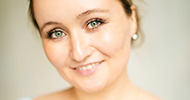
Interview with Julia Lezhneva
August 31, 2026
“Analytical work allows for emotional freedom, while emotional discoveries…”






Travel was an important part of Emmanuel Pahud's life from birth. His father worked for an American company, and the family moved frequently during his childhood. This, however, would only serve to shape Pahud's international outlook for his future. Just six weeks after Pahud's birth, his parents moved to Baghdad for a year. When he was one year old, they moved again, this time to Paris, where Emmanuel's younger brother was born. In 1972, they moved to Madrid for two years, and finally, in 1974, to Rome for four years. In their apartment building in Rome lived the Swiss-French Binet family, whose four children played musical instruments. The father (François) was a flautist who had studied in Zurich and Paris but had retired from performing in later years. Pahud first heard the flute at the age of four. When the eldest son Philippe played the Flute Concerto No. 1 (Mozart) KV 313 in G major, this marked the beginning of a remarkable chapter in Pahud's life.
Pahud attended the Conservatoire de Paris (Conservatoire National Supérieur de Musique de Paris) in France, studying with Michel Debost, Alain Marion, Pierre Artaud, and Christian Larde. During his studies, he won two major competitions, one in Duino in 1988 and the other in Kobe in 1989. In 1988, Emmanuel also won second prize at the Scheveningen International Music Competition in Scheveningen, Netherlands. As a result of these competition successes, Pahud was appointed principal flutist of the Basel Radio Symphony Orchestra under the direction of Nello Santi. He received this position in 1989 while continuing his studies in Paris. He left the orchestra in 1992. Pahud was also principal flutist of the Munich Philharmonic under Sergiu Celibidache. Pahud graduated from the Conservatoire in 1990 at the age of 20, receiving the First Prize (Premier Prix). For the next two years, he continued his studies in style and interpretation with one of France's greatest flautists, the Swiss Aurèle Nicolet, who turned out to be his neighbor. In 1992, Nicolet prepared Pahud for both the Geneva International Music Competition (le Concours International de Genève) in September of that year and the audition for the position of principal flautist of the Berlin Philharmonic (BPO) in October, through an extensive ten-day audition process. He explains that he owes both his first prize at the Geneva International Competition and his appointment as principal flautist at the age of 22 by BPO conductor Claudio Abbado to his experiences with Nicolet.
As a child, you moved around a lot. Did that have any influence on your later life as a musician or on certain decisions?
I haven't thought about it and don't really see a connection. Of course, childhood experiences shape you, and I came into contact with music early on through family travel. Perhaps I would have discovered music for myself sooner or later anyway. But this way, I was introduced to the flute at the age of five through our neighbor in Rome. As an adult, I travel a lot now, and my childhood certainly helps with that and has a positive influence on my perception.
At 22, you were the youngest member of the Berlin Philharmonic, becoming principal flutist under Claudio Abbado. Can you tell us a little about that time?
Above all, it was an exciting time for everyone. The city was undergoing a transformation after the fall of the Berlin Wall. It was one of the few cities in Europe that could still grow and change from within. On the other hand, the post-war generation in the orchestra had reached retirement age, and a new wave of musicians was arriving, all from different parts of Europe. Claudio Abbado's task was to unite these forces and bring us musicians together.
You teach very little these days?
Yes, with concert tours as a soloist, in orchestras, and in chamber music, I hardly have any time to teach. The pandemic has changed everything—fewer tours, less travel. This has also given me a bit more time in Berlin. We have an orchestra academy, and I teach two students flute there. They are prepared for competitions and performances by and with us. In addition, I have the opportunity to teach ensemble music and woodwind and brass instruments at the Barenboim-Said Academy.
What do you enjoy most – solo performance, chamber music, or orchestral work?
I enjoy everything, so I try to combine them all. Orchestral music always captivates me, but in a solo concert, you're responsible for the music yourself. I think they complement each other quite well. In the orchestra, Romantic music predominates, while in chamber music, Baroque and modern music take center stage. There are plenty of opportunities to pick the best of both worlds. For me, it's definitely a great balance.
Which composers and compositions do you like best?
As a child, I was introduced to music by Mozart. This kind of music quickly captivated me, and Wagner also had a very formative influence. Around the age of 30, my taste changed a bit and now leans more towards Ravel or Stravinsky. But Mozart and Bach are so monumental; it's a luxury for me to be able to engage with their work.
Have you ever composed yourself?
No, I've improvised occasionally in projects. But I have neither the urge nor the time to sit at a desk.
What is your opinion of contemporary music?
I enjoy working with modern composers. For example, I receive a flute composition every year to learn. I also receive many new compositions for solo or chamber music. When I talk to contemporary composers and become familiar with their perspectives and thought processes, I understand older compositions much better.
How much do you practice these days?
I always try to practice a few hours a day. But here, I'm referring to pure practice, alone without other musicians. That's something very important to me. And fortunately, I've had more time for it since the pandemic.
Do you have any goals or visions?
Yes, I'd like to continue this comprehensive flute education. I currently have about 20 projects in mind. These are the things I have in mind. On the other hand, I want to share my experience with the next generation. I'm now working more with music academies, where I can share a lot. But when you dedicate more time to others, you have less for yourself.
Do you have any passions besides music?
I would have said traveling, experiencing other cultures, which is, of course, very enriching. But you can also do that with books; there are so many books about other cultures and insights. Understanding these is, I believe, very important.
Interview by Florian Schär | Classicpoint.net | December 23, 2021
November 14, 2026 - Emmanuel Pahud (flute & conductor), students of the Barenboim-Said Center for Music Ramallah;
December 13, 2026 - Master Concert: Emmanuel Pahud, flute and Benjamin Alard, harpsichord;
April 11, 2027 - Emmanuel Pahud (flute), Potsdam Chamber Academy, François Leleux (oboe & conductor)
; April 17, 2027 - Emmanuel Pahud (flute), Potsdam Chamber Academy, François Leleux (oboe & conductor)
; April 18, 2027 - Emmanuel Pahud (flute), Potsdam Chamber Academy, François Leleux (oboe & conductor)
; April 19, 2027 - Emmanuel Pahud (flute), Potsdam Chamber Academy, François Leleux (oboe & conductor)
April 23, 2027 - Emmanuel Pahud (flute), Potsdam Chamber Academy, François Leleux (conductor)
April 24, 2027 - Emmanuel Pahud (flute), Potsdam Chamber Academy, François Leleux (oboe & conductor)
May 2, 2027 - Emmanuel Pahud (flute), Bruckner Orchestra Linz, Markus Poschner (conductor)
May 30, 2027 - Emmanuel Pahud (flute), Eric Le Sage (piano)


























































Do you want to attract more visitors to your concerts?
Find out more about the possibilities this portal offers.
With a concert search subscription, you will receive an email for your selected cantons/federal states as soon as a new concert is listed there. You can unsubscribe from the service at any time.
