

interview
Interview with Julia Lezhneva
August 31, 2026
“Analytical work allows for emotional freedom, while emotional discoveries…”




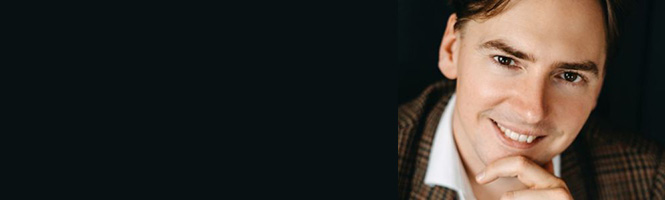

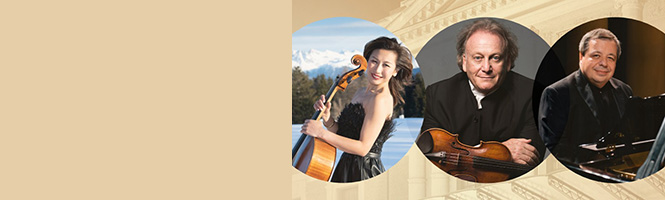


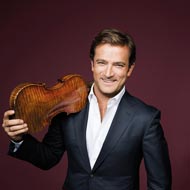
Renaud Capuçon was accepted into the class of Gérard Poulet at the Paris Conservatoire at the age of 14. Three years later, he successfully completed his studies in violin and chamber music. His other teachers included Thomas Brandis and Isaac Stern.
Renaud Capuçon's discography includes recordings with his brother Gautier, as well as a Double Concerto Op. 102 by Johannes Brahms and Frank Braley. He regularly performs with Braley in chamber music projects. He also appears regularly as a soloist in the world's major concert halls. From 2006 to 2010, he was an exclusive artist at the Dortmund Concert Hall. Since 2014, he has held a professorship for violin at the Haute École de Musique in Lausanne. In 2016, he performed at the annual National Day concert in Vienna.
They are playing the Guarneri del Gesù "Panette" (1737), which belonged to Isaac Stern. How did that come about?
I was fortunate enough to acquire this violin in 2005. It was purchased for me by a bank in Ticino and loaned to me for several years before I bought it myself. The meeting took place in Lugano. The first time I played this instrument, I had a profound revelation about its sound. I knew in that moment that this instrument would be my lifelong musical partner.
You yourself had lessons with Isaac Stern. What are your memories of him?
Isaac Stern was an incredibly impressive violinist. I was fortunate enough to meet him at the Verbier Festival in 1995. I was able to work with him for a week. He was an extremely demanding teacher who understood all the problems an instrumentalist faced and was certainly able to bring out the very best in them.
Which musicians have had a particular influence on you?
The musicians who have particularly influenced me are, of course, Isaac Stern, Claudio Abbado, with whom I played for many years as solo violin in the Gustav Mahler Orchestra, but also Martha Argerich, with whom I perform regularly, Daniel Barenboim, one of the greatest musicians of the century, with whom I play regularly and with whom I have many very profound conversations about music. And also many conductors, especially of the younger generation.
They direct the Sommets Musicaux de Gstaad. What makes this festival special?
What makes the Sommets Musicaux de Gstaad so special is above all the location; it's a festival that takes place in the mountains, in Gstaad, in several churches: the church in Rougemont, the church in Saanen, and the chapel in Gstaad. You don't hear music the same way when you're in the middle of winter, with snow falling outside, and you retreat to a church to listen to Brahms, Schubert, or Beethoven, as you do when you're in a large concert hall. The location, the proximity to the mountains, and the fact that Switzerland has always been an exceptional host country for artists are what make it so special. I feel at home there, and all the artists feel very much at home there. The atmosphere of the festival, which we wanted to keep very intimate, is also a distinctive feature.
This year, all concerts are taking place in a streaming format. What was and is the difference in the preparation?
This year the festival will take place via streaming. Of course, it is with a heavy heart that I had to change the original program, which was wonderful, but one has to adapt to the pandemic. Being able to maintain five concerts with established and emerging artists, but also with stars like Martha Argerich, and young talents like Alexandre Kantorow and Victor Julien-Laferrière, is also a way of showing that music is always present and demonstrating solidarity with the other artists and the audience to whom these concerts are being offered via streaming.
You also founded your own festival, the Festival de Pâques. What makes this festival stand out?
I founded the Festival de Pâques d'Aix-en-Provence in 2013 together with Dominique Bluzet from Crédit Mutuel CIC. It's a completely different format, featuring 35 concerts. I wanted a festival that exists and resonates throughout Europe at Easter, similar to the Salzburg Easter Festival compared to its summer festival. With this in mind, I conceived this festival, which includes orchestral concerts, chamber music, recitals, masterclasses, and much more centered around young artists.
They're usually constantly on the go. How are things with the pandemic situation right now? What are they doing?
Normally, I'm always traveling. I still travel a little lately for concert recordings, but the trips are very limited. I use this time to work, take care of my son, be with my family, and work on countless ongoing projects, programming my festivals, teaching (I teach in Lausanne and at the Menuhin Academy in Rolle), and recording CDs. I still have a lot to do.
What do you miss most right now?
What I miss most is the relationship with the audience and the opportunity to share music with them.
Where do you see the personal advantages in the current situation?
I don't see any personal advantages in the current situation, except that I get to spend much more time with my family and don't have to travel as much. Perhaps we were all too extreme before, traveling too much and doing too many things. But I would much rather not have a pandemic at all, a situation where audiences can attend concerts and we can lead normal lives.
In your opinion, will the pandemic have a long-term impact on the classical music scene?
This pandemic will undoubtedly have an impact on life surrounding music and concert performances in general. Perhaps in terms of concert formats, travel, and tours, the economic impact on musicians will be significant; some orchestras will close, and concert halls will face financial difficulties. There will be many consequences, and things will not be easy to manage.
What passions do you have besides music?
Writing, reading, meeting friends, very simple things in life, being in my country house in the south, having dinner with the people I love, walks, very simple things, some dishes I particularly like.
Interview by Florian Schär | Classicpoint.net | January 29, 2021
09/24/2026 - Midori (violin), Renaud Capuçon (violin), Gewandhausorchester, Semyon Bychkov (conductor)
11/07/2026 - VALERIY SOKOLOV & FRIENDS
11/07/2026 - Renaud Capuçon (violin), Gautier Capuçon (cello), Orchester Philharmonique de Radio France, Jaap van Zweden (conductor)
November 8th, 2026 - Renaud Capuçon (violin), Gautier Capuçon (cello), Orchester Philharmonique de Radio France, Jaap van Zweden (conductor)
November 12th, 2026 - Renaud Capuçon (violin), Gautier Capuçon (cello), Orchester Philharmonique de Radio France, Jaap van Zweden (director)
12/03/2026 - Scheherazade
12/04/2026 - Scheherazade
02/08/2027 - Renaud Capuçon (violin), Kian Soltani (cello), Mao Fujita (piano)
03/05/2027 - Midori (violin), Renaud Capuçon (violin), Bruckner Orchestra Linz, Jonathan Nott (conductor)
03/25/2027 - Renaud Capuçon (violin), Royal Concertgebouw Orchestra, Klaus Mäkelä (conductor)
04/11/2027 - Martha Argerich (piano), Orchester de Chambre de Lausanne, Renaud Capuçon (conductor)
05/23/2027 - Renaud Capuçon (violin), Vienna Symphony Orchestra, Petr Popelka (conductor)
June 13, 2027 - Julia Hagen (cello), German Symphony Orchestra Berlin, Renaud Capuçon (violin & direction)



























































Do you want to attract more visitors to your concerts?
Find out more about the possibilities this portal offers.
With a concert search subscription, you will receive an email for your selected cantons/federal states as soon as a new concert is listed there. You can unsubscribe from the service at any time.
