

interview
Interview with Julia Lezhneva
August 31, 2026
“Analytical work allows for emotional freedom, while emotional discoveries…”






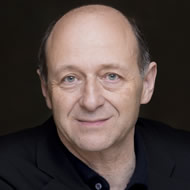
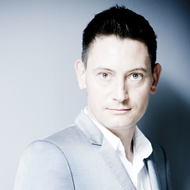
The cellist, who lives in Switzerland, is well-known in both Europe and the USA. He was Mstislav Rostropovich's last student at the Moscow Conservatory and has won several first prizes at international competitions. As a soloist, he has collaborated with leading orchestras and conductors, including the Berlin Philharmonic under Krzysztof Penderecki, the Leipzig Gewandhaus Orchestra under Kurt Masur, and the Moscow Philharmonic under Mstislav Rostropovich. Ivan Monighetti has taught at the Basel Academy of Music for 26 years and gives masterclasses worldwide.
Classicpoint.ch: How did you come to play the cello?
Music played an important role in my family. We often went to concerts together and listened to a lot of music at home. My mother played the piano herself and really wanted her son to play the cello. So I started playing the cello at the age of eight. By the time I was nine, I knew it would be my career path. My mother worked very hard to find me the best teacher.
You were one of Mstislav Rostropovich's last students at the Moscow Conservatory. Tell us a little about him.
My dream was to study with Rostropovich. He was a role model as a person, a cellist, and a musician. I attended all his concerts in Moscow. With each concert, my desire to study with him grew. When I first met Rostropovich to audition for him, I had no accompanist and had to start, completely unprepared, with the second movement of Prokofiev's Sinfonia Concertante. Rostropovich sat down in an armchair right in front of me. I barely had time to play the first really difficult passage before he interrupted me with the question: "Have you ever been outside of Moscow?" He listened to my answer and then asked me again to play from the beginning. At the same point, he interrupted me again with the question: "What are you reading at the moment?" He interrupted me with a question three times, and I had to start again. Then something crazy happened. He suddenly jumped up, went to the piano, and played the orchestral introduction, and together we played the entire movement without interruption. It was an extraordinarily intense experience, unlike anything I had ever experienced before in my life. An incredible freedom, like flying, a miracle! After the last chord, he looked at me with his mesmerizing gaze and said simply: "I'm taking you into my class."
Studying with him was extremely instructive and incredibly rigorous. I remember how he once gave me the cello concerto by Reinhold Glière as punishment. The concerto is extremely difficult to play and very tedious to practice. I had to learn it in just one week and perform it in a concert. He was uncompromising with his students and pushed them hard. Later, he gave the same punishment to my fellow student, Mischa Maisky . Because he traveled so much, we sometimes had lessons at the most inconvenient times. He might arrive at the conservatory at 2:00 a.m. to give us an hour-long lesson. We all listened to him intently. His words were law to us. We all attended his concerts in Moscow with great enthusiasm and benefited immensely from them, especially since he very rarely used the cello in his lessons. He could also be very funny and sociable. In Soviet times, artists were not allowed to bring their spouses on concert tours abroad. Only in exceptional cases, such as illness, could one submit a request. Rostropovich once jokingly wrote a highly official letter requesting permission from the Ministry of Culture to let his wife accompany him, arguing that he was perfectly healthy.
You are known both for the many new compositions dedicated to you, which you have also premiered, and as an expert in the performance practice of the 18th and 19th centuries. In which era do you feel most at home and why?
Every era interests me greatly. If time travel were possible, I would give a great deal to hear Luigi Boccherini with his cello or Mozart with his violin or piano.
As artistic director, you founded the Moscow Early Music Festival, which no longer exists, but had a decisive influence on the development of historically informed performance practice in Russia.
When I was exploring historically informed performance practice in Europe, I was determined to initiate this development in Russia as well. At that time, there was relatively little engagement with it in Russia. Today, there are soloists and ensembles in Russia of international caliber, and historically informed performance practice is taught at several universities. I am very pleased about this.
You have been teaching at the Basel Academy of Music for 26 years. What has changed during this time?
The academy has become much more modern over the years and is now among the top music academies in Europe. The level of the Swiss students has also risen incredibly. The range of subjects offered has multiplied. I am very happy and proud to be able to work at this academy.
Your most famous student, Sol Gabetta, now teaches alongside you. How have you perceived her development?
Sol Gabetta came to me when she was 10 years old. It was immediately clear to me that she possessed a very special talent. Even as a child, she had an admirable capacity for learning. That was exceptional. She is an extraordinary musician who has something very important to say to her audience, and she does so with her cello on stage.
Sol Gabetta said about you: “We read books and listened to operas together, we discussed films and went to the ballet. Ivan took me to museums and made sure I relaxed, but also went for runs to recharge my batteries. Teachers like that are almost nonexistent these days – unfortunately!”
You can't teach all your students that intensively, can you?
When Sol came to me in Madrid, I had a small class that was like a family. We went on outings together. For example, I often drove the students in a minibus to Casa de Campo, where we all practiced, played, and discussed things together. It was a very intense time. I give each student as much as they can absorb and I don't watch the clock.
Have there been students in your teaching career whom you felt were capable of much more?
Every student is an individual. Great musical talent is a prerequisite, but it's not enough on its own. It's a complex task. A soloist must feel the need to send a message to their audience. Ideally, I envision a development program for an artist that lasts 10 years. We achieved this with Sol Gabetta and with Kian Soltani, who studied with me for 11 years at the Basel Academy of Music and is now enjoying great success.
You will be giving a masterclass at the Menuhin Festival in Gstaad. How does your teaching at a university differ from a masterclass?
A masterclass is essentially the culmination of intensive preparatory work. I expect all participants to be very well prepared in every respect. It's concentrated work in a short time, where technical problems shouldn't be the focus. There will be a lot of music-making, not only solo but also in chamber music groups. A great many students applied for the masterclasses in Gstaad. I have to make the selection based on the submitted videos, as I will only be teaching a small number of students. We are all very much looking forward to it.
Do you have any other passions besides music?
There isn't enough time in life to do everything that interests me. I take riding lessons twice a week. I really enjoy riding.
Interview by Florian Schär | Classicpoint.ch | May 2, 2016




























































Do you want to attract more visitors to your concerts?
Find out more about the possibilities this portal offers.
With a concert search subscription, you will receive an email for your selected cantons/federal states as soon as a new concert is listed there. You can unsubscribe from the service at any time.
