

interview
Interview with Julia Lezhneva
August 31, 2026
“Analytical work allows for emotional freedom, while emotional discoveries…”






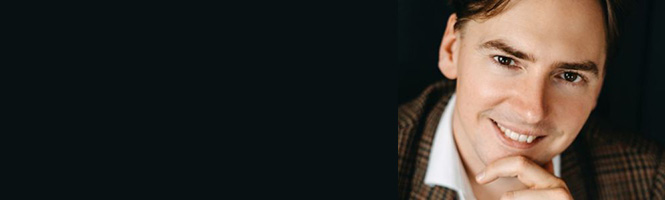



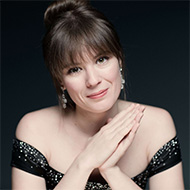
The Romanian-born British pianist and creator of "The Nutcracker and I," Alexandra Dariescu, captivates audiences and critics worldwide with her effortless musicianship and compelling stage presence. Her vision and innovative programming approach mark her as a creative entrepreneur who thinks outside the box. Highlights of Dariescu's 2019/20 season include her debuts with orchestras such as the Orchestre National de France at the Enescu Festival, the Tonkünstler Orchestra, the Detroit, Houston, Sydney, and Melbourne Symphony Orchestras, and the Auckland Philharmonia; her return to the Royal Liverpool Philharmonic Orchestra and the Orchestre Symphonique de Quebec; and a UK tour with the Moscow Philharmonic. Furthermore, Dariescu continues her collaboration with Angela Gheorghiu following their successful performance at the Vienna State Opera, and the duo will appear this season at the Barbican in London, the Berlin State Opera, at BOZAR in Brussels, and on tours in the USA and China.
In the following interview, Alexandra Dariescu talks about her project "The Nutcracker and I", her mentor Sir András Schiff and her passion for new and unknown works.
Classicpoint.net: What are your earliest encounters with music? What do you remember?
I remember walking into my piano teacher's room at the Special Music School in Iași, my hometown, when I was seven years old and seeing this enormous grand piano — it was the first time I'd ever seen one. The walls were covered with concert posters and diplomas attesting to the achievements of the teacher's students. It intimidated me quite a bit, but at the same time, it made me curious and excited. My mother had saved a lot of money to buy a piano. Living in communist Romania, extracurricular activities weren't the norm, but she wanted me to do something special — for example, learn to play the piano. I remember falling in love with that huge instrument and discovering something new every day; that was the biggest thrill. My concert debut at the age of nine was definitely one of those moments when you realize what you want to do in life. I felt exhilarated and loved being on stage, and the moment I stepped out, I told my mother and my piano teacher, "I want to be a concert pianist." I also remember my first international piano competition in Italy when, at the age of 10, I decided to stay home with my grandmother and prepare (i.e., practice, practice, practice) instead of going on the annual summer holidays with my parents. My stubbornness paid off when I won first prize, and at the same time, I gained the incredible feeling of knowing how and when to trust my intuition. It turns out that intuition has been a great companion throughout my life!
You are not only a pianist but also the producer of "The Nutcracker and I." Could you briefly tell us about this project?
"The Nutcracker and I" is my most fulfilling project. From the initial idea and concept to the financing and the smallest detail of the business plan and risk assessment, I poured my heart and soul into it. My dream was to change something in the 21st-century music world, to reinvent the way we present an evening of classical music, and to bring younger audiences into the concert hall. A unique concept — a 50-minute recital for piano, ballerina, and digital animation, starting anytime from 11 a.m. onwards (ideal for children, but also for older people). The success of this project far exceeded my expectations: "The Nutcracker and I" brought more young people to the hall than any other piano recital, with an average audience of about 65% under 18. After three years of intensive work, we had the world premiere in 2017 at the Barbican in London, followed by more than 75 performances worldwide in some of the most prestigious concert halls: Vienna Konzerthaus, Royal Liverpool Philharmonic Hall, Dubai Opera House, Luxembourg Philharmonic Hall, Hamburg Laeiszhalle, Melbourne Recital Hall, Sydney Recital Hall, BOZAR Brussels, two tours in China (including Shanghai and Beijing), and performances in the USA, Sweden, Latvia, Lebanon, the Netherlands, Denmark, France, and Switzerland. The accompanying CD was released as an audiobook – alternating between my own personal story and that of the Nutcracker, narrated by the famous children's TV presenter and BAFTA winner Lindsey Russell. A dream come true, under the motto "Dare to dream!"
How did you come up with this idea?
As I traveled the world, I saw many concert societies and orchestras closing their doors forever, some even after 30-40 years of cultural activity, because they lacked a younger generation. I knew that as an artist, I had a responsibility to help change that. I wanted to attract as many young people as possible to the concert hall; I wanted to show them that classical music can be fun and exciting, and that it can speak to them in their own "language." When you combine live music with really cool technology and live dance, it can appeal to any age, race, or culture, and it can inspire and transport you to a fascinating world where anything is possible.
The story is about a little girl named Clara who becomes a concert pianist and, through her imagination, encourages others to have the courage to pursue their dreams, work hard for their goals, and never give up. Is that also your personal story?
Absolutely. I believe that especially today, the younger generation needs role models; they need to see that hard work pays off, and that with enough courage, you can achieve anything you dream of. I don't come from a privileged family, not even a musical one, but over time I've learned that with determination, perseverance, and passion, supported by a positive attitude and never giving up, I can realize my dream.
Do you have further projects of this kind planned?
Yes, but where do I even begin...? In my mind, I have a vision that would likely change the course of classical music in favor of greater diversity, accessibility, and a generally more balanced approach. There is so much to explore, discover, and inspire. However, given the current climate and economic outlook, it will probably be a long time before all of this is achieved. But as you've probably guessed, I won't give up; instead, I will continue to find partners who also believe in these important values and together we will create a new narrative.
Besides the core repertoire, you also focus on new and unknown works. What appeals to you about that?
I love discovering new pieces and sharing them with my audiences around the world. I find that audiences are very keen to embark on this journey, and sometimes I think they are a bit more adventurous than some promoters. Ginastera's Concerto Argentino is a fantastic piece, the world premiere of which I gave in Norway and the United Kingdom with the Stavanger Symphony Orchestra and the Royal Scottish National Orchestra. The core repertoire is, of course, our bible, and I have spent most of my life studying the classics, from Bach to Rachmaninoff, from Mozart to Debussy. With a repertoire that includes more than 50 piano concertos, I have a great range and versatility in interpretation to offer. While I have studied and performed all of Beethoven's piano concertos, playing the Ries Piano Concerto No. 3 with the Tonkünstler Orchestra has helped me enormously to better understand this particular era and has broadened my awareness of the context in which the music was written.
The trilogy of complete preludes I recorded for Champs Hill Records has taken me on an incredible journey of discovery: starting with Chopin, I've been able to delve into works by Dutilleux, Messiaen, Fauré, Shostakovich, Lili Boulanger, and Szymanowski. As a young artist, I'm so grateful to have had the opportunity to record such a repertoire and begin building a library, one that will unearth some real treasures. From a personal development perspective, I find it liberating to be on a journey of constant learning and self-education. That's the beauty of music: the more we learn, the more there is to learn.
You are the first pianist to perform a 50/50 program of composers in a regular recital without a specific focus at the renowned Wigmore Hall. Is this a particular concern of yours?
Yes, I consider it our duty to also present works by female composers and to try to achieve a certain balance, which, in my personal opinion, is largely lacking in classical music programs. There are some exceptional works by women composers, but I often feel that not enough effort is being made to rediscover at least some of them. The beginning of 2019 marked a new step for me, as I made the active decision to offer a gender-balanced program to the performers and orchestras I work with. I haven't been able to convince everyone yet, but there have been some successful collaborations with the Gothenburg Concert Hall, the Liverpool Philharmonic Hall, the Ruhr Piano Festival, and Wigmore Hall, which have proven that it is a shared concern that we all must address. From the standpoint of piano concertos, I particularly enjoyed collaborating with the BBC Symphony Orchestra/James Gaffigan on Nadia Boulanger's Fantaisie variée and Germaine Tailleferre's Ballade for Piano and Orchestra with the Royal Liverpool Philharmonic Orchestra/Jessica Cottis. I also brought these works to Romania for their Romanian premieres. Several years ago, I commissioned the award-winning British composer Emily Howard to write a new piano concerto, "Mesmerism," which I recorded with the Royal Liverpool Philharmonic Orchestra for NMC and which subsequently won the British Composer Award. This year, I am focusing on some works by Clara Schumann and giving several world premieres by the American composer Missy Mazzoli, the first woman to receive a commission from the Metropolitan Opera House in its 139-year history.
Sir András Schiff is your mentor. How has he influenced you?
Sir András Schiff is a true role model for me. His encyclopedic mind is truly fascinating, and I have learned so much from him: from treating the score as a bible, the meaning and significance of every note and notation, the way in which folklore has shaped certain composers, the coexistence of different musical styles, and above all, the pursuit of continuous learning.
Playing at Carnegie Hall is every musician's dream. Well, mine came true in 2012, and at that moment I felt it was the best week of my life. Not only the excitement of seeing New York for the first time, but above all, being in the presence of the musician I had admired and looked up to my entire musical life: András Schiff. He took us on a journey centered on the music and life of Béla Bartók. After reading "My Father" by Peter Bartók, I felt I had been given the green light to enter this wonderful world of Hungary's most famous composer. The lessons and discussions with Mr. Schiff were truly inspiring, and his attention to detail was astonishing. I loved our lunches, which always began with chicken soup, followed by conversations about music, philosophy, the latest film releases, anecdotes... Mr. Schiff is such a joy to be around, and you were always aware of his warmth and generosity. A memorable day was the visit to the Met Museum: Mr. Schiff had arranged a private tour of the Renaissance portrait collection. One could only marvel at his wealth of knowledge and understanding of the works of Bellini, Donatello, Botticelli, and Mantegna, to name just a few. How important it is for a young artist to understand how a gallery is structured, the connections and relationships between these immensely valuable works of art. Just like putting together a program for a recital! I find Mr. Schiff's ability to inject imagery into music quite remarkable: in Bartók lessons, one could actually see the "pebbles falling into the water" in the Barcarolle from Out of Doors; one felt the "shadows of war" in the Suite Op. 14; the "tipsy" character of the second Burlesque, which he explained so well by describing the descending chords with gentle laughter, the "donkey," and the "hiccup." Mr. Schiff made the meaning of each note clear to everyone, while simultaneously explaining how Bartók revolutionized percussion instruments and the importance of using percussion in piano music, just as writing is. His wealth of knowledge and his generosity are wonderful, and I am truly grateful to have had the opportunity to study with him in London, New York, Gstaad, and Manchester.
You are still young and at the beginning of your career. What are your visions and aspirations?
My vision is to truly make a difference in today's music world. I strive for equality in classical music, but also to make it accessible and relevant to the younger generation. My wish is to always maintain my curiosity and openness to learning at the highest level and to constantly strive to become a better musician.
What do you do besides music? How do you unwind?
I love cycling because it really makes you appreciate distances. It helps me discover places I wouldn't otherwise see and leads me to meet people I wouldn't have otherwise met. For me, all of this is especially important in a world where you can simply hop on and off a plane and travel to several countries in a single day, leaving behind the distance and all the wonderful stories that were there to be told.
I also love baking, the art of pastry, which is based on precision and creativity. Furthermore, I believe that good cakes bring people together. Above all, though, I love to communicate, I love the dialogue with people from different walks of life, I love to learn and discover more and more about our incredibly fascinating world.
Interview by Florian Schär | Classicpoint.net | September 1, 2020

























































Do you want to attract more visitors to your concerts?
Find out more about the possibilities this portal offers.
With a concert search subscription, you will receive an email for your selected cantons/federal states as soon as a new concert is listed there. You can unsubscribe from the service at any time.
