
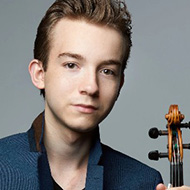
interview
Interview with Jacques Forestier
November 1, 2026
“I want to share the music I love most with as many people as possible…”




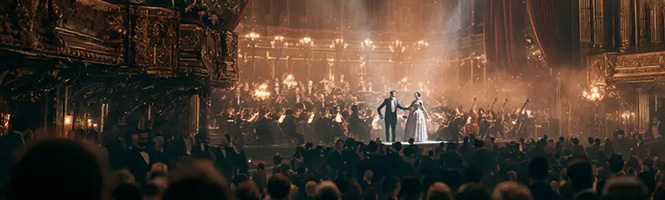




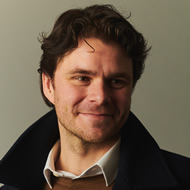
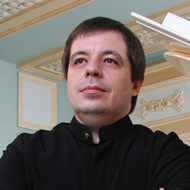
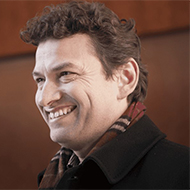
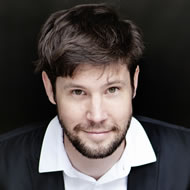
Canadian composer Nathan Henninger studied piano and film music and also gained experience as a horn player and choir singer. His debut album, "Five Scenes for Orchestra," with the Scoring Berlin Orchestra—members of the Berlin Philharmonic and other renowned Berlin ensembles—conducted by the composer himself, was recorded at Teldex Studio Berlin. Henninger created these soundscapes at a tranquil retreat in the Azores, which he occasionally swaps with his vibrant home in New York. At times eruptive, at others dreamlike, the dense work evokes images in Cinemascope format.
You studied piano and French horn. How did you get into composing?
Well, my father was a composer. He recently turned 80. I remember being fascinated by an orchestra from a very young age, when one of his pieces was performed by an orchestra. My parents met in the college choir, so music was always a bridge in our home, something we all shared. My sister played the violin. My mother was a psychologist and sang and gave concerts in her spare time. It was around that time that I first saw "Star Wars" and was captivated by the music. I've been fascinated by orchestras since childhood. I think Prokofiev's "Peter and the Wolf" made me realize that all these instruments are characters who want to communicate with each other. What do they say?
Yes, I've been learning piano and French horn since childhood, performing in school musicals and singing in choirs. It wasn't until high school that I began studying music theory, and when I got to university, I started seriously studying composition, which became my major. After college, I moved to New York and studied music at Juilliard Extension, taking private composition lessons and piano lessons with Taka Kigawa at the Greenwich House Music School. More recently, I've been studying at workshops and privately with some of the best Hollywood orchestrators. I learn something new with every piece I write. We recorded my latest work, "Romanza," on June 12th in Budapest with musicians from some of the best orchestras there. I would say that I really started composing seriously during the COVID pandemic, when I was teaching piano at a conservatory in the Azores. I decided to focus on it professionally.
What do you want to express with your music?
Always to make music that we love, that you as a listener would enjoy, and that is hopefully direct and speaks to what is most personal or intimate, what is familiar to you, what you might need. I believe that music has a real power to heal and to allow us to name things in our hearts that we don't want to forget, that we somehow need to remember. Therefore, in my music, I'm interested in exploring this aspect and sharing it with other musicians and the audience to create something special and, hopefully, useful. Above all, I'm interested in good storytelling.
What is your greatest source of inspiration for your compositions?
I believe that my own childhood memories and experiences with music created these obsessions and musical ideas as a starting point for my imagination and my training. A kind of "Hansel and Gretel" thread in my heart and mind. What moves me most, and why, connects me to something that feels emotionally essential to me. That could be a chord change, a gesture, a phrase.
Sometimes the music from a small scene in a film stays with me. Nature, the opportunity to spend time in nature, is also a very important source of ideas and inspiration. I currently live in the Azores and have always loved hiking, camping, and being by the sea.
How do you approach a composition, what steps lead to the finished work?
I consider myself a melodic composer. I'm interested in orchestration, creating textures and new environments for musical ideas. I describe my music as impressionistic, since I'm clearly influenced by composers like Debussy and love evocative soundscapes, but also as "neo-romantic," since I am primarily a melodic composer.
As a pianist, I enjoy improvising at the piano, using the music memo app on my phone to record these improvisations. Often I find harmonic, melodic, or rhythmic sequences or ideas and then start fresh with sheet music. I use Dorico Pro as my notation software.
I studied with excellent teachers and learned the principles of good arranging from Hollywood orchestrators like Norman Ludwin, Conrad Pope, and Nan Schwartz, as well as how to expand material in interesting ways. So, when I start with an idea, I look for ways to vary and unify it, to present it, so to speak, in different "guises." In doing so, I always serve the narrative and build the material organically and emotionally, in accordance with the music's implications and suggestions.
Once I have a sketch of the piece's form, I often outline it like a story, jotting down ideas, keys, transitions, overall goals, and the mood of each section. Then I begin writing the music. And once that structure and musical outline are in place, I start orchestrating. Every part of the process brings forth new ideas. It's a bit like sculpting: you're constantly learning what's needed by examining your natural response to the overall musical experience and noticing what's missing.
Hopefully, the end result will be music that feels welcome and necessary, like a good friend. By putting yourself in the audience's shoes, you can be honest and adjust details until you feel it works.
You lived in New York and moved to the Portuguese Azores just before the pandemic. How did that come about?
I came to the island of Terceira in the Azores for my birthday in December 2018 and fell in love with it. As a teenager, I spent seven summers camping on Catalina Island off the coast of Long Beach, California. And Terceira, especially my neighborhood of São Pedro with its view of Monte Brasil and the cross on its summit, always reminds me of those carefree summers of my youth on Catalina. I immediately had a sense of déjà vu on Terceira and started exploring the possibility of living there. By the end of that week, I had already found an apartment. When I returned to New York, I looked for a roommate and moved in with my cat, Heidi, in February 2019. I found a job there as a piano teacher at a conservatory, and when COVID hit, I felt safer in a more secluded environment than in a big city, so I decided to stay. I took Portuguese lessons, made new friends, but continued my professional life and my connections to New York.
And how have your life and work changed?
Living in the Azores has made me take my lifelong love of nature more seriously and make it a bigger part of my everyday life. So in many ways, I have changed. But I think I am now more in touch with parts of myself that have always been there, but are more accessible in a natural environment.
I regularly leave the island for work or workshops, which allows me to find a good balance between city life and retreating to the peace and nature I love so much. Simply put, I can find myself better in the Azores.
At first, as a foreigner, I felt a bit like a fish out of water. But I had my cat with me; she was my mother's cat, Heidi. When my mother died, I adopted Heidi, and she became my best friend. Heidi loved life on Terceira. She died shortly before I had finished and recorded most of the music for "Five Scenes for Orchestra" in Berlin. I consider the duet between the flute and the French horn at the beginning of Scene 5 a tribute to her and our deep friendship. Around that time, I also adopted my new cat, Lua, whom I met during my daily hikes on Monte Brasil.
The biggest professional change was that during COVID I began to seriously consider composing as a career. In the years since the lockdown, I've composed a lot of music, recorded in various cities, attended workshops, and resumed my studies at the Film Scoring Academy of Europe in 2023. It's now my full-time job and my business.
Her latest work is "Five Scenes for Orchestras," recorded with musicians from the city's most prestigious ensembles: the Berlin Philharmonic, the DSO Berlin, the RSB, the Deutsche Oper Berlin, and others. What makes this work so special?
It was a great joy and honor to collaborate with some of the finest musicians in Berlin and the world at Teldex Studio. I love the documentary film produced by Sascha Knorr of AudLab, which is available on my YouTube channel. It showcases not only the project but also the musicians. Many of them have become friends, and we stay in touch. When I turn to chamber music or solo works, I immediately think of specific musicians I've collaborated with before. Making music can be a bit like a family or a community! I love the idea of recurring collaborations, similar to repertory theater, where you see the same actors in different plays and contexts. I hope to do that with the musicians I encounter along the way! The Berlin musicians were all very down-to-earth, musically outstanding, and generous in their performances.
I think what's special about "Five Scenes for Orchestra" is that it conveys a sense of both grandeur and mystery, yet is fundamentally intimate and personal. It's also about friendship and loss, about how, in the end, nothing can truly be taken away from you.
What are your next projects?
I've just finished recording "Romanza," a multi-movement tone poem for string orchestra, percussion, and solo piano. The recording sessions in Budapest were a joy; we've just started mixing, and as with "Five Scenes," there will be videos and a documentary. Next, I'll be working on piano pieces and chamber music that further explore this atmosphere and will serve as "companion pieces" for my next album, "Romanza," which will be released in early 2026.
What are your passions outside of music?
I love animals, especially my cat Lua. I love hiking and nature. I also love art and photography. I'm a big fan of the artist Andy Goldsworthy. I once did an international art photography project with bicycles in different environments called "Cycles." I also really enjoy visiting art museums when I'm in a larger city.
Interview by Florian Schär | Classicpoint.net | August 1, 2025
© Image: NateChet Music LLC




























































Do you want to attract more visitors to your concerts?
Find out more about the possibilities this portal offers.
With a concert search subscription, you will receive an email for your selected cantons/federal states as soon as a new concert is listed there. You can unsubscribe from the service at any time.
