
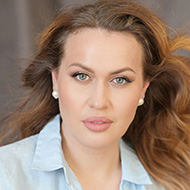
interview
Interview with Elena Stikhina
June 1, 2026
“The Zurich Opera House has a very special meaning for me.” Elena Stikhina is…


Franco Fagioli was born in San Miguel de Tucumán, in northern Argentina. He received piano lessons at the Tucumán Music Institute and then studied singing, first in his hometown and later at the Instituto Superior de Arte, the training center of the Teatro Colón in Buenos Aires. The already impressively accomplished young performer achieved his breakthrough when he won the 10th International Singing Competition "Neue Stimmen" (New Voices) of the Bertelsmann Foundation in October 2003. In July 2015, Fagioli became the first countertenor ever to be signed by Deutsche Grammophon.
Classicpoint.net: You were born in Argentina. What place does Argentina hold in your life now?
That's right, I was born in San Miguel de Tucumán. Tucumán is a province in the northwest, with beautiful subtropical weather. It's 1200 km from Buenos Aires. In my life now, it holds the place of being the country where I was born. My immediate family lives there, so it's always there in some way, even though it's far away. Argentina is my past and present. All those people who have known me from the beginning live there, and that's priceless. Of course, you come to Europe and make new friends, but they haven't known you forever.
When did you first hear a countertenor, and what was your reaction?
It was by chance when I was a pianist in a choir and we Stabat Mater . To learn the piece better, I went to a music store to buy the CD. There was only one version. I didn't pay attention to who was singing; I went home and put the CD in my player to listen to it. The first part was a soprano, but then there was this second part, which I initially thought was a woman's voice. However, when I looked more closely at the CD cover to see exactly who I was listening to, I was shocked to see it was a man. But for me, it was also a confirmation. Before I knew that countertenor was a distinct vocal register, I was already singing in my head voice, but more for fun. I thought I was imitating women's voices. I didn't know that music had been written specifically for the countertenor voice. It was confirmation that it existed and made it an option for me to pursue seriously. At that time, I was more of a pianist than a singer, but it led to my decision to become a countertenor.
Castrati were once huge stars. Senesino, Caffarelli, or Giovanni Carestini—would you have liked to have lived as one of those castrati back then?
Well, no, I wouldn't have liked to have been castrated like those poor men. A counter-question for you and humanity: Was castration really a necessity? Nowadays, we sing without being castrated. Perhaps there's no answer to that question, though. We can't say that the castrati were better, that they could do something that countertenors can't do today. We'll never know what those stars sounded like. Of course, there's this one very old recording by the Capella Sistina Castrato that gives us an idea of what a castrato voice sounded like. But in that recording, you can also hear that the way they sang back then was completely different. Whether that's beautiful or not is a matter of taste.
I wouldn't have liked to have been castrated, but I would have loved to have heard the castrati live. I would have loved to learn from you, because you were very well-trained at that time, not only as singers, but as musicians in general. You played instruments, knew harmony, counterpoint, all the rules of music and composition. It was the golden age of musical interpretation for singers.
Argentina is a country with a strong machismo. How did your social circle react when you started studying countertenor?
I was lucky that my parents fully supported me. Although my mother was initially worried about me, as she didn't know that men could sing so high. She was afraid I would ruin my voice. As a child, I sang in a choir, a soprano of course, and my mother loved it. But as a mother, you naturally expect that to change, that your child will have a beautiful tenor or baritone voice. She wanted to protect my voice. "Oh no, don't sing like that, don't sing so high, you're endangering the health of your voice!" And I told her, "No, no, it's okay, there's a countertenor register, and that's what I do," and then it was fine with her. It was a bit different with my friends. Once we were walking around town, and I was singing now and then. My male friends kept telling me to stop. They told our friends to move their mouths so people would think it was a choir and not that they were walking around with a lunatic. That was funny.
I must also say that the reception among the people of Tucumán was very positive when I started singing. I remember my first concert with the provincial symphony orchestra; I was 19 or 20 years old and sang Handel's Dixit Dominus, the alto solo part. The audience really liked it. It was probably the first time a countertenor had performed there, but I never had any problems.
Are you confronted with a lot of prejudice these days?
That's a good question. Somehow, there are far more prejudices in the music world than with ordinary people. People receive what you give them; they like it or they don't, that's all. Just like any other art form. But theater or concert promoters, people who work with music, have far more prejudices than the actual audience. For example, something that happens to me very often: I'm a countertenor, but one characteristic of my voice is that the register is very similar to that of a mezzo-soprano. Occasionally, I can also play so-called "trouser roles," which are normally sung by mezzo-sopranos. Handel's Ariodante, for example, is such a role, written for castrati, but nowadays usually sung by mezzo-sopranos because it's so high. But I can also sing it, for example, Sesto in La Clemenza di Tito. I was able to sing this role on stage as a countertenor because Sesto was also written for a castrato. These prejudices can change, as I've already said. Fashions change, and of course, if you only ever hear recordings of Sesto sung by a mezzo-soprano, you'll always choose a mezzo-soprano for the role, even if you know it was composed for a castrato. If I were chosen for the role, well, of course I'm not a woman, and of course it wouldn't be the same, but it's a different version, a different way of singing the role. Sometimes theaters accept that, and sometimes they don't.
But I've already gotten used to it; with my voice, I can handle both lower and higher parts. But only male roles—I don't mean to imply that I would sing Carmen or Cenerentola. I'm pleased, however, that there are theaters that have given me roles usually sung by women. For example, Arsace in Semiramide , the aforementioned Sesto in La Clemenza di Tito , or Idamante in Idomeneo , or Ariodante. Prejudice, as the word itself suggests, is a preconceived notion. Please listen to it first, and if you don't like it, that's okay. You're free to like what you want. But you should experience it first.
Your teachers had no experience with high male singing. How did you develop your voice technically?
Yes, that's true. I had two teachers; my first was a soprano and my second a baritone. They had no experience with countertenors, but I thought it was fantastic. Why do I say that? Well, they taught me what they knew about singing. The soprano taught me the Italian singing technique, the bel canto technique. My baritone teacher at the Teatro Colón in Buenos Aires was the first to tell me I should try Arsace's aria from Semiramide , that my voice was well-suited for it. So I developed my voice using the Italian singing technique. That means it's based on the early days of opera, based on bel canto; bel canto not just as 19th-century music, but bel canto as a kind of ideal of singing, based on the Italian tradition of singing. During the 19th century, bel canto was a fashionable term, a way of relating to music from this nostalgic feeling for the Italian singing of the past. What I mean by nostalgia is, look at how many "trouser roles" there are in bel canto opera houses. These roles are a reminiscence of what castrato was. There were no more castrati, castration had been outlawed, but composers wrote the roles in this style again because it was fashionable once more. The public liked this type of opera, but since there were no more castrati, these roles were taken over by women, which is very interesting. That's what I learned.
You have made a name for yourself as one of the finest Handel singers of our time. What is your personal connection to Handel?
My personal relationship to Handel is like, "Hello, my master, here I am to learn." Every time I turn to him in the score, I try to find out what he wants to tell me through the notes, through the music. Of course, I try to interpret the character in the opera. Handel is always there; he was a great genius, even when he wrote for castrati or other special singers. You always see his heart in the music, and that's what makes him so great. It's not comparable to the other composers who wrote for castrati, such as Porpora, Vinci, Manna, Cafaro. All these Neapolitan composers wrote very personalized music that was very much tailored to the voice of the person for whom the piece was written. For example, a singer might approach a composer and say, "Oh, Maestro Porpora, I'm very good at singing these scales or these arpeggios; please write them into the aria," and then it would be done. But Handel went further than that. He was able to create a style that, while based on Neapolitan opera, was much more universal. Handel didn't just think about the person for whom he was writing the piece, but also about all the other voices that would sing his music. That, for me, is what's so great about him. He knew how to combine his genius with universality, and of course, with business acumen; he was a great businessman. He ran a theater, so he had to sell his opera. For me, Handel was the Andrew Lloyd Webber of Baroque opera in London. Nowadays, we go to musicals in London or New York; back then, it was Handel in London. He created a style that was accessible to both the audience and the singers.
What are the sonic differences between a countertenor and a mezzo-soprano?
This question isn't so easy to answer. We can't really speak of sonic differences in the strictest sense, because sometimes you hear a recording and can't tell whether it's a countertenor or a mezzo-soprano. This happens to me regularly; people hear me and don't realize I'm a man. So it's less about the sound itself. Of course, a mezzo-soprano is a woman, a countertenor is a man; it will never be the same, but both have something rich that they can contribute to the artistic scene. I'd rather talk about the different schools of singing. You can immediately hear whether a soprano is more aligned with the Italian school of singing, or the German or Russian school. Because it's this school that makes the biggest difference, much more than the difference in sound. With countertenors, for example, there's the British and the Italian school. You learn to sing and feel connected to one of these techniques. There's an interesting point to consider: in Handel's time, there were both countertenors and castrati. The castrati were all Italian, and their singing style was accordingly influenced by the Italian school. They sang Italian operas in London. At the same time, there were also countertenors. The difference between them and the castrati, besides their physical characteristics, lay in their vocal technique. The castrati were engaged to sing Italian operas, while the countertenors sang oratorios and English music, as they adhered to the British school of vocal technique. This serves as an example when discussing tonal differences.
Are major opera houses hesitant to engage countertenors?
It's similar to the stereotypes; opera houses aren't inherently hesitant. They're very open to creating artistic events when they stage operas, and that's wonderful. It's also great that they consistently include Baroque operas or even Handel operas in their seasons. I don't think they're hesitant at all. It's about what they need, what aesthetic direction they want to pursue, and that's perfectly fine.
What are your interests outside of music?
People, my family and friends, communicating with other people. But I also love tennis and running; I'm a good runner.
Interview by Florian Schär | Classicpoint.net | October 2, 2018
© Image: Igor Studio / DG




























































Do you want to attract more visitors to your concerts?
Find out more about the possibilities this portal offers.
With a concert search subscription, you will receive an email for your selected cantons/federal states as soon as a new concert is listed there. You can unsubscribe from the service at any time.
