

interview
Interview with Julia Lezhneva
August 31, 2026
“Analytical work allows for emotional freedom, while emotional discoveries…”


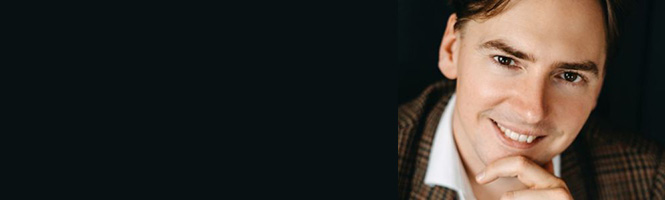






Graziella Contratto represents a young generation of conductors who combine the concert and operatic repertoire with a keen sense for compelling programming, innovative connections, and open communication. Literature, architecture, dance, and film serve as sources for her concepts.
Classicpoint.ch: You give workshops for managers and executives. They have the opportunity to conduct an orchestra under your guidance. You highlight the parallels between the leadership qualities of a conductor and a manager and offer suggestions for improvement. Where do these parallels lie, and what are the most frequent insights from such workshops?
Somewhat poetically, and perhaps not entirely suited to the economic context, I would argue that the most important thing is beauty: As soon as the conducting executives shed everything inauthentic, learned, cool, or superior, they become beautiful—the musicians allow themselves to be led. This happens without the slightest verbal communication, solely through genuine charisma and the associated flow state, which manifests itself in the sound. Other parallels include clarity of message, expertise, a sense of balance between the collective and the individual among those being led, and vision and implementation without detours through vanity.
Do you also learn from the workshop participants from the business world for your work as a conductor?
Absolutely – concepts like 'authoritative' or transactional/transformational, 'flow,' or the specific problems of personnel management can be applied almost identically to my work. (If I may add: At the moment, however, I'm learning most from our two-year-old daughter what 'leadership' means. When making certain parenting decisions, I ask myself: Does this 'no' serve myself, the child's upbringing, or the child? Feel free to apply that to conducting an orchestra or leading a company.) Arnold Schoenberg, himself a gifted teacher, wrote in the introduction to his 'Theory of Harmony': 'I learned this book from my students.'
Is charisma and leadership competence even learnable?
A certain degree of basic charisma is certainly innate or natural. But: Certain leadership styles develop a kind of "objective" charisma through intensive study, which has integrated remarkably well into the classical music world, especially in recent decades – many conductors with a musicological or historical background are respected by orchestras, even though they no longer conform to the mythical cliché of the magician on the podium.
How does one deal with a classical diva in the orchestra?
Divas are everywhere; I, for one, find it a challenge to integrate these strong personalities, who often suffer from a kind of post-pubescent attention deficit disorder, into the interpretation through a particularly strong, visionary concept. The best players should serve the team, not engage in hybrid solo ventures.
How do you deal with obvious power struggles and cliques within an orchestra?
An orchestral apparatus has groups that have developed historically, e.g., string sections or the woodwinds, respectively. Brass bands. Every group has two faces – one is humble (ideally) and passionately dedicated to realizing the compositional score, the other insists on union rights, wants a say, and is actively involved in external communication. To manage all these important diversifications, a conductor is needed who can empathize with the different positions – musically, communicatively, stylistically, and in terms of union affiliation – without losing themselves in the process. A conductor is, and remains, a leading figure, a role originating in the 19th century.
You became the first woman in France to be the chief conductor of a state orchestra. Have you experienced any rejection while working as a woman with a top orchestra?
Let's wait a few years, and this question will be completely irrelevant! I can only say that it's been a give and take: the better I conducted, the smoother the relationship became. Sometimes, for some irrational reason, there's also love at first sight—or the opposite. My male colleagues say the same thing, if they're honest…
What options are there to win over an orchestra if you are rejected as a conductor?
Study, learn, reflect: The emotional and intellectual insights must flow into your body and take on their own form. You should master the score so well that the orchestra – whether stylistically agreeing or not – can no longer resist the elegance or the compelling nature of your interpretation.
You are very active in many different areas. Are there any projects that are particularly close to your heart and that you haven't been able to realize yet?
A Wagner ship on Lake Lucerne – just wait a few more years, and that will happen. I won't reveal any more than that for now.
You are the artistic director of the Davos Festival – young artists in concert. What is the concept behind this festival, and how does it differ from other festivals?
the Davos Festival has been dedicated to promoting young international musicians, especially in chamber music. We don't invite big names, but rather try to offer young talents performance opportunities within the beautiful triangle of landscape, audience, and poetry. In recent years, we have become very bold, particularly with regard to new music, dance theater, and special outreach initiatives (a reclining concert on the Schatzalp! Hotel operas! Cage in a club), and a few weeks ago we were honored to receive the Johana Dürmüller-Bol Prize – which, of course, encourages us to continue on this path.
You have already collaborated with many great artists. Which ones have particularly impressed and inspired you personally?
Carlos Kleiber, whom I unfortunately never had the chance to see perform live, but who constantly accompanies me as my conducting muse. Ben Heppner, who sang Tristan like Mozart in 1998. Lisa Larsson, who demonstrates a magnificent stylistic assurance as a soprano, ranging from Baroque to contemporary music. The young Mirella Weingarten, with whom I have had the privilege of co-producing numerous projects in her direction or choreography. Martin Helmchen, to whom I owe an incredible Schubert at the Davos Festival . And my husband, the violinist Frédéric Angleraux, for his music and his cuisine…
Interview by Florian Schär | Classicpoint.ch | February 21, 2011





























































Do you want to attract more visitors to your concerts?
Find out more about the possibilities this portal offers.
With a concert search subscription, you will receive an email for your selected cantons/federal states as soon as a new concert is listed there. You can unsubscribe from the service at any time.
