

interview
Interview with Julia Lezhneva
August 31, 2026
“Analytical work allows for emotional freedom, while emotional discoveries…”


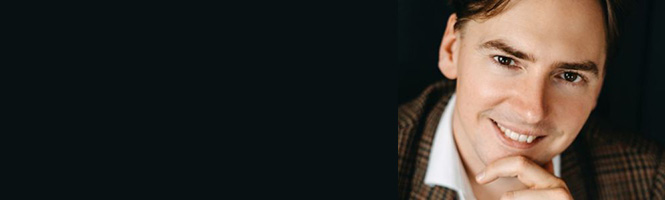


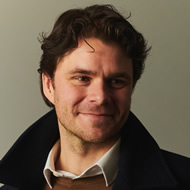
With his appointment as Chief Conductor of the Adelaide Symphony Orchestra, which he led from 2016 to 2019, he became the first Australian in over 30 years to conduct one of the country's orchestras. From 2018 to 2021, Nicholas Carter was Chief Conductor of the Klagenfurt City Theatre and the Carinthian Symphony Orchestra, where he conducted numerous new productions and regularly performed in the orchestra's concert series. Following his debut at Santa Fe Opera with Die Fledermaus, he returned in 2021 with Eugene Onegin. He also maintains an important collaboration with the Deutsche Oper Berlin, where he served as Kapellmeister for two seasons and to which he regularly returns as a guest conductor. Since the 2021/22 season, Nicholas Carter has been Chief Conductor of the Opera and Co-Opera Director at the Bern Theatres.
You are considered a very versatile conductor. In addition to your role as chief conductor of the opera and co-director of the Bern Theatres, you also frequently appear as a guest conductor in the concert hall. Where do you feel more at home, in the opera or in the concert hall, and why?
To be honest, I can't say that I prefer one over the other. What I particularly enjoy about conducting operas is that the focus is very much on what's happening on stage. In opera performances, I always feel like part of a large team, working together to achieve something. Of course, it's always a joy to be on stage in the concert hall as well, sharing the music with the audience—if only because the repertoire is so spectacular. But in the concert hall, there's a different focus: the purely abstract aesthetics of the music, and I also consider it a great privilege to be a part of that.
Can you remember your earliest opera experience as a child?
As a child, I was a member of a children's choir, and one day we were encouraged to audition for a small role in Verdi's Macbeth at Opera Australia. I was lucky enough to get the roles of Fleance and the Child Ghost, and it was my first experience of the world of opera. It was the first time I'd ever been on a stage. It was customary to sing the Ghost's part from the orchestra pit, and it was the first time I'd ever been surrounded by the sound of an orchestra. I was hooked from the very first moment!
You grew up in Australia and also served as chief conductor of the Adelaide Symphony Orchestra from 2016 to 2019. Apparently, for the last 30 years, all the conductors employed by orchestras in Australia have been foreigners. Are there really so few good conductors?
It's a long and complex story as to why there are so few Australian conductors leading Australian orchestras. First of all, you have to remember that Australia is a large country with a relatively small population. The classical music scene is well-established, but small. There are only seven or eight good orchestras in the entire country. Therefore, there aren't many opportunities for young conductors to develop and gain experience. Those who aspire to a career have to go to Europe or America to learn and develop. I did that myself, as did the Australian conductor Simone Young. However, there are now quite a few Australians around the world who have pursued careers as conductors. Another reason might be that we Australians are generally not very fond of authority figures. It's part of our historical identity to be skeptical of people who like to be at the top and take charge. Perhaps I'm not very "Australian" in that respect!
You have worked for many years in Germany, Austria, and now also Switzerland. Where do you see the biggest differences compared to your homeland in the musical field?
Classical music is a largely imported art form in Australia. When I came to Europe twelve years ago, I was impressed by how deeply rooted culture, theater, and music are in social discourse and how classical music is constantly evolving as a result. It seems to me to be an integral part of society. Even though some people fear that the importance of classical music is declining here as well, in my experience it still enjoys a much higher level of appreciation compared to Australia. Because Europe has an incredible amount to offer in this regard. As I said, the top orchestras in Australia are truly world-class, but in Germany, Austria, and Switzerland, there are simply hundreds more! What we are offered here in Europe is a true gift.
What do you personally miss about your homeland?
I miss my family and many friends who live there, of course. Also the wonderful weather and the magnificent beaches! The quality of life there is very high. Fortunately, I get to travel there every year or every other year to conduct.
You have conducted many new productions in recent years. Which ones were particularly important to you and why?
I am especially proud to have contributed to the first-ever performance of the Ring Cycle in Bern. We presented Rheingold and Die Walküre in the last two seasons, and this year we have Siegfried. Initially, many people asked why we wanted to perform a Ring Cycle in Bern, in a relatively small theater. To my great delight, however, we received enthusiastic responses: firstly, because of the brilliant staging by director Ewelina Marciniak, but also because of the wonderful playing of the Bern Symphony Orchestra and our fantastic singers. Many people traveled from all over the world, including overseas, to see what was happening here in Bern. This production was also extremely well received in the national and international press. "Something very special is happening with the opera in Bern," wrote one journalist. The whole city can be proud of that. I am sure that the Bernese Ring will live on in the minds of many people!
Thinking about upcoming productions, which are you particularly looking forward to?
That's difficult to say, because every project is special to me! Our next production here is Jenůfa, one of the most heartbreaking and, at the same time, terrifying operas ever written. And, of course, the next chapter of our Ring cycle—Siegfried—promises to be very exciting!
Do you have a pre-performance ritual?
I started taking mental training much more seriously last year. In the world of sports, training is routinely based on the principles of performance psychology, and this science is taken very seriously. Unfortunately, in the music world, it's simply expected that you "don't get nervous." That's not healthy, and many of my performances have been disappointing because I wasn't in the right frame of mind. That's why I now consciously invest time in meditation before a performance to achieve a high level of concentration. It's a process of focusing on your breathing, clearing your mind of external distractions, and being grateful for the opportunity to conduct the upcoming performance or concert. This ritual makes me feel much more comfortable during a performance and allows me to show my best side.
How do you recover from stress? What do you do in your free time?
I remind myself daily that it's a privilege to work in a theater and to be able to engage with such magnificent works of art.
Yes, there are moments when there's pressure to learn this or that opera quickly, but that's a very privileged kind of stress.
Sometimes I have to remind myself to relax! Reading, walking along the Aare River, and spending time with my family are good ways to stay grounded and keep things in perspective.
Interview by Florian Schär | Classicpoint.net | November 1, 2023
Photo: Florian Spring
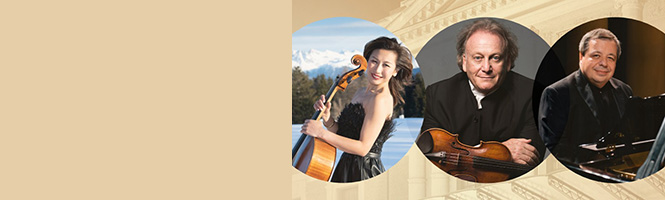
February 21, 2027 - Brett Dean (viola), Stuttgart State Orchestra, Nicholas Carter (conductor)
May 9, 2027 - Madeleine Przybyl (viola), Zoltan Paulich (cello), Stuttgart State Orchestra, Nicholas Carter (conductor)
May 15, 2027 - Hayato Sumino (piano), Dresden Philharmonic, Nicholas Carter (conductor)




























































Do you want to attract more visitors to your concerts?
Find out more about the possibilities this portal offers.
With a concert search subscription, you will receive an email for your selected cantons/federal states as soon as a new concert is listed there. You can unsubscribe from the service at any time.
