
interview
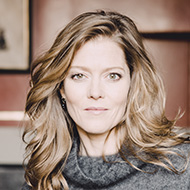
Interview with Barbara Hannigan
July 1, 2026
"I rediscover every piece I sing, again and again, no matter how often I've already sung it..."




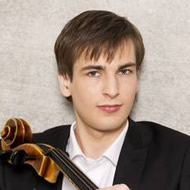
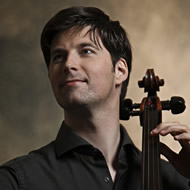
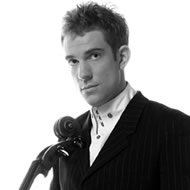
The Swiss cellist made his debut at Carnegie Hall in New York at the age of 17, where he has performed regularly ever since.
Further appearances have taken him to renowned concert halls such as the Tonhalle Zurich, the Konzerthaus Vienna, Wigmore Hall London, the Munich Residenz, the Capella St. Petersburg, the St. Petersburg Philharmonic Hall, and the Baku Philharmonic Hall.
Classicpoint.net: Why did you choose the cello as your instrument as a child?
At the age of three, I received a Siberian flute shaped like a ceramic cow as a gift. I was thrilled and played the three possible notes with such persistence and fervor that after a few weeks, my mother gave me a real flute. It immediately became my constant companion. Only my music teacher managed to silence my flute in just a few weeks. At that time, my older sister loved playing violin lessons with me. Everything was great fun, except for standing; that was simply too tiring for me. I absolutely needed an instrument I could sit down to play. The choice between piano and cello was quickly decided, since you can't play in an orchestra with a piano.
What are your earliest memories of musical experiences that have shaped you?
The joy of making music was there from the very first notes and, thankfully, has never left me. Music evokes a feeling of freedom in me.
When did you decide to pursue music professionally?
After exactly four months of cello lessons, when I was seven. I was allowed to perform two short pieces at my class recital and was, of course, extremely nervous. But I immediately felt more comfortable on stage and thoroughly enjoyed playing music in front of an audience. After the recital, I wanted to perform again as soon as possible. That's how my dream of becoming a cellist began.
You have performed in many competitions and won many prizes. What do competitions mean to you?
Competitions are a great motivation for me to prepare and try to give my best. I also find it exciting every time to learn a new piece written specifically for the competition in a short amount of time. It's a chance to practice rapid, intensive learning and to deal with emotional pressure.
Do you play differently in competitions than in concerts?
I try to give my all in both competitions and concerts. The pressure is greater in competitions because you know you'll be judged critically. Over time, I've become more adept at blocking out those thoughts.
You are still very young. What are your dreams and visions?
My goal is to be able to carry out my own projects and not to forget that it is a huge privilege to be able to do what I love every day – music.
Which artists have influenced you the most?
Alexander Neustroev, my cello teacher from Zurich, with whom I began taking lessons at the age of 13, was instrumental in my musical development. My approach to music-making comes from him: to tell a story with the cello that touches the audience. I received further important inspiration from Wolfgang-Emanuel Schmid – above all, I learned from him how to create a broader sound production. From the conductor and cellist Michael Sanderling, I learned precision when playing with an orchestra, and from Steven Isserlis, phrasing, musical interpretation, and inspired, natural playing.
Is there a particular style of music that fascinates you?
Since I'm still quite young, it's natural for me to constantly (re)discover different genres. I try to explore all directions and immerse myself completely in the music. This immersion is what brings out the true joy and natural challenge. Last year was an intense period with classical music, culminating in the CD recording of both Haydn concertos, which will be released at the end of this year. In February/March 2018, I was fortunate enough to work on Othmar Schoeck's Cello Concerto, which reached its culmination with the CD recording. This year, I'm focusing on many Romantic and some contemporary works.
Do you have any role models?
I am extremely inspired by all great artists, not just classical musicians, but also painters, architects, writers, and brilliant artists, both living and past. The list is too long to name names. Especially among young cellists today, there are many fantastic musicians who impress, inspire, and excite me. Of course, I try not to imitate them; that would defeat the purpose of what I want to express.
What interests you besides music?
I'm interested in what's happening in the world, the direction we're heading in, why we're even here, what we can make of it; how we miss our goals every day and try to do better the next day, and try to perceive the gift we've been given with gratitude and humility.
I love to read, play chess, spend time in nature, look at the stars at night, and love to sleep. I also really enjoy skiing, driving, and flying.
Interview by Florian Schär | Classicpoint.net | August 1, 2018


























































Do you want to attract more visitors to your concerts?
Find out more about the possibilities this portal offers.
With a concert search subscription, you will receive an email for your selected cantons/federal states as soon as a new concert is listed there. You can unsubscribe from the service at any time.
