

interview
Interview with Julia Lezhneva
August 31, 2026
“Analytical work allows for emotional freedom, while emotional discoveries…”



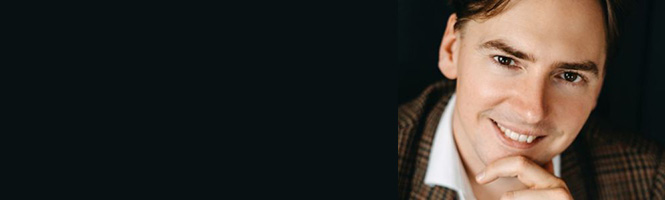


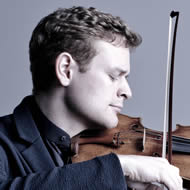
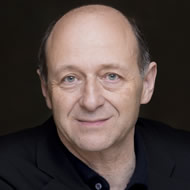
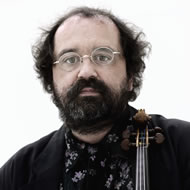
As first violinist of the Alban Berg Quartet, Günter Pichler enjoyed a unique career: During its nearly 40 years of existence, he and the quartet performed on all the world's major concert stages. With the dissolution of the Alban Berg Quartet in 2008, Günter Pichler intensified his conducting activities, which he had already pursued regularly and successfully for over 20 years.
Classicpoint.ch: You became concertmaster of the Vienna Symphony Orchestra at the age of 18, and in your mid-twenties, you became concertmaster of the Vienna Philharmonic under Karajan. You could have focused entirely on a solo career. Why did you choose to play in a quartet?
My instinct told me that playing in a quartet was the right thing for me.
Were there moments when you regretted your decision to play in a quartet?
I never regretted that decision; it turned out to be the dream of my life.
In 38 years with the Alban Berg Quartet, you've probably performed in almost every major concert hall dozens of times, given thousands of concerts. Are there any concerts that stand out in your memory? The most exciting concerts, and of course the most thrilling, were those we knew would decisively influence our career. First and foremost, there was our debut in the autumn of 1971 at the Vienna Konzerthaus, then the first concerts in the great concert halls of Europe and overseas, for example, the Berlin Philharmonie, the Zurich Tonhalle, the Concertgebouw Amsterdam, the Frankfurt Alte Oper, the Cologne Philharmonie, the Munich Herkules Saal, the Théâtre des Champs-Élysées in Paris, the Santa Cecilia in Rome, the Queen Elizabeth Hall in London, the Suntory Hall in Tokyo, the Teatro Colón in Buenos Aires, and, of course, especially Carnegie Hall in New York. Our debut there was recorded and later released on EMI; it was the catalyst for our decision to record almost exclusively live from then on. Unforgettable are also the world premieres that took place in the presence of the composers (for example, Berio, Schnittke, Haubenstock-Ramati, Urbanner, Rihm) or concerts after which the composers explicitly thanked us for the performance (such as Lutosławski or Boulez). Equally memorable are those concerts that were recorded live, especially the live recording of the Beethoven cycle at the Vienna Konzerthaus. When you play together with the same lineup for so long, a complex social network develops. How would you describe the individual personalities and their function within the quartet's social structure? Was there someone who took the lead in rehearsals, or, for example, someone who could occasionally defuse an emerging argument with a witty remark? A quartet can only function on a democratic basis. But even democracy has its rules. It's certainly advantageous to have a primus inter pares, which I believe was the case with us ; it's essential that the personalities complement each other, and we were fortunate enough to have that as well... And above all, humor is crucial. Three years before the dissolution, when Thomas Kakuska (the violist) died, was the end of the quartet already a topic of discussion? Of course, the end of the quartet was a topic of discussion at that time. But Thomas absolutely did not want the quartet to stop playing because of him. Valentin Erben is said to have been the catalyst for the dissolution of the Alban Berg Quartet. What was the reaction of the other three members when Valentin Erben announced his intention to pursue a new direction? I think we were all quite surprised when Valentin informed us of his decision. Ultimately, however, everyone agreed. Of course, I don't know exactly what my colleagues thought. I personally had actually forgotten that there has to be an end sometime, and as the oldest member of the quartet, and after 50 years of "professional life," the timing of the dissolution ultimately felt very natural to me. How did you experience the ABQ's very last concert? Preparations for the quartet's final tours began two years before the end, so we had plenty of time to prepare ourselves. However, since we didn't know how emotional the last concert would be, we decided not to play it in Vienna. It was to take place at one of our favorite venues, far from home but still with friends: in Buenos Aires, at the indescribably beautiful Teatro Colón. Then, at the last minute, out of the blue, came a request from the director of the new cultural center in Beijing. He explained his invitation with the following words: You're stopping – we're starting, please come. So we played our last concert in a country where there was virtually no chamber music culture, but in doing so, we obviously did something important for chamber music in China. This July, the president of the Central Conservatory of Music in China called me in Beijing and said: "Since you gave your concerts here three years ago, there are now over 60 string quartets at our school. Please come; we would like to introduce you to the five best, as we urgently need to connect with their tradition." Returning to the last concert: despite all the preparations, it was a very moving experience to be on stage for the last time as the Alban Berg Quartet and to play the final notes... for me, it was like being in a trance. What advice would you give to today's young quartet ensembles? What, in your opinion, is the most important thing for success? The burning love for music, the unconditional will to truth, humility before the work, believing in oneself and considering everything possible, considering every concert the most important of life, being absolutely reliable, working tirelessly, and knowing oneself. After the ABQ ended, you intensified your conducting activities and teach as a professor at the music academies in Vienna, Cologne, and Madrid. Do you still play chamber music? After months of deliberation, even before the quartet ended, I had decided, despite many good friends inviting me to play with them, not to perform publicly as a violinist anymore.
Interview by Florian Schär | Classicpoint.ch | January 3, 2012
Photo: na































































Do you want to attract more visitors to your concerts?
Find out more about the possibilities this portal offers.
With a concert search subscription, you will receive an email for your selected cantons/federal states as soon as a new concert is listed there. You can unsubscribe from the service at any time.
