
interview
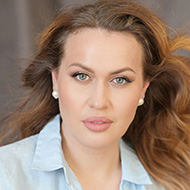
Interview with Elena Stikhina
June 1, 2026
“The Zurich Opera House has a very special meaning for me.” Elena Stikhina is…


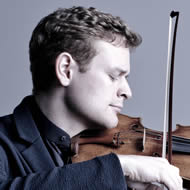
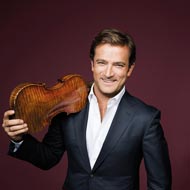
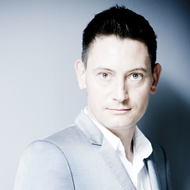
Born in Russia in 1974, violinist Maxim Vengerov began violin lessons at the age of five with Galina Turchaninova. Today, he performs on all the major international stages. The artistic director of the Swiss Menuhin Music Academy discusses his artistic career, his numerous mentors, his three roles as violinist, conductor, and teacher, and his work as a juror for the Isaac Stern Competition in this interview.
Classicpoint.net: You studied with Zakhar Bron and followed him from the Eastern Bloc to the Lübeck Academy of Music in the 1990s. Can you tell us about that time?
Before studying with Professor Bron, I studied with Galina Turchaninova for five years. As Bron's student, I went to Lübeck to both study and perform. It was a truly exciting time for me, especially coming from Russia. At that time, Russia was still part of the Soviet Union, and the cultural difference between my new destination and my homeland was extraordinary. As a young person, it was a very important time to learn about Western culture, to understand the differences between Eastern and Western cultures, and to spend time absorbing the vast Western offerings. When I arrived in Germany, I was already at an advanced stage, having received a fantastic, intensive musical education in Russia—I studied not only violin but also harmony and other musical disciplines. It was a truly amazing time when I look back on it, because at the age of 13 I was already a traveling musician, about to travel the world a second time.
When you won the Carl Flesch Competition and suddenly received 70 engagements all over the world, you weren't yet sure whether you should become a professional musician. Why were you so uncertain, and what ultimately led you to become a musician?
I studied pedagogy for 11 years under two great teachers. As a result, everyone perceived me as a professional musician because my repertoire was so extensive. I was no longer seen as a child prodigy. After my studies with Bron, I decided not to have another teacher. Once you've studied with such a great teacher, who else can you have? The level with Bron was truly exceptional, but I had to leave him due to a family situation. So I had to work on my own and discover music for myself. Around that time, I contacted Isaac Stern for a short lesson. He asked me to play the scales, which I did. He told me I couldn't connect two notes and that he was very happy I'd had so many concerts and engagements in London, Japan, and the United States, but that I hadn't yet reached musical professionalism. I asked him to help me and tell me what was wrong. He replied that he could, of course, tell me, but he believed I had the potential to figure it out myself. He told me that he, too, had been alone at 16, without a teacher. If he could discover music for himself, then I could as well. This set me on a challenging path, as I understood that I needed to change direction.
I listened to orchestras, symphonies, and operas, and studied harmony and music analysis, as well as many other disciplines outside of the violin. This really helped broaden my horizons, because I realized that without additional knowledge, I couldn't have a career as a violinist. A year later, I had several teachers, none of whom were violin teachers, and I was performing intensively, giving 70 concerts. When I turned 17, I met the great Rostropovich and Barenboim, who became my mentors for life. With them, I recorded a large part of the core repertoire. They opened new horizons and perspectives in my musical life, and I am very grateful to them.
In 2007, you had an injury to your right arm and couldn't play the violin for four years. How did that affect your future career?
I never had an arm injury! I needed time to take stock of my life. People can't understand how you can leave a great career to study something else. No one believed the real reason, so they invented an arm injury. What actually happened was that I felt I had to stop doing what I was doing and learn to conduct instead. If I were still conducting while I was conducting, I wouldn't be able to learn in a profound way. I really wanted to learn the art of conducting from the inside out. I told everyone I would be back in 2011, which I did, because I played Brahms in Brussels in May 2011. Since then, I've been playing again, but at a different level. Studying conduct has given me a deeper understanding and a new dimension to my work as a violinist. The major concertos are usually written as symphonies, with the violin parts integrated into them. If you want to understand the texture of the orchestra, you need a basic understanding of what an orchestra is. Being able to conduct takes you to another level, because you're able to speak the same language as the conductor. This process has helped me enormously; I've certainly gained a much deeper understanding of the works of Brahms and Beethoven.
Rostropovich and Barenboim – what can you tell us about these two personalities? What was your relationship like, and what did you learn from them?
They were completely different, like the sun and the moon. I remember that they were both quite tough on me. Once, before a concert, I played Sibelius's Violin Concerto for Barenboim. I was pleased with how I was playing the whole piece, as I had performed it successfully a month earlier. But within a few seconds, Barenboim's silence completely shattered all my confidence! Those seconds seemed like an eternity. I asked him if he was happy. He said that I could certainly play the piece, but that it wasn't Sibelius's Violin Concerto. I asked him what it was, and he gave me the score and said I would have to find out one evening.
The next morning I saw him again, and he told me that it wasn't enough to just practice; I also had to connect my violin part with the orchestral lines. After the first rehearsal, he encouraged me, saying I had made a good start.
But when I gave concerts with Barenboim, he still insisted on his own interpretation. When I played with Rostropovich, he threw enormous amounts of information at me, but he left me alone to shape the musical content according to how I felt during the concerts. And those were the fundamental differences between Rostropovich and Barenboim. Rostropovich truly gave me the stage and allowed me complete freedom.
You also serve on competition juries. What do you look for when selecting the best?
I've been involved in many violin competitions. One of them is the Isaac Stern Competition, where I'll be on the jury for the final round next year. I've been on the jury for the Wieniawski Competition in Poland twice, which was a remarkable experience because of the competition's innovative aspects. I conducted the entire preliminary round live, listening to 220 players in nine cities around the world. The second time, I made a preliminary selection of 250 players from America, Europe, and Japan. From that number, I had to choose 45. It was remarkable because each time I listened to the players, I gave them 20 minutes to play, and then we always had five minutes to talk. I saw what they were capable of and what they truly needed. My idea of the competition isn't about who makes it to the final or even wins. For me, it's important that everyone who participates gets something out of it. They need to be transformed. It's also a great platform for young musicians to meet and interact.
History teaches us that not all prize winners make it to the top. I believe the competition is a way to compare young players with different repertoires. For example, you might play Mendelssohn's Violin Concerto very well, but then your playing of Bach might not be so stylistically interesting.
Competitions give us the opportunity to see what a player is capable of. We recognize that these young people cannot yet be considered mature musicians; they are barely in their twenties. Therefore, we focus very much on their potential and how we believe their playing will look in a few years. It is very rare to encounter a young player who can already be considered a mature musician, but it is possible.
They see music as a healing tool in our hectic times. How and why can music help us?
Music is light and music is vibration. Therefore, whatever vibrates has the ability to influence people. It's very important to always choose the repertoire and music that you are absolutely in love with. The greatest energy there is, is love. There is nothing more powerful than love. And if you're not sure that you love the composition you're playing, then it's best not to play it!
I greatly admire the work of the American-Maltese composer Alexey Shor. He is the Composer in Residence of the Armenian State Symphony Orchestra (ASSO), and I am his Artist in Residence. We have therefore joined forces for the upcoming European tour. We are undertaking a wonderful tour of five cities in January, and for the program we will combine Bruch's "Violin Concerto No. 1" and Ravel's "Tzigane" with new, soulful works by Alexey Shor, presenting either "Barcarolle" or "Lonely Sail" depending on the concert. In addition, the ASSO will perform the European premiere of the Second Symphony, "The Fate of Man," by the Armenian composer John Ter-Tatevosian.
Shor's work is beautiful, melodious, and fits very well with the rest of the ASSO's program. Shor's music has a richness and consists essentially of wordless songs that describe nature. They are deeply connected to aspects of nature, and therefore all the titles he gives his pieces are either about the sea or something similarly picturesque. A great example of picturesque music is Debussy's La Mer. The music simply speaks for itself and helps us to understand it.
I believe there are two types of music. One type is that created by Brahms and Beethoven. You play the symphony, you feel the structure, and it's like a monument. Then there's the more picturesque type, from composers like Debussy, Fauré, and Poulenc. The interesting thing about their music is that they allow the audience to imagine what the composer intended.
You made your debut as an opera conductor last year and even took singing lessons. What's next, what else do you want to learn?
One day I'd like to compose something. I've conducted most of the major works, and now I'm itching to compose myself. But I want to do it when I have the time and when I'm not in a hurry. I want to let it happen naturally, if it has to. Combining my three professions as a conductor, violinist, and teacher is quite a challenge, and having a family is a full-time job!
I'm also very much looking forward to working with the Armenian State Symphony Orchestra and Sergey Smbtayan for the European tour. I met Sergey when he was in his early twenties, and he's a very talented violinist. Although he doesn't perform on stage often, he understands the violin, and that makes you feel very comfortable with him. The orchestra consists of talented players who have great energy and enormous potential.
Which recording or project are you most proud of?
I'm proud of the recording of Tchaikovsky's Violin Concerto that I made with Myung-Whun Chung and the Radio France Orchestra in 2015. It sounds different to me now, I think, as I play it in a more symphonic style since conducting Tchaikovsky's Symphony. Chung is also a great conductor and a fantastic partner, and the orchestra did an amazing job.
I'm also proud of the performance I did last year live from Carnegie Hall in a recital with pianist Roustem Saitkoulov. The concert lasted almost two hours! We played works by Rachmaninoff, Paganini, and Kreisler. We also played Ernst's The Last Rose of Summer, which I'm proud of because I was only ten years old when I first played it! So I revisited it to reminisce.
Do you have any other passions besides music?
My passion is my family. My children also play instruments. My eldest just made her orchestral debut in Russia on the piano.
Interview by Florian Schär | Classicpoint.net | January 3, 2020 |
Photographer: © Benjamin Ealovega





























































Do you want to attract more visitors to your concerts?
Find out more about the possibilities this portal offers.
With a concert search subscription, you will receive an email for your selected cantons/federal states as soon as a new concert is listed there. You can unsubscribe from the service at any time.
