

interview
Interview with Julia Lezhneva
August 31, 2026
“Analytical work allows for emotional freedom, while emotional discoveries…”







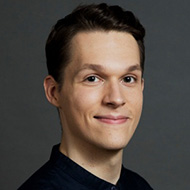
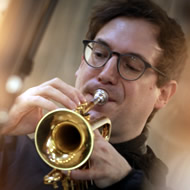
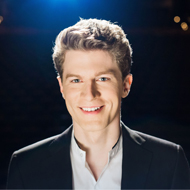
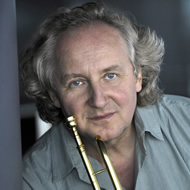
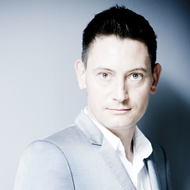
24-year-old Simon Höfele is one of the most exciting trumpeters of the younger generation. He is a current BBC Radio 3 New Generation Artist, has been an artist in the "Junge Wilde" series at the KONZERTHAUS DORTMUND since the 2018/2019 season, is an SWR2 New Talent, and is a prize winner of the special "U21" prize at the ARD International Music Competition and the German Music Competition 2016, among others. In addition to his musical projects, Simon Höfele is also involved in cultural politics and founded the association "Kunstverlust" (Loss of Art), for which he photographs people who are actively committed to art and against its destruction.
Classicpoint.net: What's so special about a trumpet?
For me, the special thing about the trumpet is the wide dynamic range this instrument offers. Everyone knows the trumpet as a loud instrument, and that's true! The trumpet can definitely be incredibly loud. But it can also sound at the other end of the spectrum, in piano and pianissimo, if you really want it to.
How did you come to play this instrument?
When I was just five years old, my father bought a small decorative fanfare trumpet on eBay. It was only meant to be hung on the wall, but I grabbed the "instrument" while playing and immediately fell in love with the trumpet. That settled it for me. The only problem was that shortly after this decision, my four baby front teeth fell out. Because of this, I had to wait what felt like forever for my first trumpet lesson. But I suppose that was also a pretty good test for my parents to see if I was really serious about wanting to play the trumpet ;-)
They're also interested in contemporary music and perform new works. Which current composer would you like to see write new pieces for the trumpet from?
Oh, there are sooo many! And that's precisely what I find so wonderfully fulfilling about contemporary music. There's such a great diversity in this era, unlike anything you'll find anywhere else! Every time I learn a new piece, I realize how multifaceted and vibrant today's music is. For me, that's a sign that music truly transcends everything and connects every person, no matter where they are, and however different the music may be!
You're also very interested in photography. What fascinates you about it, and what themes and areas do you explore?
Photography is very important to me. It's like a haven of peace or an oasis where I can recharge and fully concentrate on music with renewed energy. Of course, it's more than that, but I'm currently so busy with music that photography sometimes unfortunately takes a backseat. But you can't be everywhere at once. What interests me most about photography is the analog realm. I own many different cameras, some of which date back to 1956. I also have a darkroom and photographic chemicals to develop my own film. Analog photography particularly fascinates me because it focuses on the essentials. Ideally, nothing stands between you and the subject. No thousands of attempts until the picture finally works, no constantly checking previous photos on the camera's screen, no dead batteries, no autofocus, etc. Of course, you occasionally miss a great shot, but the rest of the pictures simply have more soul and are more authentic.
You founded the association "Kunstverlust" (Loss of Art). Can you tell us something about it?
Kunstverlust e.V. is a non-profit organization that my good friend and roommate Florian Wetzel and I founded. The idea initially came to me to create a portrait series where the people photographed stand in front of a black backdrop with overhead lighting. A kind of portrait where the facial features are particularly emphasized, character portraits, so to speak. Each portrait is accompanied by a statement from the person about what art means to them. It was meant to be a colorful statement in contrast to the black and white, usually quite serious, photograph! That was the first idea. So far, we've photographed several hundred people, including a wide range of personalities such as former Presidents of the Bundestag Norbert Lammert and Wolfgang Thierse, the pop singer Clueso, and also students from our music academy. Basically, anyone for whom the issue of cultural policy cuts is important. We've grown since then, are thinking bigger, and are looking for sponsors for larger projects. So, if you'd like to support us, you're welcome to become a member; the application form is available on our website kunstverlust.de.
What does art mean to you?
For me, art is the feeling of rediscovering freedom each time and sharing it with others.
How do you define music?
I see it very similarly with music. Music has to convey a feeling, not just beautiful melodies. It has to have something to say; then it doesn't matter what kind of music it is—classical or popular, Baroque or contemporary.
You're still very young; what are your visions for the future?
I'm approaching it as calmly and relaxed as possible. I don't want to force anything. Nevertheless, I have thousands of ideas swirling around in my head. I'm open to many things and I'm looking forward to the future with optimism. I get to make music and earn my living with it. That's an incredibly wonderful privilege.
What bothers you most about being a musician?
Not much. Musicians are mostly open-minded and wonderful people. If anything bothers me, it's perhaps the unconscious fostering of egocentric traits in some people in this field. As soon as you "have to" make music with someone like that, it usually becomes very difficult, and what it's all about—the music—fades into the background. Then it's no fun at all... Music is always something very shared. The individual performer is important, but never more important than the music itself!
Interview by Florian Schär | Classicpoint.net | September 3, 2018
September 23, 2026 - Simon Höfele (trumpet), Chaarts Chamber Artists;
November 7, 2026 - Simon Höfele (trumpet), tfn-Philharmonie, Magdalena Klein (conductor);
January 19, 2027 - Gabriela Montero & Simon Höfele
; January 20, 2027 - Simon Höfele (trumpet), Rundfunk-Sinfonieorchester Berlin, Vimbayi Kaziboni (conductor)
; January 31, 2027 - Simon Höfele (trumpet), Kammerakademie Potsdam, Charlotte Oelschlegel (moderator);
March 3, 2027 - Simon Höfele (trumpet), Elisabeth Brauß (piano), Bibiana Beglau (recitation)



























































Do you want to attract more visitors to your concerts?
Find out more about the possibilities this portal offers.
With a concert search subscription, you will receive an email for your selected cantons/federal states as soon as a new concert is listed there. You can unsubscribe from the service at any time.
