interview
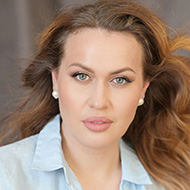
Interview with Elena Stikhina
June 1, 2026
“The Zurich Opera House has a very special meaning for me.” Elena Stikhina is…


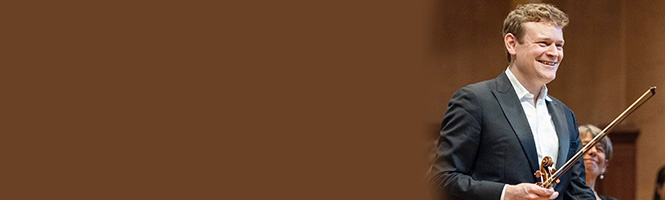


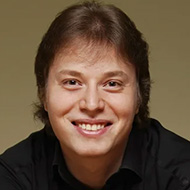
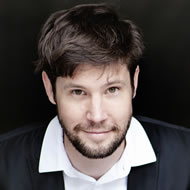
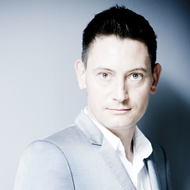
Since his concert debut at the age of 14 in the Laeiszhalle in his hometown of Hamburg, Sebastian Knauer has enjoyed a concert career spanning over 30 years.
He has performed in more than 50 countries on four continents, appearing in venues such as the Berlin Philharmonie, the Gewandhaus Leipzig, the Concertgebouw Amsterdam, Wigmore Hall London, the Théâtre des Champs-Élysées Paris, the Tonhalle Zurich, the Vienna Konzerthaus, Lincoln Center New York, the Harris Theatre Chicago, the National Center for the Performing Arts Beijing, and Toppan Hall Tokyo.
He is a regular guest at festivals including those in Schleswig-Holstein, Mecklenburg-Vorpommern, and the Rheingau, as well as the Dresden Music Festival, the Ruhr Piano Festival, the Beethovenfest Bonn, the Schubertiade Hohenems, the Salzburg Festival, and festivals in Gstaad, Montreux, Merano, Bath, Ravinia, Savannah, and Shanghai.
In the following interview, Sebastian Knauer talks about his path to becoming a pianist, his festivals, including how he came up with the ideas, and about the future of classical music.
You come from a merchant family. How did you become a pianist?
The Knauer family's merchant days are quite a while ago. Our family originated in the mid-18th century. The founder of our family was indeed a very successful and wealthy merchant. However, there wasn't a specific business that could be passed down through the generations, as is typical of family businesses. Furthermore, there must have been an event at some point in which a large part of the fortune disappeared. To this day, we haven't been able to find out what it could have been.
Therefore, I personally come from a family that wasn't focused on business, but rather on journalism.
In addition, there were also private musical ambitions, so I suppose I was born with a musical talent and thus came to the piano. For me, it was clear from the age of four: "I want to be a pianist!"
You frequently commission new compositions. What is important to you in this process?
First and foremost, it's important to me that I like the composer's music.
Then, it's important that the commissioned composition fits into a context, for example, with my existing repertoire, which I can then combine with the new work for a concert program, or, as in the case of Arash Safaian's new work, within the context of a composer who is very dear to me. It's also very important to me that the newly composed work is received by the audience in the same way that I personally feel it – in other words, that the audience leaves a concert thrilled by this music!
You created the "Word Meets Music" format together with actors. Can you tell us a bit about it?
Almost exactly 20 years ago, I had the desire to record and perform the famous story "A Winter in Majorca," about Frédéric Chopin's stay with George Sand in Valldemossa in 1838, in both spoken word and music. While this format wasn't new, I commissioned a new script based on the book of the same name and George Sand's autobiography. My wish at the time was to secure Hannelore Elsner for the reading. After a few attempts, it worked out, and since then I've performed several hundred times in over 30 "Word Meets Music" projects that I conceived myself. I'm fascinated by sharing the stage with such great actors, and I'm fortunate to be able to work with such wonderful personalities in this field. Hannelore Elsner was a very close partner on stage until her death, but I also now have a close, friendly working relationship with Martina Gedeck, Iris Berben, Hannelore Hoger, Katja Riemann, Ulrich Tukur and Klaus Maria Brandauer.
You have founded and artistically direct several festivals. Could you tell us about them?
I founded the "mozart@augsburg" festival in 2010. When a smaller local festival ran into financial difficulties and could no longer continue, I spontaneously had the idea of creating my own festival at this important historical site in Germany. As is well known, Augsburg is the birthplace of the Mozart family. And that was precisely my intention: to make Augsburg, the city of Mozart, internationally renowned through a festival. I succeeded in inviting more or less every major artist in the classical concert world, and after a short break, we will be launching again in 2021 with a new and very appealing program.
The International Music Festival Week at Bad Berleburg Castle, the residence of the Danish Princess Benedikte, has been running for almost 50 years.
It so happened that I was appointed artistic director there two years ago.
It's a very special place, and the ambiance of the concerts in the castle is truly captivating.
I conceived the "Ludwig FUN Beethoven" festival for the city of Aachen to celebrate Beethoven's 250th birthday. Everything was ready for the first edition of the festival in April of this year, but then, as we all know, the coronavirus crisis hit, and we had to cancel the festival and postpone it until 2021.
This festival naturally focuses on Beethoven's music and will take place over four days at eight different concert venues throughout Aachen.
The idea is that people can reach each concert more or less on foot, allowing them to experience the full program. Almost every genre of Beethoven's work, from solo sonatas to symphonies, will be performed by outstanding artists such as the Beethoven Orchestra Bonn, Albrecht Mayer, Martin Stadtfeld, Jan Vogler, Daniel Hope, Simone Kermes, Klaus Maria Brandauer, and many more.
You can always put together unique programs and rediscover old works? Which programs are you particularly proud of? You describe yourself as a bon vivant. As a concert pianist, how much time do you actually have left for anything else?
As a classical music pianist, you essentially play a repertoire that has existed for centuries. And you can't reinvent this music. That means a Bach concerto remains a Bach concerto, or a Beethoven sonata a Beethoven sonata. We performers can't reinvent this music, even though there are always attempts to do so. Personally, as a performer, I like to stand behind the composer and see my role not as presenting myself, but as presenting the composer's work to the audience in such a way that it touches and inspires them.
And a special selection of works can certainly work wonders in this regard. Be it juxtaposing the works of Bach and his sons, or Mozart's last piano concerto with Beethoven's first.
I really enjoy creating unique content and I notice that the audience appreciates it.
As for my personal time management, I always make sure to set aside enough time for friends and hobbies, but above all for my family.
They are committed to making classical music accessible to a broad audience. How much of a future do you see for this musical style, say, in the next 100 years?
Even in 100 years, people will still listen to classical music with fascination, emotion, and enthusiasm – I'm certain of that.
We've been listening to Bach for almost 350 years now, and Beethoven for 250. That shows how immortal this magnificent music is. And if we continue to work to give young people, or even children, access to classical music so that they can later decide for themselves whether or not they want to listen to it, classical music will continue to outlive us, even if perhaps in a completely different form of performance – I'm sure of that.
How are you experiencing the current pandemic situation?
This time is a huge challenge for all of us. Not just in my industry, the events industry of all kinds, but it affects everyone, especially due to the immense psychological strain we all face because of the great uncertainty about the future.
While I am looking ahead, the last six months have definitely left their mark, and I am particularly worried about our entire classical music industry. As long as we can't perform carefree concerts, we receive daily reports of bankruptcies among promoters, agencies, and artists.
Therefore, I hope that a vaccine will be available as soon as possible, because we clearly see that people are uncertain and perhaps even afraid to go to concerts now, even though the options are available again, albeit in a limited capacity.
What are your future plans?
Right now, I'm operating on a day-to-day basis, like so many in our industry. This means that all planned concerts in the fall and winter, provided they haven't already been canceled, are being monitored week by week, in the hope that they can still take place.
Long-term planning is also underway, of course, but it's clear that promoters are still too preoccupied with the current situation, so a lot of patience is required.
Otherwise, I'm already planning my next CD project, which is scheduled for release in 2021. You can look forward to a very special repertoire there as well.
Interview by Florian Schär | Classicpoint.net | September 18, 2020


























































Do you want to attract more visitors to your concerts?
Find out more about the possibilities this portal offers.
With a concert search subscription, you will receive an email for your selected cantons/federal states as soon as a new concert is listed there. You can unsubscribe from the service at any time.
