
interview
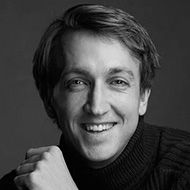
Interview with Fabian Müller
September 30, 2026
"I like to practice at night in the dark, without turning on the light. The silence sounds..."




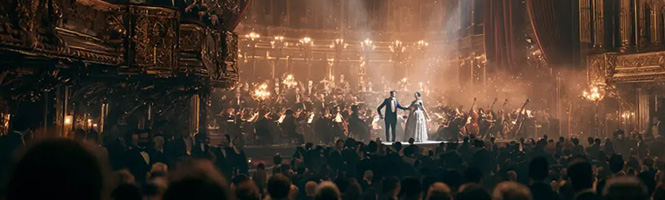



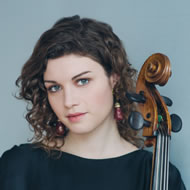
Leonard Elschenbroich has established himself as one of the most charismatic cellists of his generation. His numerous awards and prizes include the Leonard Bernstein Award, the Eugene Istomin Prize, and the Borletti Buitoni Trust Award. He was a BBC Radio 3 New Generation Artist and received the Deutschlandfunk Advancement Award. From 2013 to 2016, he was the first Artist-in-Residence of the Bremen Philharmonic Society.
At the age of five, you heard Bach's C major suite for cello and cried. After that, you wanted to learn to play the instrument. Do you remember that?
I can still picture that moment with the CD player. I was so overwhelmed and disturbed by the feeling. It wasn't a reaction to the emotional expression of the music, but solely to its beauty.
At eleven, you moved from Germany to England to attend the Menuhin School on a scholarship. What was that like for you?
Well, the first few weeks were very tough. Without a mobile phone or internet, you're really very far removed from your parents at boarding school. The hardest part was adjusting to practicing. We had to practice for five hours every day, and until then, I had never practiced for more than an hour. I had to learn that. But children learn quickly. I was only at the Yehudi Menuhin School for three years, but almost all of my current friendships date back to that time. In my memory, the Menuhin School is 'my childhood'.
You come from Germany, also studied in Vienna, and lived in London for several years. Where do you feel at home?
Berlin! I've only lived there for a year and a half, but I feel completely at home. I'm probably not the only musician who feels that way…
You founded an orchestra in Bolivia and travel there regularly for joint concerts. Can you tell us how that came about and what this project means to you?
When I was touring Latin America in 2012, an acquaintance asked me to play a concert in Bolivia with Miguel Salazar (then 27) and his small orchestra. The group consisted of about 15 musicians, none of them over 30. Since they didn't have any wind players, they had to be replaced by a pianist. Unfortunately, there was a hole in the roof of the hall where the grand piano was kept, and it rained into the instrument for days. I was to play Saint-Saëns' Cello Concerto with them, which begins with a single fortissimo chord in the orchestra. When I arrived at the first rehearsal, I was so overwhelmed by the orchestra's performance that I could barely participate myself. The energy, passion, ambition, and burning love for the music were unlike anything I had ever witnessed. From that moment on, I knew these musicians deserved every support they could get, and that I would have to be responsible for providing it, at least for the time being. Miguel handled the artistic and administrative direction alone, while the musicians themselves took care of ticket sales, press relations, venue rental, and so on. There was no established concert series in the city, no subscribers, and yet the concert was not only sold out, but some people waiting in line even had to be turned away.
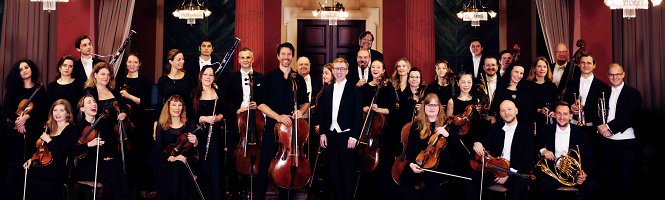
The following year (2013), with the generous support of the Hilti Foundation, we founded the Orquesta Filarmonica de Bolivia. This time, we played with musicians who had traveled from all over the country—La Paz, Tarija, Sucre, Santa Cruz. At our first concert, we were already 50 musicians and played in Cochabamba, a small city at an altitude of 2,500 meters above sea level, before an audience of 500. Just a year later, we were 90 musicians, now including Bolivian emigrants who returned to the country specifically for the concert, from Heidelberg, Oxford, Newcastle, Houston, and Vienna.
This time we played in a hall with 900 seats, and over 1,000 people attended, some of whom had brought their own chairs, while others had to stand. It was a resounding success.
For me, the greatest joy is witnessing the dedication these young musicians bring to these projects. There are many strikes in Bolivia, and often truck blockades on access roads, so the musicians sometimes had to walk long distances with their instruments after a twelve-hour bus journey to reach rehearsals. Just imagine how a European orchestra would react in that situation. These musicians remind us that playing music is a privilege.
Bolivia actually has the oldest classical tradition in Latin America. In the 18th century, the Spanish Jesuits, then living in the Chiquitania rainforest, introduced music and also composed there.
There are so many incredibly good cellists of your generation. Do you maintain any friendships?
My best friend is a cellist (Menuhin School, of course). But otherwise, I've always been drawn to violinists. My circle of friends at the Cologne University of Music consisted of students of Zakhar Bron and Viktor Tretiakov.
You perform a great many concerts all over the world. Can you tell us a few anecdotes about funny incidents backstage or while traveling?
Once, at the end of an intense concert period, just before the summer break, I fell asleep on stage. At the end of the slow movement in the Archduke Trio (Beethoven). My favorite part! Then I woke up during the concert… (but I don't think anyone noticed.)
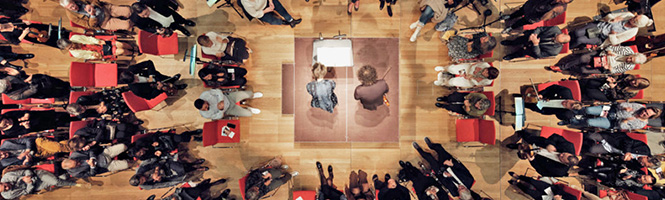
Currently, there are strong efforts to make classical concerts more attractive to young people. You once said that we shouldn't forget older people in this process?
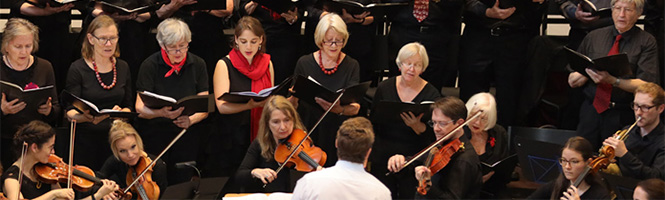
Older people have many qualities that are very well suited to listening: time, patience, life experience. Young people are under a lot of pressure: earning money, realizing their plans, starting a family. They then have to relieve this pressure with "partying," alcohol, and so on. During a Bruckner symphony, you could write many emails or meet people. We have to introduce young people to music, no question. I also do quite a bit in that direction (Latin America, Rhapsody in School, etc.). But the excessive veneration of youth is particularly misplaced when it comes to the classical music audience. I'm happy to see a so-called "gray" audience in the hall. We understand each other.
You advocate for lesser-known works and new compositions. Which composer would you currently like to hear write a new piece for?
Julian Anderson, Sofia Gubaidulina, Thomas Ades, Oliver Knussen...
You're still young. What are your visions and possible future projects?
I've been conducting since last year. I hope to be able to play the cello for as long as possible, but at the same time, my attention is now very much focused on conducting. It's not just the repertoire and the sound, but the physical aspect and the constant learning curve that give me deep joy.
How do you find balance outside of music?
I hike in South Tyrol, where my father comes from. I would consider that a balance. But more important is inspiration. I find that in art, literature about art, and poetry, primarily.
Interview by Florian Schär | Classicpoint.net | July 4, 2017
© Photo: Felix Broede
January 16, 2027 - Leonard Elschenbroich (cello), Alexei Grynyuk (piano)






























































Do you want to attract more visitors to your concerts?
Find out more about the possibilities this portal offers.
With a concert search subscription, you will receive an email for your selected cantons/federal states as soon as a new concert is listed there. You can unsubscribe from the service at any time.
