interview
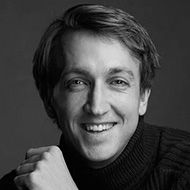
Interview with Fabian Müller
September 30, 2026
"I like to practice at night in the dark, without turning on the light. The silence sounds..."




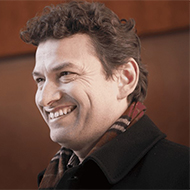
Since 2015, he has curated the Klangantrisch Festival, a crossover festival founded by Treffpunkt, in the village of Riggisberg (Canton of Bern, Gantrisch Nature Park), where he was born in 1970. Prior to its founding, from 2005 to 2012, he was the music director of the Zentrum Paul Klee in Bern. He succeeded Jiří Bělohlávek as chief conductor of the PKF Prague Philharmonia between 2005 and 2008.
In his hometown of Bern, he studied flute (with Heidi Indermühle) and opera and orchestral conducting (with Ewald Körner) while attending school. In Zurich, Basel, Siena, Paris, and as a member of the European Mozart Academy, he received numerous artistic impulses from Aurèle Nicolet, Ralf Weikert, Charles Dutoit, Manfred Honeck, and many others.
As a flautist, he performs numerous concerts with his ensembles "mit vier" and "Ensemble Paul Klee," as well as in a chamber music group with Magdalena Kožená, Sir Simon Rattle & Friends. Their project "Soirée" toured in 2016 and 2019, was released on CD by Pentatone, and will be revived in 2022.
You are active as both a flautist and a conductor. What are the advantages and disadvantages of this dual role?
As a conductor, one should above all be a good musician. I don't really see any disadvantages to pursuing two careers; otherwise, I would have given up playing the flute long ago. At the beginning of my career, managers, concert promoters, and agencies advised me to focus on one thing, as it would be easier to market. Today, I can sell myself as what I am. In the work process, it's a disadvantage for me as a flautist that, as a conductor, I have to tend towards perfectionism, which makes me very unforgiving of myself. But for the result, this is an advantage. Another important advantage: I know very well what it means to master an instrument perfectly, to keep my nerve during a difficult passage, and to stay in shape even with advancing age. I have great respect for the skill and the strain my musicians endure. When the orchestra members know that I am not only a musician but also a good instrumentalist, when they sense that I know what I'm talking about, I can demand a lot from them; the mutual respect is then high, without any need for power plays.
You are also the artistic director of the Murten Classics Festival. What makes this festival so special?
I recently stepped down as artistic director of Murten Classics after 22 years. Since 1999, we had transformed the festival from a weekend gathering among friends into a still very personal, familial, but much larger, now national event with approximately 35 concerts. The program of symphony concerts was always dramatically coherent, but not elitist, because as a non-subsidized cultural organizer, Murten Classics relied on high attendance. In recent years, this has consistently been over 90%. The smaller concert formats (Baroque, vocal, chamber music, and contemporary concerts) allowed us to explore the central theme of the festival in greater depth, and we also wanted to offer more daring programs. During my time in Murten, the program was more important than the performers; that is, we focused less on big names and more on a consistent, yet colorful and vibrant program. There are already plenty of big names with the same old programs.
What are your plans and visions for the festival?
My successor, Christoph-Mathias Mueller, is taking over a festival in top form. I hope he doesn't make changes at any cost, but also that he soon brings in a distinctive profile of his own, because after more than 20 years, a festival needs this kind of change. That was the main reason why I wanted to hand over the festival, not because it no longer suited me or because things had become difficult on a personal level.
You are the music director of the Biel Solothurn Symphony Orchestra. What has the orchestra been doing during the current pandemic?
I am very happy to be part of a team at TOBS (Theater Orchestra Biel Solothurn), excellently led by Dieter Kaegi, which has always wanted to remain active. As early as April 2020, we started giving small balcony and garden concerts for our neighbors, for housing estates, and for retirement homes. Organized privately, but officially announced, documented, and widely discussed in the media. Then we were among the first to go into the studio; at the beginning of June, we recorded the first of three CDs featuring works by the forgotten Swiss late Romantic composer Joseph Lauber (1864-1952). The second CD, recorded in December 2020, will be released soon. During the summer, we played a large number of open-air concerts, and from September onward, we primarily produced works for the theater, with Janáček's first opera, "Šárka," for example, not premiering until May 2021. To this end, we streamed selected concerts, such as the Beethoven concerto with the Queen Elizabeth Music Chapel in Brussels, Schubert's "Unfinished" and Mahler's "Das Lied von der Erde" for the local television station "Telebielingue" in January, we produced a Christmas film, including Christmas carols for viewers to sing along to at home, we ventured into new cinematic territory with Richard Strauss's "Der Bürger als Edelmann," and we recorded several pieces for "NomadPlay," an interesting online format where, for example, an amateur musician or a student might want to practice the clarinet part in a Brahms symphony and can now see and hear the clarinet part on their screen at home, except for the clarinet part itself. Music minus one online. This gives our orchestra a wide reach; NomadPlay has followers from Buenos Aires to South Korea. What was also very important to me during the pandemic were the support programs for young artists. For example, in February, the conducting class from the Zurich University of the Arts (ZHdK) came to us and was able to use all the services of a canceled subscription concert for practice purposes. These young conductors hadn't been able to practice their instruments for a whole year, and we were determined to keep them engaged and playing. A professional orchestra that doesn't perform is like an uninhabited house; it soon becomes dilapidated and in need of renovation. Speaking of houses: During the pandemic, we were able to move into our new orchestra home, the Zwingli Church in Biel-Bözingen. We want to transform this wonderful 1960s church into a vibrant, modern cultural and community center that can benefit the entire neighborhood.
What kind of sound and what qualities are important to you in an orchestra?
The sound is, of course, something very personal. I maintain that the same piece sounds completely different with the same orchestra under two different conductors. I strive for sonic transparency, for stylistic assurance, at least from the Baroque era to contemporary music. The original text is initially far more important to me than my interpretation. I want my orchestra to play with pleasure and enthusiasm, not under unnecessary pressure. A stress-free sound is much more beautiful. One should be allowed to argue in rehearsals, and the word "concert" itself contains the word "argument" ("certo," Latin for: I argue), but also the word "con," suggesting a competition, a joyful contest.
You conduct many Eastern European orchestras. How did this collaboration come about?
When I finished my studies in the early 1990s, Eastern Europe was just beginning to open up; it was a vast new field that opened up to me as a young Western European. I first became aware of this almost limitless potential during my time at the European Mozart Academy in Krakow. While many Eastern European musicians sought their livelihood with Western orchestras, I was given the opportunity at a very young age in Eastern Europe to conduct major symphonic works or to perform as a soloist with national orchestras—something I would never have been offered here. I was able to learn, learn, and learn some more. I was entrusted with great responsibilities at a time when I was still a nobody. For example, the Sibiu Philharmonic (Hermannstadt, Romania) offered me the vacant chief conductor position in 2002. I am incredibly grateful for this and countless other opportunities, and I would like to give something back to these orchestras today. For instance, by continuing to perform with them for a modest fee and perhaps even persuading outstanding soloists to join me for a fraction of their usual salary. This leads to very beautiful, intense encounters and profound shared experiences. Culture must be based on encounters rather than business. I hope we have learned a great deal about this during the pandemic.
Where do you see the main differences between East and West with regard to classical music?
I find this division into East and West obsolete and arrogant after more than thirty years. There is essentially no difference. The mechanisms are exactly the same. The budget gap between the centers or capitals and the regions or provinces is just as large as it is here, although it is precisely in the regions that great ideas sometimes emerge, and creative thinking is particularly encouraged by budget constraints. In communist countries, the discipline, the channeling, the focus on talent from a young age were more pronounced than here, and culture was universally supported by the state, available to everyone as a fundamental right, whereas in Switzerland, it has always been a "nice to have" for good times, something that has to be cut or at least existentially questioned in bad times. On the other hand, culture was never censored here. Even today, in many institutions in ex-communist countries, for example in academia, one still struggles with outdated structures. But many young artists are now returning to their home countries after studying abroad and are slowly but surely reforming the system.
Besides maintaining the standard repertoire, discoveries and rarities are a passion of yours. How do you go about discovering them?
I read a lot, listen a lot, and see a lot; I spend a lot of time in nature. I have many friends and acquaintances who have nothing to do with music. Conversations with them broaden my horizons. Interest comes from "inter esse," being in-between; I'm right in the thick of it, so I don't have to go through any particular process to find what I'm looking for. I practice my profession with passion. That's why I'm a happy person.
What would you consider your greatest musical achievements?
I'm delighted that almost all the orchestras I've conducted have invited me back. It fills me with joy that I've never had a bad exit anywhere I've worked for an extended period, not even after ten or twenty years. And I'm equally delighted to be able to make a difference in a so-called unimportant venue, like performing alongside Sir Simon Rattle at the Berlin Philharmonie or Wigmore Hall. What matters isn't where, but what, how, and with whom. Let's be honest: success is something you have to live for yourself; a career is a matter of mind and heart. After our limited lifespan of 50 to 70 years, what's more important: that we dedicated our entire lives to success, media presence, and the number of likes, or that we were happy, had a fulfilling private life, and could look at ourselves without fundamental shame?
I practice my profession with passion. That's why I'm a happy person.
What visions and goals do you have for yourself?
To keep learning, to keep moving forward, to set high goals, not to forget who I am and where I come from, but never to stop dreaming.
What passions do you have besides music?
Literature is very important to me, as are visual and performing arts. Besides culture, I need a lot of exercise: travel, hiking, cycling, swimming, tango dancing. And always, there's my family and friends. Without them, none of this would be possible.
Interview by Florian Schär | Classicpoint.net | May 11, 2021



























































Do you want to attract more visitors to your concerts?
Find out more about the possibilities this portal offers.
With a concert search subscription, you will receive an email for your selected cantons/federal states as soon as a new concert is listed there. You can unsubscribe from the service at any time.
