
interview
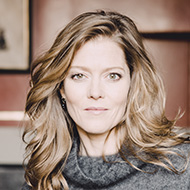
Interview with Barbara Hannigan
July 1, 2026
"I rediscover every piece I sing, again and again, no matter how often I've already sung it..."




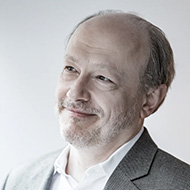
Marc-André Hamelin, born in Montreal in 1961, is one of the most outstanding pianists of our time. He combines his exceptional virtuosity with profound musical sensitivity and a particular curiosity for rarely performed works of the 19th, 20th, and 21st centuries. Alongside the established piano repertoire, Hamelin continually dedicates himself to forgotten or technically demanding compositions, thereby making a significant contribution to their rediscovery. He is also a successful composer; numerous works of his have been published by Edition Peters. His extensive discography comprises more than 90 recordings. Hamelin has received numerous awards and is, among other honors, an Officer of the Order of Canada and a Chevalier de l'Ordre national du Québec.
You are known for performing extremely virtuosic works (e.g., Alkan, Godowsky). What is it about this kind of repertoire that appeals to you?
This repertoire largely belongs to my past now, but it didn't attract me because of its technical difficulty (because I would have wholeheartedly wished it were easier to play!), but because I have always had a preference for orchestrally conceived, dense, and contrapuntal piano compositions, which often come with considerable pianistic challenges. I must very strongly that my motivation did not stem from pianistic self-promotion or a fascination with sheer difficulty, but from my belief in the music itself. If the music hadn't been good to begin with, I would have seen no reason to spend time on it. I must also say that I have long had a great fondness for works such as Janáček's On an Overgrown Path or, for example, everything by Schubert, in which entire emotional worlds – sometimes true wonders – are expressed with great economy of means.
How do you approach technically extremely demanding passages in practice?
Slowly! Step by step! It's important to work everything out gradually and not expect too much too soon. It's also crucial to have a very firm mental grasp of the music.
You have brought many rarely performed composers back into the repertoire. How do you choose such works?
It has to move me, but I also have to feel that it will appeal to the audience as well. I may feel a certain affection for this or that work, but if I think the audience would have difficulty appreciating it, I might be more hesitant to include it in my programs.
You are also a composer – how does your way of thinking as a performer differ from that as a composer?
I consider composing an indispensable tool for performing musicians for several reasons. It helps one feel a little closer to the creator of the works one is performing, and consequently, it helps one make better interpretive decisions. It also helps one to better understand the intricacies of musical notation.
I don't mean to suggest that every musician should also be a composer, but I consider it essential to at least try, to experience what it feels like to put your thoughts down on paper in a way that is understandable to performers. Furthermore, it's crucial to have a solid foundation in harmony, music theory (both written and aural), counterpoint, and analysis—otherwise, your artistic repertoire will remain very incomplete.
When you compose, do you usually start at the piano or in your head—or do you consciously avoid the instrument?
I usually compose without an instrument, but of course I always have to check my work at the piano afterward to make sure I've heard everything correctly internally. It always gives me great pleasure when what I've written ends up sounding better than I had imagined!
Are there moments when you're playing other people's works and think, "I would have composed that differently"?
Yes – and here, too, the same principle applies: as a composer, you're better equipped to be critical in this way. I don't think it's realistic to blindly respect a composer's work.
What triggers the impulse in you to write a new work?
There has to be a very strong initial spark of inspiration, a very strong idea. Without it, I can't do anything – if I sit down in front of a blank page, nothing happens.
What legacy would you like to leave behind as a composer that extends beyond your performances?
I would be pleased if some of my music had contributed to expanding the repertoire. Unlike at the beginning of my composition career, I am now much more interested in writing for other performers than for myself.
Interview by Florian Schär | Classicpoint.net | August 1, 2026
Image Copyright: Sim Canetty-Clarke
August 25, 2026 - Marc-André Hamelin (piano)
August 25, 2026 - SCHUBERTIADE SCHWARZENBERG: Piano recital by Marc-André Hamelin
August 29, 2026 - Marc-André Hamelin (piano)
May 23, 2027 - Marc-André Hamelin (piano), Hamburg Symphony Orchestra, Ryan Wigglesworth (conductor)





























































Do you want to attract more visitors to your concerts?
Find out more about the possibilities this portal offers.
With a concert search subscription, you will receive an email for your selected cantons/federal states as soon as a new concert is listed there. You can unsubscribe from the service at any time.
