
interview
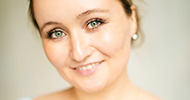
Interview with Julia Lezhneva
August 31, 2026
“Analytical work allows for emotional freedom, while emotional discoveries…”


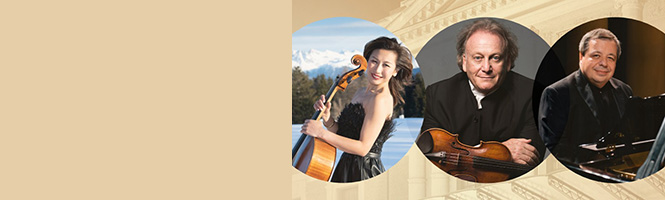




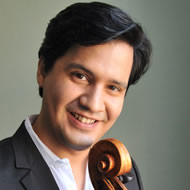
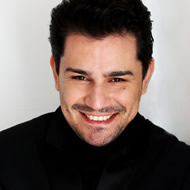
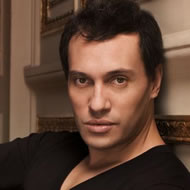
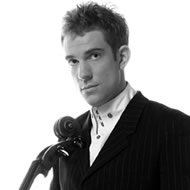
The German-born cellist of Peruvian-Uruguayan descent is one of the most sought-after musicians of his instrument. In addition to his solo career, he is a professor at the Stuttgart University of Music and Performing Arts.
Classicpoint.ch: You were born in Germany, and your parents are from Peru and Uruguay. What is your musical relationship to your South American roots?
My relationship to the music of Peru and Uruguay is excellent. Since childhood, I have regularly and enthusiastically listened to both Peruvian salsa and Uruguayan tango. In recent years, I have also ventured onto the dance floor more often to learn both tango and salsa. Unfortunately, I hardly have any time for it, but I can only recommend it! It's worth mentioning that the world's most famous tango, "La Cumparsita," doesn't actually originate from Argentina, as one might assume, but was composed by the Uruguayan composer Matos Rodríguez.
Your parents are both professional musicians as well. How much of a role have they played in your career?
My parents exposed me to classical music from my earliest childhood. I still vividly remember being forced to listen to "The Magic Flute" twice in a row when I was six, enthusiastically singing along to the large LP booklet.
When I started playing the cello, my parents were a great support with my daily practice, and my mother, a pianist, accompanied me from the very beginning. I never felt pressured to become a professional musician, but there was one crucial condition. My parents wanted me to dedicate myself to learning the cello every single day—practice! If I didn't comply, the cello would be taken away without further discussion. I was just seven years old. Naively and highly motivated, I immediately agreed. A few weeks later, the day came when football was more important to me than practicing the cello, especially since it was a sunny summer day, and my school friends had spontaneous plans to meet up after school, including me. My parents insisted on the agreed-upon condition, and naturally, I wasn't keen. They replied that they would take my cello away, and, being the defiant person I was back then, I stormed off to my room, determined to go straight to football practice. After the short walk to my room, however, I realized I didn't want to give up my cello, so I sat down, practiced my assigned pieces, and then went to football satisfied. I often think back to this episode and am very grateful to my parents. That's how I learned discipline and/or self-discipline at a very early age, without even knowing what the word meant at the time. This was, of course, incredibly helpful for my development.
You were a student of Boris Pergamenschikow, later a visiting professor at the Hanns Eisler School of Music in Berlin. What was the transition like from student to teacher at the same institution?
That was ten years ago now, and I didn't find it to be a major adjustment. My long-time teacher and mentor, Professor Boris Pergamenschikow, provided enormous support during my studies, and it was always important to him to encourage his students to develop into independent artists with their own opinions.
Although his early death made it all too brief, it was a special time to teach alongside him, and we always had an active exchange of ideas. Even today, I think of him in every lesson I give and take great care to pass on the principles he championed to my students.
You now teach as a full-time professor at the Stuttgart State University of Music and Performing Arts. In what ways do you differ from other cello professors?
Well, that's inherent in the uniqueness of every individual. Therefore, this question would be better posed to my students or to participants in my previous masterclasses. :-)
Together with the painter Klaus-Peter Kirchner, you developed the installation project "Space for Pablo Casals" as a tribute to the great cellist. What exactly was it, and how did it come about?
When I won first prize at the Casals Competition in Kronberg in 2000 and, as a result, had the opportunity to play Pablo Casals' famous Goffriller cello for two years, I became very familiar with the various biographies of Pablo Casals. What struck me most was how strong a personality he possessed and how he championed freedom of expression, democracy, and fraternity in his time. Klaus-Peter Kirchner and I wanted to create a musical and artistic memorial to this with an installation and a concurrent live concert.
What are your interests besides the cello and classical music?
Tango and salsa dancing, yoga, meditation, jogging, and a great passion for football, both as a player and as a spectator.
What are your future musical plans?
Currently, I'm busy intensively researching the major standard works of Bach, Beethoven, and Brahms in the cello repertoire and will therefore be planning recordings in two to three years at the earliest.
This season, I'm engaged at various concert venues around the world, including the Konzerthaus Berlin, the Beethovenfest Bonn , and also the Beethoven Festival in Warsaw, the Casals Festival in Puerto Rico, and with the Fort Worth Symphony Orchestra in Texas. At the same time, I hold a professorship at the Stuttgart University of Music and Performing Arts and regularly give masterclasses at various events. It's important for me to maintain a good balance between my own performances and teaching.
Interview by Florian Schär | Classicpoint.ch | December 2, 2013
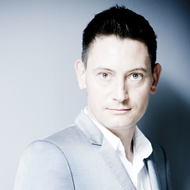
Photo: Neda Navaee
02/14/2027 - Oscar Bohórquez (violin), Claudio Bohórquez (cello)


























































Do you want to attract more visitors to your concerts?
Find out more about the possibilities this portal offers.
With a concert search subscription, you will receive an email for your selected cantons/federal states as soon as a new concert is listed there. You can unsubscribe from the service at any time.
