

interview
Interview with Elena Stikhina
June 1, 2026
“The Zurich Opera House has a very special meaning for me.” Elena Stikhina is…


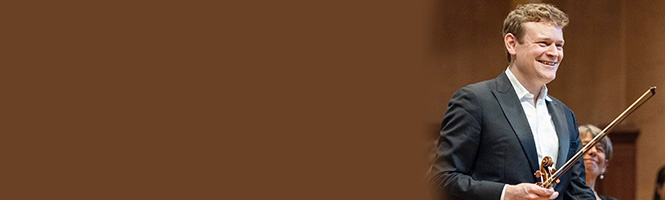


Philippe Tondre was born in 1989 and began playing the oboe in his hometown of Mulhouse, France, with Yves Cautres before studying with David Walter at the Conservatoire National Supérieur de Musique in Paris. His professional career began while still a student at the age of 18, when he was appointed principal oboist of the SWR Symphony Orchestra Stuttgart. He has also been invited to serve as principal oboist with leading orchestras, including the Royal Concertgebouw Orchestra Amsterdam, the Budapest Festival Orchestra, and the Bavarian Radio Symphony Orchestra. In 2010, Seiji Ozawa selected him as principal oboist of the Saito Kinen Festival Orchestra, now known as the Seiji Ozawa Festival Orchestra. His total dedication to the oboe and his constant desire to become a better musician led to five intense and challenging years of participation in international competitions. Undoubtedly, one of his greatest moments was winning the ARD International Music Competition in Munich in 2011 and being awarded the prestigious Beethoven Ring – a musical honor bestowed by the Beethovenfest in Bonn. In 2016, he was appointed principal oboist of the Leipzig Gewandhaus Orchestra. In 2020, he became principal oboist of the Chamber Orchestra of Europe and won the coveted position of principal oboist with the Philadelphia Orchestra under the direction of Yannick Nézet-Séguin. In 2022, he was appointed professor at the Curtis Institute of Music in Philadelphia.
You became principal oboist of the SWR Symphony Orchestra while still a student. What was that start to your professional life like?
Becoming principal oboist of the SWR Symphony Orchestra while still a student was an exciting and formative experience. It was an incredible honor to hold such a prominent position at such a young age, but it also came with a great deal of responsibility. Balancing my studies and the demands of professional life required discipline and a steep learning curve.
I was incredibly fortunate to have exceptional colleagues who welcomed me with open arms and were patient enough to work with a young newcomer. Their support and generosity allowed me to grow into the role and develop both my skills and my confidence. Working with such accomplished musicians was inspiring and helped me mature quickly as both a musician and a team player. Looking back, I am very grateful for this opportunity—it shaped my approach to music-making and instilled in me a lifelong pursuit of excellence.
Three years later, Seiji Ozawa appointed you principal oboist of the Saito Kinen Orchestra. How did you experience the culture and the people of Japan?
Three years into my professional career, Seiji Ozawa's appointment as principal oboist of the Saito Kinen Orchestra was a significant milestone for me. It not only gave me the opportunity to work with one of the most inspiring conductors of our time but also introduced me to Japan's rich cultural heritage and the warmth of its people.
My connection to Japan began through music, but quickly extended far beyond that. Working with the Saito Kinen Orchestra was like becoming part of a family – there was an incredible sense of camaraderie and shared purpose among the musicians. Outside of rehearsals and performances, I immersed myself in Japanese culture, exploring the country's art, history, and cuisine, and experiencing the deep respect and care that are part of everyday life in Japan.
What impressed me most was the emphasis on harmony and the love of detail in all aspects of Japanese culture, something that deeply resonated with my own approach to music. These experiences not only enriched my personal life but also profoundly shaped my perspective as a musician. Japan remains a special place for me, both professionally and personally.
Seiji Ozawa was more than a conductor to me—he was a mentor and almost a father figure. His dedication, his vision, and his humanity were endlessly inspiring, and his belief in me gave me the confidence to develop both as a musician and as a person. He taught me invaluable lessons about music, leadership, and humility, and his influence continues to this day. Working with him was a privilege and an experience I will always cherish.
In 2016, you then joined the Leipzig Gewandhaus Orchestra as principal oboist. What were the differences compared to your previous orchestras?
Joining the Leipzig Gewandhaus Orchestra as principal oboist in 2016 was an extraordinary experience. The Gewandhaus Orchestra has a remarkable tradition spanning over two centuries, and being part of such a prestigious institution was both humbling and inspiring.
One of the most significant differences from my previous orchestras was the Gewandhaus Orchestra's unique sound tradition. The orchestra's sound possesses a distinctive warmth and depth, rooted in its long-standing relationship with composers such as Mendelssohn and Brahms. Adapting to this distinctive sound world was both a challenge and a privilege, as I had to refine my own playing to blend seamlessly into the ensemble while simultaneously contributing my own voice as a solo oboist.
Furthermore, the Gewandhaus Orchestra's close ties to its home city of Leipzig fostered a deep sense of community. The connection with the audience felt very personal, as if the orchestra were an integral part of the city's cultural identity. This differed somewhat from the more international focus of other orchestras I had played with and lent the performances an incredibly meaningful and intimate dimension.
Every orchestra has its own character, and the emphasis on tradition and the team spirit at the Gewandhaus taught me a great deal about the importance of heritage and how music connects us to the past while simultaneously inspiring the present.
Then, in 2020, came the move to the Philadelphia Orchestra as principal oboist. How did you experience the cultural differences in America?
Joining the Philadelphia Orchestra as principal oboist in 2020 was an exciting step in my career, but it also presented new challenges—particularly adapting to a different cultural environment. The United States has a unique musical culture that emphasizes both individual expression and collective collaboration. There is a very strong awareness that the musician's voice is an integral part of the orchestral fabric, and I quickly felt that in Philadelphia.
One of the most striking differences for me was the openness to experimentation and innovation in the American music scene. There's a willingness to explore new interpretations, push boundaries, and try things that might not be so common in more traditional European institutions. At the same time, there's a deep respect for the classical tradition, and I've found a real balance between honoring the past and embracing the present.
All in all, the move to the Philadelphia Orchestra was enriching in every respect. It's not just about the musical differences, but also about how those differences reflect the values and spirit of the culture here in the USA.
In the meantime, you won some important competitions that served as a springboard for your parallel solo career. Which competition was the most important for you, and what was it like?
Competitions have been an important part of my musical journey, and each one has taught me invaluable lessons. If I had to choose the most significant, it would be the 2011 ARD International Music Competition in Munich. Winning this prestigious competition was a pivotal moment in my career, as it opened many doors for me and established me on the international stage.
Preparing for and participating in such a prestigious competition was an intense experience. It required months of dedicated practice and concentration, not only to perfect the repertoire but also to develop the mental fortitude needed to perform under pressure. The ARD Competition was particularly challenging because it highlighted both soloists and chamber musicians. It allowed me to demonstrate my versatility and my ability to connect with other musicians – skills I still draw upon today.
Aside from the technical and musical demands, this competition was particularly significant because it offered me the opportunity to reach a wider audience and meet exceptional musicians from all over the world. Winning was a validation of my years of hard work, but even more importantly, it provided me with a platform to showcase myself as a soloist to a larger audience. That was a pivotal moment that shaped my path as an orchestral musician and soloist.
You also teach as a professor at the Curtis Institute of Music in Philadelphia. What do you look for when selecting your students?
Teaching at the Curtis Institute of Music is a very fulfilling part of my career. Curtis is known for its tradition of excellence and for producing some of the best young musicians in the world, so the selection process is both rigorous and meticulous.
When selecting students, I pay particular attention to their musicality and potential. Of course, a solid technical foundation is important, but what truly impresses me is their ability to convey something that transcends the notes on the page – be it through phrasing, tone color, or an emotional connection to the music. I look for individuality, for that spark of creativity and curiosity that demonstrates their readiness to develop further as artists.
Another crucial quality is their dedication. Being a musician requires not only talent, but also an exceptional work ethic and resilience. I want to work with students who are passionate and open-minded, and who are willing to work hard to hone their craft and develop their unique voice.
Finally, I value teamwork. Music is a shared experience, and at Curtis, where chamber music and ensemble playing are integral parts of the curriculum, it's important that students can collaborate with others in a meaningful and respectful way. My aim is to develop well-rounded musicians who are not only technically proficient but also artistically reflective and ready to contribute to the world of music.
I read that you also go jogging with your students. Do you try to build a class as a team, or does that come from the students?
Yes, it's true that I go jogging with my students! I believe that building a sense of community and camaraderie within the class is just as important as focusing on individual development. Music can be very competitive, but it's also deeply collaborative, so I try to create an environment where students can support and inspire one another, both inside and outside of class.
Jogging together—or simply spending time in a relaxed atmosphere—helps break down barriers and creates a space where we can connect on a more personal level. It's not just about physical activity; it's also about building trust, fostering open communication, and creating a sense of belonging. However, team spirit also arises naturally from the students themselves. They bring their own energy and personality to the group, and I'm fortunate to have classes that genuinely enjoy working together and growing as a group.
Ultimately, I see my role not only as teaching oboe, but as helping my students become well-rounded musicians and individuals. Whether jogging, playing chamber music, or in studio discussions, I try to create an atmosphere where everyone feels encouraged to contribute, collaborate, and inspire each other to achieve their best.
What do your students prefer: a solo career or a position in an orchestra? What do you recommend?
My students have different goals—some dream of a solo career, others would prefer to play in an orchestra. At the Curtis School of Music, we encourage both paths, as well as chamber music, teaching, and other creative ways to build a career in music.
My recommendations depend on the individual student. A solo career requires not only exceptional playing but also strong artistic self-confidence, independence, and the ability to thrive in a highly unpredictable environment. A position in an orchestra, on the other hand, demands great adaptability, teamwork skills, and the ability to blend seamlessly while maintaining one's own voice. Both paths are rewarding in their own way, and I always advise my students to remain open-minded, as careers often take unexpected turns.
More importantly, I encourage them to gain diverse experiences during their training—whether by participating in solo competitions, playing in orchestras, or forming chamber music ensembles—so they can discover what truly inspires them. The most fulfilling career is the one that aligns with their passions and strengths, whether as a soloist, an orchestral musician, or a combination of both.
You're still young; what are your musical goals and ambitions?
I feel incredibly fortunate to have experienced so many different aspects of the music world—performing as a soloist, playing in incredible orchestras, and teaching the next generation of musicians. My biggest goal for the future is to continue developing as an artist and to find new ways to share music with audiences.
One of my goals is to expand the oboe repertoire by promoting lesser-known works and collaborating with composers to create new music. The oboe has such a rich and expressive sound, and I want to contribute to its further development by opening up new perspectives for this instrument.
At the same time, I would like to further deepen my artistic collaborations, be it through chamber music, recording projects, or interdisciplinary works that combine music with other art forms. And of course, teaching remains an important part of my life – I hope to continue inspiring and guiding young musicians as they find their own path.
Ultimately, my goal is to discover, learn, and share my love of music in as many meaningful ways as possible.
What are your passions outside of music?
Music is a big part of my life, but I also have passions outside of music that inspire and balance me. I love sports and being active—whether it's swimming, jogging, cycling, or hiking, being outdoors helps me recover both physically and mentally. Swimming is essential for me.
Furthermore, I greatly appreciate the visual arts. My sister and I share a passion for painting and drawing, and I find that visual creativity is a different, but equally powerful, form of expression. Travel is another great passion of mine – discovering new cultures, meeting people from diverse backgrounds, and experiencing the world's rich artistic and culinary traditions constantly inspires me, both personally and musically.
Ultimately, I think that my passions outside of music help me to stay open and creative, and that they often influence how I approach my playing and teaching.
Interview by Florian Schär | Classicpoint.net | June 1, 2025
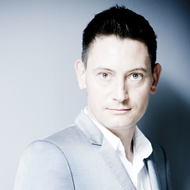
© Image: Philippe Tondre




































































Do you want to attract more visitors to your concerts?
Find out more about the possibilities this portal offers.
With a concert search subscription, you will receive an email for your selected cantons/federal states as soon as a new concert is listed there. You can unsubscribe from the service at any time.
