

interview
Interview with Julia Lezhneva
August 31, 2026
“Analytical work allows for emotional freedom, while emotional discoveries…”


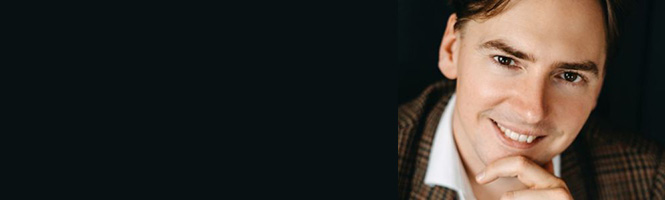


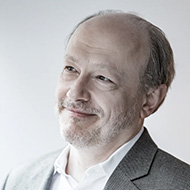
Sir James Galway is considered one of the most important classical flautists of the late 20th and early 21st centuries. His discography comprises more than fifty records and CDs. The Belfast-born artist, who now lives in Switzerland, is often called "the man with the golden flute".
How did you actually come to play the flute?
Well, my father played the flute, my grandfather played the flute, my Uncle Joe played the flute and learned it from my grandfather, and many other people who lived in my neighborhood played the flute. So I thought that I should play the flute too.
You are also called "The Man with the Golden Flute." How important is the instrument itself? Are your instruments specially made?
The flute I currently play was made by an American company run by a Japanese flute maker named Kanichi Nagahara. I think the instrument is very important, and I am convinced that the flute I play was made using the most advanced and best techniques. It has a wonderful tone, mainly because the flute maker has a good idea of how the flute should sound, and he knows how the headjoint needs to be crafted to achieve that sound.
You played as principal flutist with the Berlin Philharmonic under Herbert von Karajan for six years. What was it like working with Karajan?
I could talk all day about my time with the Berlin Philharmonic under von Karajan. It was a wonderful experience, and von Karajan was a truly fierce conductor. What was so great about him was that he had conducted everything so many times before. Of course, he conducted many operas. When he conducted an opera, it was as if he were revisiting familiar landscapes. It just flowed.
I remember when I once recorded La Bohème with Pavarotti for Decca. Pavarotti was still quite unknown at the time, and none of us had heard him. Karajan introduced him as a "heavyweight world champion." When he started to sing, it was breathtaking!
I also remember when we rehearsed Strauss. When things started to drift apart at one point, Karajan said to a horn player: "I would like you to play this passage like this." And the horn player looked him straight in the eye and said: "No, I play it like this for Richard Strauss and I won't change it for you!" Karajan then simply said: "Well, what can I say to that?"
Do you sometimes miss playing in the orchestra?
No, not at all. I left the orchestra at the right moment. I was ready for it, and it was the right thing for me. It wasn't a sudden stop. Rather, it was as if I had gradually exhausted all the possibilities within the orchestra, and a new beginning was waiting for me: I left the orchestra as an established flautist.
They also play many non-classical styles. What do you like besides classical music?
I like classical music best. The level of performance is highest in classical music. There are a few exceptions, some amazing bands like Pink Floyd, the Beatles, and a few other great rock bands. You know, the Beatles didn't just appear out of nowhere. They played hundreds and hundreds of concerts before they became famous and recorded CDs. It's all about experience. When you hear someone like Pavarotti or Joan Sutherland sing, it's simply astounding. They have so much experience, and you can hear and feel it in their performances.
You've played with world-famous pop and rock stars. Did any personal friendships develop as a result?
Not really, because you simply get together for the occasion. The exception is John Denver. A deep friendship developed with John. My wife and I even played at his wedding.
How do you prepare for a performance immediately before a concert?
I spend the last hour before a concert practicing in my dressing room. Practice brings perfection. I practice for many hours every day. You can't stop practicing, even if you're the best. You have to keep practicing constantly to remain the best. Otherwise, it's like a bicycle that you no longer ride; it rusts.
You've played almost everywhere in the world. Which concert halls do you like best?
That's difficult to say. There's a great hall in Champagne (Illinois, USA), for example, and a good one in Ann Arbor (Michigan, USA), and the Detroit Symphony Orchestra has a wonderful concert hall of its own. There are many concert halls that are better than some of the well-known ones.
Does the audience in Europe differ from that in the USA, or are there already noticeable differences in audience behavior within Europe?
No, I don't think there are any differences. Because of my reputation as a flautist, there's an extremely high level of interest from flautists, who often travel many miles to hear me play, which is truly wonderful.
What does James Galway actually do in his free time?
Interviews like this one! I love listening to music, playing chess, working on the computer, and I really enjoy cooking with my wife on weekends.
Interview by Florian Schär | Classicpoint.ch | April 3, 2012




































































Do you want to attract more visitors to your concerts?
Find out more about the possibilities this portal offers.
With a concert search subscription, you will receive an email for your selected cantons/federal states as soon as a new concert is listed there. You can unsubscribe from the service at any time.
