

interview
Interview with Julia Lezhneva
August 31, 2026
“Analytical work allows for emotional freedom, while emotional discoveries…”




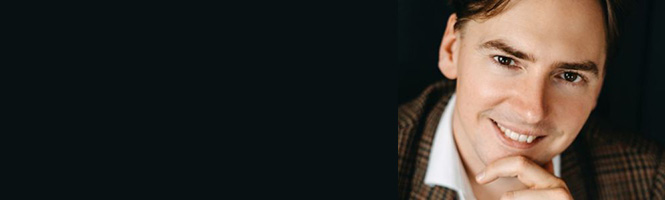


Gwendolyn Masin is one of the leading concert violinists and innovators of contemporary classical music. She performs internationally as a soloist and with other
musicians, artists, and orchestras. Her live recordings and tours include concerts with the National Symphony
Orchestra of Ireland, the RTÉ Concert Orchestra of Ireland, the Hungarian National Philharmonic, the Hungarian Chamber Orchestra, the Savannah Philharmonic
Orchestra, the Georgia Philharmonic Orchestra, and the Bern Symphony Orchestra. Her international career has taken her across Europe, to the USA, Asia, South Africa, and
the Middle East.
As a commissioner of contemporary music, you have premiered many works. How do you choose the composers?
I have performed as a solo violinist since childhood. My first public concert in a large hall took place in Budapest at the Liszt Ferenc Academy when I was six years old. On that occasion, I met a composer in person for the first time. My mother, a Hungarian violist, introduced me to her friends Marta and György Kurtág. Their remarkable personalities impressed me. György excitedly told my mother about his latest composition, and I loved the energy and passion with which he spoke. Later, my parents showed me some of his pieces and played a few for me. I sensed in them the same playfulness, audacity, and curiosity that Kurtág embodies.
Years later, in my late teens, an idea dawned on me while I felt lonely in a hotel room during a tour in Mexico. While practicing somewhat aimlessly, I remembered Kurtág and wondered if composers who work in solitude also experience this feeling of isolation. And then it dawned on me that performing music is a conversation with a composer and their ideas, which are expressed through the music.
Since then, whenever I meet composers I'd like to collaborate with, I make a point of engaging in conversation and taking ample time for an exchange of thoughts and opinions. The connection between the person and their music allows me to be "right in the middle," a point where, as a performer, I can get as close to the music as possible, and one to which I hope I can also bring the audience.
Do you give guidelines for commissioned compositions and guide the creative process?
It varies from case to case. When the Irish composer John Buckley wrote his first violin concerto, which I had commissioned, I was heavily involved, right down to the cadenza, which we partly built upon my improvisations. When commissioning works for the GAIA Music Festival, I try to provide a framework or theme and the ensemble, while giving the composer as much freedom as they feel they need. When Dobrinka Tabakova was composer-in-residence at GAIA, she initially developed works around the musicians she knew would be participating, tailoring some of her compositions specifically to them. We performed one of her pieces as a duo, and it made me realize how significant the role of the dedicatee is in her works.
You are the founder and musical director of the GAIA Music Festival. What makes this festival stand out?
Many things, I think. The themes of diversity, sustainability, and equality have been important to us from the very beginning. Even the festival's name hints at this. Gaia, born from chaos, is the primordial Greek goddess in the form of the earth.
The festival aims to create unique and vibrant interpretations. They come from musicians who come together for ten days to develop a repertoire. And instead of emphasizing cultural outreach to the point of it becoming an empty necessity, we've connected with the residents of the village of Oberhofen and our other venues from the very beginning. We collaborate on projects, open our doors during rehearsals, engage in conversation with our audience, and exchange ideas at small salon evenings. I invite artists who want to connect with others, who reflect the realities of our society.
The festival is coming up soon; what are your personal highlights this year?
There will be many things I'm looking forward to. The revival of the stage production "The Journey," which I developed with Lukas Bärfuss. The concert with Amandine Beyer, in which Baroque and Renaissance music meet Schoenberg's "Verklärte Nacht" (Transfigured Night). Works by lesser-known composers like Bodorová, Ben-Haim, and Bacewicz, but also familiar pieces: Beethoven's Septet or one of Mozart's piano concertos.
You launched the multidisciplinary series "In Search of Lost Time" in 2004. Can you tell us about it?
Having started performing so young, at 23 I was hungry for connection, collaboration, and to give the other art forms I love a way into my stage life.
I embraced the idea of multidisciplinary performances early on. "In Search of Lost Time" is an example of this, and it has undergone some changes since then. Originally, it combined classical music with theater, literature, dance, and lighting design in unusual spaces; later, contemporary music was added.
The series took place in Ireland and Switzerland and is now on hold in favor of other productions that have captured my interest.
You were invited to conceive and curate the "Cocktail for the Muses" series for the Casino Bern and to perform at each concert yourself. The result is elaborate, unique productions featuring classical music and other musical genres and art forms. How did this idea come about?
After the Casino Bern underwent extensive renovations, their cultural department invited me to create this series. Casino Bern wanted to attract a wider audience, one that would extend beyond their existing clientele. I thoroughly enjoyed directing the series from 2018 to 2023. We held up to three events per year. For example, at the first event, I performed with my ORIGIN Ensemble alongside Andreas Schaerer, Kalle Kalima, and Wolfgang Zwiauer. Among other things, Bach encountered improvisations, jazz, and newly composed works. These were magical moments that still resonate and can be viewed on YouTube.
You are a frequent keynote speaker, often with your violin in hand. What do you enjoy talking about most?
I'm an enthusiast – I can quickly become passionate about topics ranging from music to other art forms, science, politics, or history. Invitations to give lectures usually came as part of recitals, and in some cases, I had the opportunity to speak to people with little to no experience of classical music. On the one hand, this is very exposed, as with TEDx, but on the other hand, it's also a fantastic process to engage in, and one that is enormously fulfilling.
You have developed your own teaching method, and your book, "Michaela's Music House, The Magic of the Violin," has won awards. What are the key aspects of your teaching method?
Probably the active engagement of the imagination from a very early age, a thorough approach to the mechanics of playing, and the deep conviction that music students should achieve independence from their teacher as quickly as possible. The sooner a student leaves my classroom with a critical mind, ready to embark on their own musical adventure, the greater my sense of accomplishment.
In your doctoral dissertation, you presented a chronicle of the contemporary history of the violin and examined the similarities and differences within 20th-century violin pedagogy. What are your most important findings?
That's difficult to summarize. The work is over 200 pages long and discusses more than 20 theses by leading violinists, starting with Geminiani in 1751, through Spohr, Baillot, de Bériot, and David, to Menuhin and Bron. It includes interviews with leading figures in violin playing, some of whom were my teachers: Ana Chumachenco, Zakhar Bron, Shmuel Ashkenasi, Herman Krebbers, Boris Kushnir, Nora Chastain, and Maxim Vengerov. There's a treasure trove of tips on technique and movement that they shared in their interviews.
I recommend that anyone who loves their violin and wants to know how the great pedagogues of the last 270 years taught download my dissertation. It's available for free on the Trinity College website, where I earned my doctorate.
What are your current projects?
I'm touring as a soloist with the Hungarian Anima Musicae Chamber Orchestra, preparing programs for the 2025/26 season, and working on developing a solo recital program as well as further developing "The Journey" with Lukas Bärfuss. I'm also quietly learning the art of conducting from fantastic conductors.
What do you do besides music?
Many things, I enjoy them. But somehow, everything I do eventually becomes part of what ends up on stage. I'm a mother, I love being active, I write and read a lot, I love being on the go, and I have an insatiable curiosity and a great interest in meeting people. An enthusiast, in short.
Interview by Florian Schär | Classicpoint.net | April 1, 2024
Photo: Balazs Borocz
November 27, 2026 - Coda – The Final Masterpiece (GAIA)
November 29, 2026 - GAIA Matinee on Sunday,
November 29, 2026 - Death and the Maidens (GAIA)



























































Do you want to attract more visitors to your concerts?
Find out more about the possibilities this portal offers.
With a concert search subscription, you will receive an email for your selected cantons/federal states as soon as a new concert is listed there. You can unsubscribe from the service at any time.
