interview
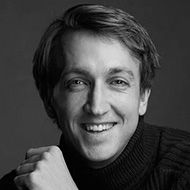
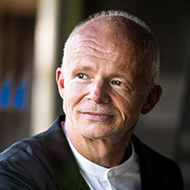
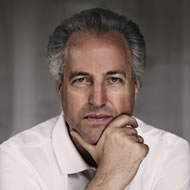
Interview with Fabian Müller
September 30, 2026
"I like to practice at night in the dark, without turning on the light. The silence sounds..."


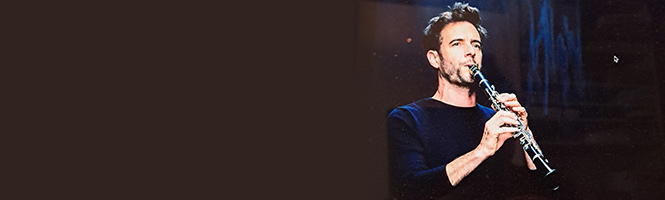
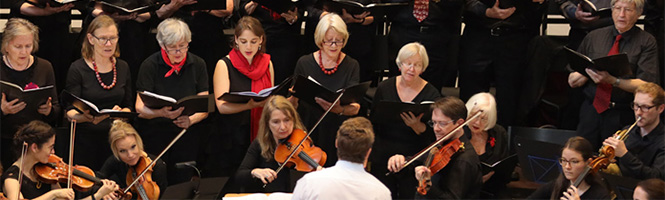


Jacobs studied philology at the University of Ghent and simultaneously took singing lessons with Louis Devos and Alfred Deller. Before devoting himself entirely to music, he taught Latin and Greek for three years. In 1977, he founded the vocal ensemble Concerto Vocale Gent. During his career as a singer in the 1970s, he performed with musicians such as Alan Curtis, Nikolaus Harnoncourt, Gustav Leonhardt, and Sigiswald Kuijken. He subsequently appeared as a conductor at numerous festivals, including the Innsbruck Festival of Early Music.
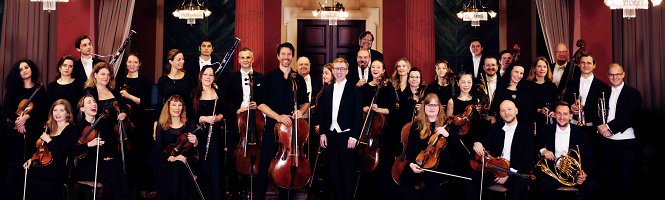
Jacobs is known as a specialist in the historical performance practice of early music and Baroque operas . As a conductor, he collaborates with renowned orchestras and ensembles such as Concerto Köln, the Akademie für Alte Musik Berlin, the Freiburg Baroque Orchestra, the B'Rock Orchestra Gent, the Netherlands Chamber Choir, and the RIAS Chamber Choir.
Since 1988, Jacobs has conducted at the Centre de musique baroque de Versailles. He also taught at the Schola Cantorum Basiliensis. From 1997 to 2009, he was artistic director of the Innsbruck Festival of Early Music.
As a conductor, he completed the instrumental parts and vocal ornamentation in several Baroque operas. Numerous recordings of his work are available on CDs and DVDs. Among other accolades, he received the 2005 Classical Grammy Award for Best Opera Recording for his performance of Mozart's The Marriage of Figaro. His contribution to the international reception of Telemann's music was recognized in 2008 with the Georg Philipp Telemann Prize. He recorded Beethoven's opera Leonore in its original version with the Zurich Sing-Akademie . According to Eleonore Büning, Jacobs proved himself to be "the fastest Beethoven opera conductor in the history of recorded music."
You initially studied philology and then taught Latin and Greek for three years; how did that influence you?
I was very glad I did that. Whenever I encounter a new piece, I ask about its sources. Greek and Latin are helpful with Baroque operas, as the themes often come from mythology. I was always happy to have that knowledge to share.
After that, they studied singing and now conducting; what prompted them to take this step?
It was a process. As a singer, I'd performed a lot of repertoire, vocal chamber music, and chamber music with voices. Then I came across a 17th-century Baroque opera. I thought to myself, "This is so interesting, and nobody's performing it." So I brought it to the early music festival, and it was a resounding success. At the first few performances, I conducted and sang, but that couldn't go on forever. Eventually, a colleague of mine took over the singing. A lot came out of that, including things I never would have imagined.
Are you considered a specialist in performance practices of early music and baroque operas?
Those are three words I dislike. For me, "old music" means that for Mozart, Handel's works were old. It's worth mentioning that this term only emerged during that period. However, only two generations separated them. Clearly, the temporal distance makes a difference. But historically informed performance practice has always been very important to me. My early work was in this field, and I learned a great deal about performance practices through various collaborations.
This shouldn't be an excuse for a lack of imagination, though. And I'm not a specialist. Much of what I'm doing now comes from later periods. I approach older pieces as if they were new. In doing so, I always try to break free from old performance traditions. I study the piece, not just the music. First, I examine the libretto, because that's the source, and it reveals a great deal about the composer. You can discover many new things in it.
You have recorded a series of new works for harmonia mundi, featuring long-forgotten pieces. How did you come across these works?
Very little of what I recorded—and there was a great deal—I found in the original historical sources. People don't understand how much of this music has been published in modern times. Musicology as a discipline began as early as the 18th century. Various works were already being published back then, for example in newspapers. You can find, for instance, so-called commemorative editions of composers' works in libraries. There are also 20th-century editions of facsimiles, including 40 series from the 17th century in Italian.
You've also published a book called "I Want to Retell Music." How did that come about, and who would you recommend it to?
This was a collaboration, but not a traditional book; it was more of a long interview with Silke Leopold, a well-known German musicologist. A woman who can explain things very well.
It deals with various unexpected aspects. For example, that I first fell in love with Schubert's music.
You've made an incredible number of recordings. Are there any recordings you regret now?
There are recordings I've already forgotten. There are also recordings I no longer have myself. But they're all children, and just as a father can't or won't say who his favorite is, neither can I.
You mentioned that you're also interested in contemporary music. Now you're returning to Schubert, but are you also interested in very current works?
I'm not focused on that in the sense that I intend to delve deeply into music being composed today. Early music, even though, as I said, I don't like that term, continues to evolve throughout music history. In that sense, my projects are ongoing, but due to my age, I'll never get to contemporary music. However, the music being composed today, which can often be very complex, represents only a tiny percentage of the music produced today. Genres like rock, pop, and rap dominate. I have a big problem with that because this music is so heavily marketed and, purely musically, very trivial, and beats are often confused with rhythm.
As an opera conductor, you work with directors. Have there ever been moments when a collaboration fell through?
No, because if you manage to create a good working relationship and both parties are on the same wavelength, then a production can be a wonderful thing. But if I get the impression that the director doesn't want to or can't read the piece, then it's important to intervene in time. You mustn't forget, an opera rehearsal period lasts six weeks, which is a long time. That would be an incredible waste of time. At the moment, I'm doing few productions, but more and more concerts. The last tours were always in four different cities, so you had to be flexible. But such fantastic pieces came together that people at concert performances often said they understood more than at a staged production.
Is there a musical experience that was particularly special for you?
What impressed me most as a child was the first performance of Bach's St. Matthew Passion. It was a performance in Geneva Cathedral, where I sang in the boys' choir. It was the first time I had ever seen an orchestra and been able to experience the whole process. That influenced everything. Music became the most important thing to me, even during my philology studies.
Do you have any future-oriented projects?
There's a lot I want to do, and some things I will do. This year I'm doing another full-scale opera production at the Berlin State Opera, a Vivaldi piece. I also have a project planned with Brahms' Requiem, a favorite of mine. It would be a shame to die without realizing that.
Next up is the Gstaad Menuhin.
Yes, but the church is very narrow, especially for such large pieces. With a 40-person choir, it will be a challenge. I wonder how it will sound.
Interview by Florian Schär | Classicpoint.net | May 31, 2021
November 27, 2026 - "Harmony Without End" – Basel Chamber Orchestra
April 26, 2027 - Salieri: Falstaff ossia Le tre burle (concert performance)
April 28, 2027 - Salieri: Falstaff (concert performance)
May 19, 2027 - Sophie Rennert (mezzo-soprano), Bernhard Forck (violin), Academy for Ancient Music Berlin, René Jacobs (conductor)
May 28, 2027 - Handel: La Resurrezione di Nostro Signor Gesù Cristo HWV 47




























































Do you want to attract more visitors to your concerts?
Find out more about the possibilities this portal offers.
With a concert search subscription, you will receive an email for your selected cantons/federal states as soon as a new concert is listed there. You can unsubscribe from the service at any time.
