
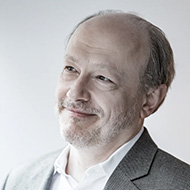
interview
Interview with Marc-André Hamelin
July 31, 2026
“I consider composing an indispensable tool for performing musicians.”…





Regula Mühlemann from Lucerne is currently taking the opera world by storm. Besides the operatic repertoire, Regula Mühlemann also dedicates herself to art song. She has received numerous awards.
Do you remember the first opera you ever heard?
Yes, it was at the Zurich Opera House, a performance of Le Nozze di Figaro. I was a young teenager, and the small role of Barbarina particularly fascinated me. The way she stood there at the beginning of the fourth act with a picnic basket in her arms and sang that beautiful cavatina, "l'ho perduta me meschina." It moved me so much that I absolutely wanted to do that too, to be on stage and sing. That was a pivotal moment for me and certainly left its mark.
What do you do on a performance day before and after an opera?
I usually sleep in and take it easy, because a performance demands a lot of concentration and energy. I do more administrative work and try not to sing too much. If I have a concert, I have to do my makeup and hair, and then I warm up my voice. It's almost a meditative ritual. At the opera, it's easier; makeup artists and dressers take care of making sure everything is perfect. Then it's very important that I eat something. I have to eat quite a lot, about an hour before the performance, usually pasta or meat.
After the performance, I go for a beer with my colleagues. We chat and wait until the adrenaline has worn off so I can go back to sleep around 1:00 a.m. I really enjoy sitting together.
Your mother is a dressmaker and your father a chimney builder. Did you have to get used to the idea that your daughter would become an opera singer?
I had to get used to it myself. I had finished high school and still didn't really know what I wanted to do. Because singing had always been a passionate hobby of mine — I also sang in the Lucerne Cantata Choir, studied many classical works, including solos — I embarked on a music degree. At the beginning, however, I didn't know that the path would lead to becoming an opera singer. When you study classical singing, there are, of course, other possibilities. My first steps in opera were in a co-production with the Lucerne Theatre. I was thrilled, and it was clear to me that opera should be a part of my future career. My parents supported me in this and gave me a lot of freedom.
What are your dream roles that you would currently love to sing?
I've noticed that my voice has developed further and become more powerful. Therefore, new roles are becoming possible that I would love to sing, such as Susanna in Le Nozze di Figaro, Pamina in The Magic Flute, Adina in L'elisir d'amore, Norina in Don Pascuale, or Juliette in Gounod's opera. My dream roles are always within the range that I can currently sing or could soon sing.
Her sister has Down syndrome. How does she react to your singing?
She mainly likes folk music and popular songs. So my singing isn't her first choice. Nevertheless, she comes along every now and then and enjoys it, even though a whole opera takes a long time and it's tiring to stay still for so long.
How would you recommend opera to someone who has never been to one?
I recommend starting with lighter works, so don't begin with a Wagner opera. It's also a good idea to read the libretto before the opera so you really understand what it's about. Especially with modern productions, there's often so much information to process that it's advantageous to know the plot well.
Have you ever sung rock and pop songs and wanted to sing in a band?
I sang a lot of pop, but I didn't want to study it. As a pop singer, you're supposed to be able to write your own songs, and ultimately that didn't interest me enough. Classical vocal technique fascinated me much more. Over time, I also realized that it's better for my voice if I don't sing pop and rock songs anymore.
Who is usually the biggest diva: the singer, the director, or the conductor?
Good question (laughs). In my opinion, the days when singers were divas are over. Today, a singer has to be very adaptable and always be able to go along with any quirky ideas. Conductors can also be diva-like, but I think directors are the biggest divas.
Many singers are afraid of catching a cold, so they constantly wear a scarf, etc. What about you?
I'm actually rarely sick. I usually get sick once a year. However, I think there's not much you can do about it. I try to be a little careful and avoid people with colds in my immediate vicinity, but otherwise, I behave like everyone else.
Can you tell us a bit about the unpleasant aspects of performing in an opera?
A lot can happen. You can have a coughing fit during a death scene, have an allergy backstage, or be sick and still have to perform. But otherwise, I don't see any unpleasant aspects.
Where do you find balance, how do you deal with all the stress?
I need that bit of risk. I can also handle stress very well. Nevertheless, I'm careful not to do everything at once. I also try to spend time away from music and meet up with friends.
Interview by Florian Schär | Classicpoint.net | April 1, 2017
© Photo: Henning Ross / Sony Classical
August 22, 2026 - Open-air concert on Bundesplatz
Season opening with Mahler's Resurrection Symphony
Season opening with Mahler's Resurrection Symphony
Beethoven: Symphony No. 9 in D minor, Op. 125;
November 28, 2026 - Regula Mühlemann (soprano), Saxon State Opera Chorus Dresden, Saxon State Orchestra Dresden, Joshua Weilerstein (conductor);
January 31, 2027 - Regula Mühlemann (soprano), Freiburg Baroque Orchestra;
March 26, 2027 - Regula Mühlemann (soprano), Marina Viotti (mezzo-soprano), Sebastian Kohlhepp (tenor), Alexander Grassauer (bass), Alice Sara Ott (piano), Philharmonia Choir Vienna, Mahler Chamber Orchestra, Joana Mallwitz (conductor)
01.06.2027 - Regula Mühlemann: Arias by Rossini, Donizetti, Verdi…





























































Do you want to attract more visitors to your concerts?
Find out more about the possibilities this portal offers.
With a concert search subscription, you will receive an email for your selected cantons/federal states as soon as a new concert is listed there. You can unsubscribe from the service at any time.
