interview
Interview with Marc-André Hamelin
July 31, 2026
“I consider composing an indispensable tool for performing musicians.”…




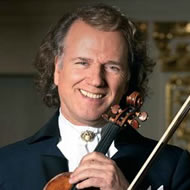
Since the mid-1990s, André Rieu has toured the globe with his Johann Strauss Orchestra. He performs in stadiums and large concert halls, averaging 10,000 listeners per concert. Rieu and his orchestra interpret classical pieces in a popular style, aiming to reach the widest possible audience through presentation and show effects. The classical repertoire is complemented by orchestral versions of popular hits and pop songs. In addition to lighting effects, he also employs extensive technology for sound amplification and coloration. Critics more inclined towards classical music consider his productions musically superficial, arguing that Rieu uses familiar classical melodies to present them in a pleasing way.
Classicpoint.ch: What does classical music mean to you?
Classical music is something wonderful. I grew up with it. My father was a conductor, and at home, we listened to and played exclusively classical music—everything, everything—Mozart, Bach, Bartók—the entire repertoire. We were six children, and we all learned an instrument: harp, cello, violin, or piano. It wasn't until much later that I discovered other music—the Stones, the Beatles, ABBA. But to this day, I love classical music, especially that of Johann Strauss. It makes me happy. I think we can all agree that the world would be poorer without it.
Do you play other classical repertoire besides salon music and waltzes?
Oh yes, of course. For me, there are no musical boundaries. We played salon music in our early years as a salon orchestra, back then with a smaller ensemble. But for over 25 years now, I've led the Johann Strauss Orchestra, the largest private orchestra in the world, with around 60 musicians, including the choir. They're all my permanent employees. I can't just say, "I'm playing with five people now, and then with ten next week." Right now on tour, for example, we're playing "O Fortuna" from Carmina Burana, "Granada," an opera medley, arias from operettas and musicals, film music—a real mix. Waltzes are part of the evening and are an integral part of it; "The Blue Danube" is always included. But they're by no means the entire concert.
You're also known as the Waltz King of the modern era and say you live a life in three-quarter time. When did you hear your first waltz?
I think it was around the age of eight. I can still remember the moment perfectly. As a very young boy, I was always at all my father's concerts. That evening, he played Mahler and Beethoven, then as an encore, "The Blue Danube" by Johann Strauss. And suddenly, something changed in the audience. People started smiling; they were happy. That really impressed me. That's when I realized that this music possessed a very special magic. That idea has stayed with me ever since.
Can you imagine playing a classical concert without show effects, sound amplification, and lighting effects, or is that simply part of it for you?
It's part of it because it enhances the expression of the images we choose, the music itself. Around 10,000 people attend our concerts each evening; on the stadium tour with Schönbrunn Palace in Melbourne, we had over 38,000 in a single evening. Of course, that's impossible without sound amplification. But fortunately, technology has improved so much that you can achieve a fantastic sound even with microphones. Symphony orchestras in the classical sense, in concert halls, exist in every city. I think what distinguishes us is that we do something completely different. I always say: I can only do things on a grand scale. And I have to, because I have 120 permanent employees who are paid year-round. I don't receive any subsidies.
In 2009, despite selling millions of tickets and CDs, you were around 34 million euros in debt and had to mortgage everything. What gave you the strength to believe you could recoup all that?
I had already overcome the debt by 2010. It had accumulated because I had Schönbrunn Palace reconstructed three times as a backdrop for my concerts. That cost a fortune. Just to give you an example: it took 500 people five days to set it up and three days to take it down again. We booked 15,000 hotel rooms for the 2009 Australian tour alone. But I never doubted that we would manage to overcome the debt. My family supported me completely, as did my German promoter and my record company, and someone from the bank said, "Let him keep playing." The Schönbrunn story then generated so much publicity worldwide that all the concerts in 2010 were completely sold out. That's how we got out of that situation.
In 2010, you had balance problems and had to cancel many concerts. Did you change anything in your life as a result?
Yes, and I have to say, that scared me more than the debt, because health is the most important thing for being able to do my job. This dizziness came on suddenly in the night. Everything was spinning; it really wasn't pleasant at all. Marjorie and I sat down the very next morning and made a list of things I shouldn't do anymore. I was simply accepting too many requests: openings, award ceremonies, etc., and I hadn't taken a vacation in five years... I then focused solely on music. I also changed my diet and exercise regularly, proper strength training. Up until the age of 40, everything pretty much takes care of itself, but after that, you have to do something!
You've also been composing and improvising on the violin since childhood. Do you compose in your usual genre, or do you also try out new styles?
I compose from time to time because I enjoy it immensely. Unfortunately, I have very little time for it because we're on tour so much. I mostly write on commission. I wrote the theme music for Donna Leon. At the Sochi Winter Olympics, the German figure skaters performed to my arrangement of Chris de Burgh's "When Winter Comes." And I've just finished composing for a Dutch film set in Italy, including a tarantella. So, yes, I do enjoy trying out new styles.
What do you say to classical musicians who criticize your performances as popular sing-along music?
Classical music, especially in German-speaking countries, is truly regarded as a "sacred" institution. That's not the case abroad, and it used to be quite different. Opera was entertainment, and operetta even more so. And many of those who criticize me have never even been to one of my concerts. What has always bothered me about classical musicians is how serious they are. They play the most cheerful pieces with a face like they have a stomachache. My orchestra and I really enjoy ourselves up there on stage, and that rubs off on the audience. People who haven't done that in years get up and dance. That's wonderful.
You've been threatened several times; there was even a kidnapping attempt. Do you have enemies, or how do you explain this danger?
Fortunately, it's not quite that dramatic. Years ago, there were death threats from a woman who was mentally disturbed. I do go out on the street without security, but I do have security at public appearances and my concerts, but that's perfectly normal; all world-famous musicians have that. When you're in the public eye, you automatically become the target of fans' projections. Most of them are truly wonderful; I receive so many lovely letters from all over the world, but it can always happen that someone thinks you "belong" to them. You have to be careful then.
Your orchestra is also a family business, with your wife and children involved in management. What does your family mean to you?
Everything. I always wanted a wife with whom I not only got along well personally, but could also collaborate professionally. I couldn't have built any of this without Marjorie. She was the breadwinner in our early days. We had two young sons. It's truly amazing how alike we think. My older son, Marc, is a painter, and the younger one, Pierre, works as a manager in my company. He often comes to the concerts with me. That's wonderful for me, of course, because the profession requires a lot of travel. This way, family is always with me. I love my four grandchildren more than anything. They're so sweet when they try to play the violin. They're four and five now.
Your parents and siblings were, and in some cases still are, musicians. What was and is your relationship with your parents and siblings like?
My relationship with my father wasn't easy. He was a real boss, even at home. I remember once we went on vacation without him. Suddenly, the whole atmosphere was different, much more relaxed. My mother is over 90 and still incredibly fit, absolutely wonderful. I rarely see my siblings because I travel so much. One brother plays cello in the orchestra at the Marseille Opera, and I'm always telling him, "Get out of there, make it your own." Because we have more fun than he does (laughs).
What do you wish for in the future?
Basically just that things continue as they have been. That I can continue making music for many more years. And that one day I'll give a concert on the moon.
Interview by Florian Schär | Classicpoint.ch | March 3, 2014



























































Do you want to attract more visitors to your concerts?
Find out more about the possibilities this portal offers.
With a concert search subscription, you will receive an email for your selected cantons/federal states as soon as a new concert is listed there. You can unsubscribe from the service at any time.
