
interview
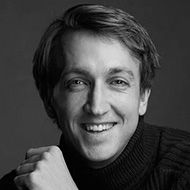
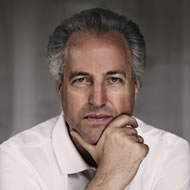
Interview with Fabian Müller
September 30, 2026
"I like to practice at night in the dark, without turning on the light. The silence sounds..."






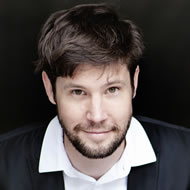
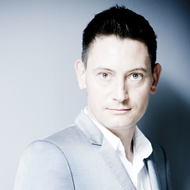
Stefan Temmingh belongs to the young generation of world-class recorder players. Born in Cape Town, he comes from a South African-Dutch family of musicians and now lives in Munich. This year he was awarded the Echo Klassik prize as Instrumentalist of the Year.
Classicpoint.net: You received the Echo Klassik award as Instrumentalist of the Year this year. Were you surprised?
Yes, very much so! My first thought when I got the email was that a friend was playing a prank on me. But then I saw who was copied on it and knew it was true! I wasn't allowed to tell anyone until the next day, though. That was really difficult.
What does this award mean to you?
My mother, who is a director, taught me to be very careful with prizes and awards. As an artist, only one thing counts: absolute honesty. Only then can art truly unfold from the soul. Therefore, I'm careful not to overestimate the significance of this award.
What has changed since then?
Not much, actually. I see things more holistically. I'm one of only three or four recorder players with this distinction. My instrument is gaining more and more recognition and is no longer seen as a child's toy.
You played on a plastic recorder until the age of 17, one that you could clean in the dishwasher. What was the feeling and the transition to a wooden recorder like?
It was, of course, a complete revelation. The tonal possibilities are many times greater. The second revelation came when I received my first recorder from the Swiss recorder maker Ernst Meyer. These recorders significantly influenced me as a player. Sadly, Ernst passed away this summer. It's a great loss for the recorder world.
Is the recorder really the best instrument for beginners?
I don't think you can say that one particular instrument is the best for beginners. I believe that an instrument either awakens a child's inner voice or it doesn't. So, for one child the recorder might be an ideal starting point, and for another child the violin.
The instrument is burdened with many prejudices. How did your family and friends react when you decided to work professionally with the recorder?
To be honest, I never asked. My mother likes to tell the story of how, as a boy, I told her I was raising myself! To a certain extent, that's true. I've mostly done my own thing, and what others say hasn't really mattered to me.
Besides performing early music, they also give many world premieres and commission new compositions. How open are composers to the recorder?
Composers today constantly need to find new sounds, and the recorder is particularly practical in this regard because it's not as well-known as other instruments. Furthermore, its simple design offers the added bonus of so many different playing possibilities.
Do you only play original compositions, or also transcriptions and arrangements?
I play both. My debut CD featured violin sonatas by Corelli, which were transcribed for the recorder as early as the 18th century. My second CD included Handel's opera arias, also from Baroque arrangements. My third CD features Bach piano suites arranged for recorder, viola da gamba, and lute. So I'm not at all afraid of changing the instrumentation. Ultimately, all that matters is whether it "sounds good." But in the near future, I'll be focusing more on original compositions.
You come from South Africa and lived there as a boy. How intensely did you experience apartheid yourself?
Very intensely. My parents made it very clear to me as a young boy how unjust the apartheid regime was. Even as a child, I absolutely did not understand this racial segregation. I was in primary school during the political upheaval and, for example, witnessed Mandela's first public speech after his release.
What else interests and occupies you besides music?
Pleasure. I'm a passionate cook, I read cookbooks daily, and when I'm at home, I love to cook. But for me, pleasure also means gazing at an autumn leaf with joy, not just drinking a good red wine.
Interview by Florian Schär | Classicpoint.net | November 1, 2016
November 13, 2026 - Stefan Temmingh (recorder), students of the Freiburg University of Music
; November 14, 2026 - Stefan Temmingh (recorder), Margret Koell (harp)
; November 24, 2026 - Dorothee Mields (soprano), Stefan Temmingh (flute), Capricornus Consort Basel;
November 27, 2026 - Valer Sabadus (countertenor), Stefan Temmingh (recorder), Lautten Compagney Berlin, Birgit Schnurpfeil (violin & conductor)
; April 3, 2027 - Stefan Temmingh (flute), Mathis Wolfer (flute), Konstanze Waidosch (cello), Margret Koell (harp), Julius Lorscheider (piano)






























































Do you want to attract more visitors to your concerts?
Find out more about the possibilities this portal offers.
With a concert search subscription, you will receive an email for your selected cantons/federal states as soon as a new concert is listed there. You can unsubscribe from the service at any time.
