interview
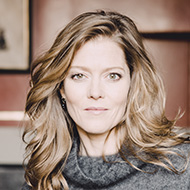
Interview with Barbara Hannigan
July 1, 2026
"I rediscover every piece I sing, again and again, no matter how often I've already sung it..."


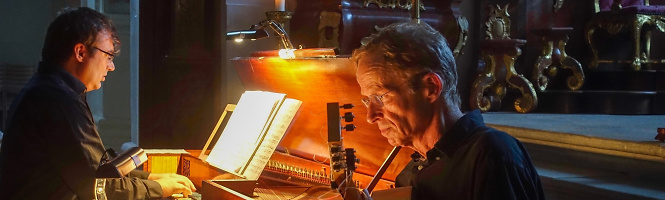


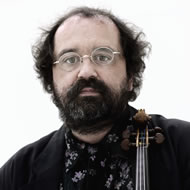
Kim Kashkashian is an internationally renowned soloist and sought-after chamber musician, performing worldwide. She has also taught at music academies. After professorships in Freiburg and Berlin, she accepted a position at the New England Conservatory of Music in the summer of 2000, returning to the United States. Her collaborations with contemporary composers have resulted in some world premiere recordings, which have helped to expand the relatively small viola repertoire.
Classicpoint.ch: Your parents emigrated from Armenia. You were born in Detroit. You have premiered works by Armenian composers. What characterizes contemporary composers in Armenia?
Armenia has always had one foot in the Middle East and one foot in the Euro-Russian tradition and culture. I recognize the expression of both connections in earlier as well as in current compositions.
Why did you switch from the violin to the viola after only a few years as a child?
The instrument's tonal range, the alto part, captivated me.
You are very involved in the field of contemporary music and are constantly actively seeking out composers to persuade them to write works for the viola. What criteria do you use to select composers?
I pay particular attention to whether I feel comfortable with and can identify with the emotional expression and palette of tonal colors of a work, its structure, and its arcs of tension.
Is it difficult to convince composers to write works for the viola?
Not at all!
Until the 20th century, there is very little literature for viola as a solo instrument. What do you see as the reasons for this?
It's multifaceted and has to do with the development of musical styles. The so-called middle voices were primarily used as harmonically rich filler parts, and only gradually were they given leading roles. Compare the scores of Haydn, Brahms, Schoenberg, and Ligeti in succession. It's the process of the individual voices becoming equal. The development is the same in solo literature.
If you could turn back time, which composer would you most like to hear write a work for the viola?
Perhaps Dvořák, and of course, definitely Schubert!
Do you also work with other musical styles, such as world music or jazz?
Jan Garbarek invited me to play some of his compositions. But apart from that collaboration, I've never actually performed in the jazz world. Working with the folk music of all cultures, on the other hand, seems to me to have a direct connection to classical music. Ultimately, it's the same language and grammar that are used.
You have lived and worked in both America and Europe. Where do you see the differences in your work?
There still seems to be a significant divide in the meaning of contemporary music, where we hear quite different compositional styles. In the US, we have increasingly begun to integrate informative segments into concerts, explaining the compositions. This helps both the performers and the audience.
Which project is currently closest to your heart?
I have a project underway called "Music for Food." Musicians raise funds for those musicians who lack the resources. In my home country, one in nine people faces hunger as a daily, fundamental problem. It's an unimaginable situation!
What does Kim Kashkashian actually do when she's not playing the viola?
If I ever put the viola aside, you'll find me at the Academy for Kung Fu and Tai Chi. There, I try to further develop my skills through training.
Interview by Florian Schär | Classicpoint.ch | November 2, 2011
Photo: Claire Stefani



























































Do you want to attract more visitors to your concerts?
Find out more about the possibilities this portal offers.
With a concert search subscription, you will receive an email for your selected cantons/federal states as soon as a new concert is listed there. You can unsubscribe from the service at any time.
