

interview
Interview with Julia Lezhneva
August 31, 2026
“Analytical work allows for emotional freedom, while emotional discoveries…”



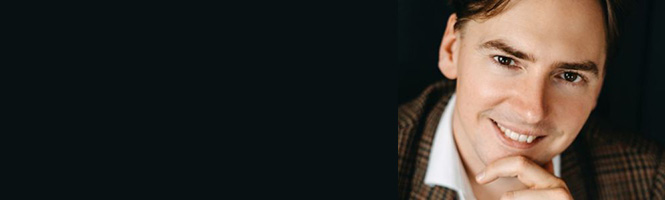

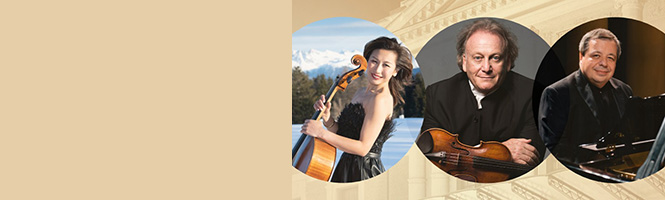


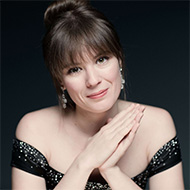
SoRyang began playing the piano at the age of five and had already won numerous awards at the state level by the age of eleven. At sixteen, she left her hometown of Seoul, Korea, and completed her piano studies in the master class of Professor Detlef Kraus at the Folkwang University of the Arts in Essen, graduating as a concert pianist. She received the First Folkwang Prize and the First Special Prize at the International Brahms Competition in Hamburg. SoRyang then pursued postgraduate studies in Vienna, where she earned her Master's degree from the University of Music and Performing Arts. Since then, SoRyang has given piano recitals worldwide, with her performances at venues such as Carnegie Hall in New York, the Golden Hall of the Vienna Musikverein, and the Vienna Konzerthaus receiving considerable acclaim. A renowned Mozart interpreter, she regularly performs Mozart's piano works at venues including Mirabell Palace in Salzburg and the Mozarthaus Vienna. She has also given recitals in cities such as New York, Los Angeles, Dallas, Hong Kong, Shanghai, Barcelona, London, Rome, Hamburg, Vienna, Salzburg, Dresden, and Berlin.
Classicpoint.net: When you came to Essen from Korea at the age of 16 to study, weren't you homesick?
Being able to study in Germany as a musically gifted teenager was a great honor for me. I didn't want to disappoint anyone and poured all my strength and energy into my studies. The joy of finally learning authentic music made me so happy that my "old" life no longer had a place in me.
In contrast, many other Korean women weren't enthusiastic about studying in Germany. They were truly homesick and wanted to return home quickly.
You come from Korea, studied in Germany, and now live in Vienna. Where do you see the biggest cultural differences?
In Korea, practicing was always about accuracy and speed. When it came to the music itself, people imitated other world-famous pianists. But in Germany, I learned how to let the music speak for itself. A funny example of cultural differences is, for instance, the notion that you shouldn't play the many notes in the bass register loudly. Otherwise, it would sound like potatoes rolling down the cellar stairs. But in Asia, we don't have cellar stairs like that, nor do we store potatoes at home. So, the very idea was something completely new to me. My professor appreciated my talent and supported me, among other things, by helping me get some great concerts very early on.
At that time, the world of music was all I knew, and I practiced like a woman possessed. When I then came to Vienna, I experienced a more relaxed lifestyle. Besides my studies, I often went out with Austrian friends. If I were to say that I explored many different districts on foot, visited wine taverns in the countryside, and watched many old films in ancient cinemas, you might wonder why I wasn't diligently practicing the piano all day, as I had been before. But that's precisely what music is about. If you don't understand life, what can I possibly tell the audience through music? My goal isn't to demonstrate to my listeners, through brilliant piano playing, what I can do and what they can't. I want to connect with them, find common ground, and build a relationship.
What adjustment or change was the most difficult for you?
I grew up in a very privileged environment—like a princess. But in Europe, many people treated me rather condescendingly because I look Asian. I can deal with that now.
Can you tell us a little about upbringing and the role of women in Korea?
Upbringing is very tough; it's purely focused on success, and children grow up in a rather unsympathetic society. It's a constant competition about who has achieved more. Playing the piano is often a means to an end. Almost all my friends who studied piano gave it up as soon as they got a job at a university or made a good marriage. That's a real shame. In Korea, you're a small part of a highly structured society. Therefore, there's hardly any room left for individual artistic freedom.
Do you see yourself as a role model for Korean women? Do people in Korea follow your career?
In fact, my classmates from my music high school believe that I'm fulfilling their dreams in paradise. But they don't want to practice piano so much again. They hated it. I, on the other hand, love practicing piano, and it's an important and integral part of my life.
Do you also give masterclasses in your home country, or do you plan to move back there someday?
Up until now, I haven't made much of an effort to maintain contacts with Korea, even though there are so many warm-hearted people there. But living in Korea is unthinkable for me. I've developed in a different direction than Koreans in the meantime. I'm more Austrian or European now. So I would certainly feel like I'd taken a huge step backward. With so much enforced restraint and many often pointless obligations, my soul would wither very quickly.
You compose yourself. How would you define your compositional style?
I would very much like to continue composing, but playing the piano is my priority. A Korean proverb teaches us that it's better to dig one well deep than many shallow ones.
You've brought classical piano music to a wide audience in the historic squares of major European cities. What were these concerts like for you?
The idea of playing classical piano music on a real piano in the street was my brainchild. Nothing like it had ever existed before. No professional pianists would have even considered doing something like that because it was simply beneath them. There also hadn't been a single female street musician in Vienna before me, apart from a very old saxophonist who was quite well-known here. But I pursued my idea regardless of what other people thought. Creating something new and pushing boundaries made me very proud. I loved this work. In the evenings, the pedestrian zone was transformed into a concert hall, where large crowds often listened quietly for hours. It was a unique experience for me—as it was for the listeners.
It's also how I found love. My boyfriend supports me in every way he can. He takes this task so seriously that he's now made it his additional profession. It's the most touching feeling when someone believes in you.
Do you have any other ideas you'd like to try?
No, not at the moment. I have only one great wish regarding music. I would like to make the piano sing, just as Maria Callas sang. Beautiful sounds filled with powerful emotion.
The former managing director of PREISER RECORDS called you "Europe's most unusual pianist." Do you see yourself that way too?
As I mentioned before, I changed the classical world somewhat by playing for free in public squares for people of all backgrounds. Since then, even famous pianists have been playing on the street, something that seemed impossible before.
Unfortunately, these days, the intensive preparation for concert tours leaves me no time to pursue that further. I played completely different pieces on the street than in the concert hall, but of course, the pieces also have to be well-prepared. When I'm out for a walk, I miss piano music on the street. I think many Viennese feel the same way, judging by the numerous messages I receive.
What interests you outside of music?
The people around me. They play the most important role in my life outside of music.
Interview by Florian Schär | Classicpoint.net | September 2, 2019



























































Do you want to attract more visitors to your concerts?
Find out more about the possibilities this portal offers.
With a concert search subscription, you will receive an email for your selected cantons/federal states as soon as a new concert is listed there. You can unsubscribe from the service at any time.
