

interview
Interview with Julia Lezhneva
August 31, 2026
“Analytical work allows for emotional freedom, while emotional discoveries…”






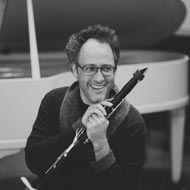
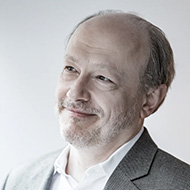
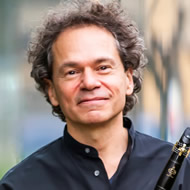
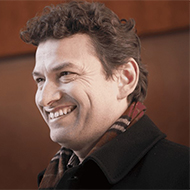
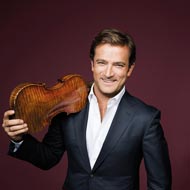
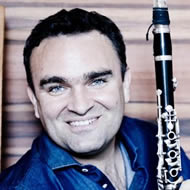
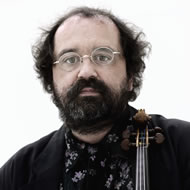
He made his debut with the Israel Philharmonic Orchestra under the direction of Zubin Mehta. Since then, he has performed with several of the most important orchestras in the United States, Europe, and Japan, including the Israel Philharmonic, the Tokyo Symphony Orchestra, the European Soloists, the Heilbronn Chamber Orchestra, the Moscow Virtuosi, the Jerusalem Radio Orchestra, the MDR Philharmonic Leipzig, the NDR Symphony Orchestra Hamburg, and the German Symphony Orchestra Berlin.
Today, Chen Halevi one of the world's leading clarinet virtuosos, equally successful in recitals, concerts, and chamber music. He is known for his impressive repertoire, ranging from the most challenging contemporary music to early music performed on authentic historical instruments.
How did you first come to study classical music, and when did you decide to become a professional?
I was born in the Negev Desert. At that time, due to the socialist philosophy within Israeli society, rural areas had a progressive and active education system, which allowed me to begin my musical training at a high level from a very young age. The local conservatives were very active in the community, and it was common for children to receive musical training. I was fortunate that my first clarinet teacher was the legendary Itzhak Katzap, who had just escaped communist Romania and landed in the small desert town where I happened to be born. My career as a soloist began quite quickly, so I never really consciously chose to become a professional musician, but instead followed a more natural path.
You have developed your own school for clarinet playing. Could you explain that to us?
When I began my studies, there were still quite a few different clarinet schools, each using different materials and having its own unique conception of sound. These schools even commissioned separate editions for their different interpretive traditions. I was fortunate that my two clarinet teachers came from very different schools — one from Eastern Europe and the other from America. My last clarinet lesson was when I was 16, and after that, I was taught by composers and musicians who primarily played string instruments. This allowed me to move beyond the clarinet itself and instead use it as a tool for conveying a broader artistic expression. I was always trying to imitate other instruments and even incorporate non-musical experiences into my playing. I began playing both modern music and period instruments, and from this mixture came some powerful ideas that, at the time, made me seem very marginal and unrepresentative of the clarinet world. I would say that the ideas I had 30 years ago, which were largely criticized and not accepted, have become much more normal today.
Are you striving to be different in some way?
I never think about it. I always try to listen to my inner voice and seek the deepest truth in the music I play. I also want to create unique, fleeting moments of emotion in my performances. I always imagine a soap bubble that takes us all, both the performers and the audience, on a unique, brief journey. The result often sounds different from other interpretations, but that's a result, not something I strive for.
Will classical music survive in 100 years?
Yes, but in what form is, of course, difficult to imagine. Will it be a small niche, just a fraction of the endless noise people might have around them, or will it become a broader, popular art form again? In my opinion, humanity in the future will be incredibly different from today, partly due to technological progress. And perhaps, who knows, we might even be living on different planets! But in any case, I believe Bach will find his way into the future.
If you could choose a deceased composer to ask a few questions, who would it be and what questions would you ask?
I think, like many musicians, I have strong ideas about the composers we play. We have an intimate dialogue with composers every day and feel we know them well. I firmly believe that meeting famous composers wouldn't surprise me, as I feel I already know them so well through their music. But I would love to spend a week with Mozart, Da Ponte, and Casanova — not asking questions, just having fun!
You come from Israel and now live in Germany. What do you consider the most significant differences?
I would say that they are two societies based on contrasting approaches. Israel is based on permanent chaos and improvisation, while Germany is founded on order and planning. This, of course, makes the way the music world operates very differently. I would say that you have a better chance of finding a rewarding job as a musician in Germany, but Israel might be a better place to develop your artistic curiosity as a child. So, perhaps jokingly, I would say it might be good to learn music in Israel, and then when you're 18, you should move to Germany!
How are you dealing with the current Corona situation?
I believe the pandemic was a major crisis that we had to prepare for. For musicians, it was a terrible blow to their professional existence. I confess it breaks my heart to think that musicians around the world pick up their instruments every morning and try to maintain their faith and form in our art, without the opportunity to do what they were trained to do — to go on stage — without any prospect of a future. I feel especially sorry for the younger generation starting their careers only to find all the doors closed to them. Personally, I was very dismayed by the inability of the world's leading politicians to understand our situation and find ways to help us. I think performing artists are the biggest victims of this crisis — probably along with small businesses. It is also sad to find that the world's leading politicians are almost without exception completely ignorant of any form of art and its importance to human existence. To tell the truth, we were abandoned without hesitation. Another point is that, contrary to what I thought before this crisis, I've realized that technology is not, and never will be, a substitute for human contact. Zoom classes are sorely missed, to say the least, and I quickly gave up on watching online concerts. It simply doesn't have that special feeling of sitting in a concert hall listening to an orchestra building up to a delicious frenzy.
What are your projects?
My immediate project and concern is to continue helping our art to survive. First of all, as a professor these days, you need a completely different kind of focus to maintain faith in the future and not lose hope. So, a lot of other work needs to be done to concentrate more on the psychological aspects. Equally important is finding ways to return to live concerts. At all the concerts that have been played in recent months, I felt a great thirst for music, and the few tickets that could be sold disappeared quickly. It's important to know that the audience complied with all the hygiene regulations without any problems.
Here in Switzerland, we are preparing the seventh edition of the Mizmorim Festival in Basel for next January, with a wonderful program. We are constantly striving to find ways to carry out all the concerts and festival events while adhering to the constantly changing safety regulations.
What are your visions for the future?
I think the most important thing for me is to stay creative and follow my current artistic interests. The clarinet is just a pretext for staying alive and curious, and that's why I love moving between different musical genres. Early instruments, working with composers, creative tango playing, flamenco, and oriental music all help me stay alert. I can no longer play 20 Weber concertos and 20 Mozart concertos a year. Freedom is important to me, and I appreciate that I pay the price for it, the way the business is run — but that's just who I am.
What are your interests besides music?
Besides music, I have many other interests, perhaps too many to choose from. But I would say that almost anything related to art in its various forms – literature, poetry, and basically anything that lifts us away from the bureaucracy of daily life – is probably something that passionately interests me.
Interview by Florian Schär | Classicpoint.net | November 25, 2020




























































Do you want to attract more visitors to your concerts?
Find out more about the possibilities this portal offers.
With a concert search subscription, you will receive an email for your selected cantons/federal states as soon as a new concert is listed there. You can unsubscribe from the service at any time.
