

interview
Interview with Julia Lezhneva
August 31, 2026
“Analytical work allows for emotional freedom, while emotional discoveries…”






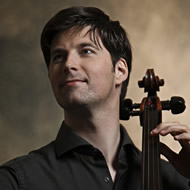
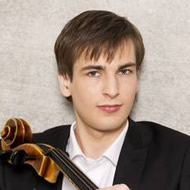
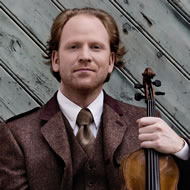
Daniel Müller-Schott is considered one of the world's finest cellists and performs on all the major international concert stages. Besides performing the great cello concertos, Daniel Müller-Schott has a great passion for discovering unknown works and expanding the cello repertoire, for example through his own arrangements and collaborations with composers.
Classicpoint.ch: You won first prize at the Tchaikovsky Competition in Moscow at the age of 15. Wasn't there a risk of losing your footing and becoming arrogant? What was the period immediately after this win like?
I was fortunate to have a very good and grounded environment at that time. Immediately after winning the prize, my parents and teachers made sure that I had enough time to grow into the life of a musician, also to be able to determine over the years: How do I cope with life as a musician? Because it doesn't just mean playing your instrument; it encompasses your whole life: How do I cope with travel, for example, or with the frequent need to play new works in rapid succession? And can I continue to develop freely as a person in the process? In retrospect, I can say that this continuous, and perhaps somewhat calmer, development has been very beneficial to my maturation. I was able to develop gradually as a musician.
You are a musical partner of Anne-Sophie Mutter. She has been your mentor since childhood. How did this connection come about?
I was the first scholarship recipient of her foundation, a very formative time. Even then, I learned about the demands placed on a professional musician, the responsibility one bears for music, and the passion required to pursue a soloist's path. As early as 2000, Anne-Sophie Mutter to a debut concert at Carnegie Hall in New York. Over the years, a wonderful musical partnership has developed, both in the Brahms Double Concerto and as a trio partner, for example, in the Mozart Project or recently on a tour of Spain with the trios by Beethoven and Tchaikovsky.
André Previn and Peter Ruzicka have composed a cello concerto for you. Sebastian Currier and Olli Mustonen have also dedicated works to you. You premiered all of these pieces with the composers or under their direction. Did you have any influence on the creation of these works?
There's a history with both composers. I had the opportunity to work with Peter Ruzicka as a conductor beforehand, and playing with André Previn in a trio and with an orchestra led to him wanting to write a concerto for me. This exchange continued during the creation of the works. It was particularly inspiring, and I'm very grateful for these encounters. I'm especially looking forward to the next works by Olli Mustonen and Sebastian Currier.
You tour the world with concerts. What unusual places have you rehearsed in because there was no other option?
I've now given what amount of private concerts for passengers at many airports around the world. Long waits at the airport are often unavoidable. I usually take out my cello to practice, which often leads to conversations with the waiting travelers. A curious experience was when I was "stranded" in a gymnasium in France in the spring. So much snow had fallen for hours that the roads were closed, and I had to wait in a gymnasium for my journey to continue. There, I had plenty of time to play the cello...
With the Rhapsody in School project, you go to schools and try to introduce children to classical music. What experiences have you had?
Unfortunately, music lessons are increasingly being pushed to the sidelines of the school timetable. I myself attended a science-focused high school and was disheartened to realize the low priority given to music education and how little of the cultural treasure of our classical composers is actually taught. When the pianist Lars Vogt told me about his idea for this project, I was thrilled by the idea of going into schools and showing children directly why we musicians feel such a passion for classical composers. Especially in classical music, it's so important to be exposed to its diversity from an early age. I'm always surprised by how open and grateful the children are when I play something for them and talk about my experiences and my love of music. I was recently in Bilbao at a German school.
There are currently many young cellists who enjoy considerable renown. Do you feel this competition, or are there enough performance opportunities for everyone?
I'm happy to see my colleagues and find it very positive that we're all contributing to introducing the cello as a solo instrument to an even wider global audience. Even in previous generations, there was a wealth of fabulous cello soloists; think of Rostropovich, Fournier, Tortelier, Gendron, du Pré, and so on. This tradition should be both an obligation and an inspiration, and it should be continued.
You also sprayed graffiti with friends in your youth. Were there ever moments when you felt a little ashamed to play the cello because it was considered uncool?
No, there were never any such moments. After winning the Tchaikovsky Competition, I decided to become a musician. But I never stopped pursuing my passions for football, literature, or art. As soon as I'm in Munich, I organize football matches with my friends. These completely different private activities, my family—all these retreats are essential for an artist to recharge their batteries for music.
among others Steven Isserlis . What was your experience of these three great cellists?
through 'Slava' and my long-time teacher Steven Isserlis . I still draw inspiration from Slava's stories whenever I play this music. It is thanks to his great love for Britten's music and Britten's warm personality that we can experience the magnificent Cello Sonata, the Solo Suites, and the dramatically dark Cello Symphony today. With Heinrich Schiff, I was able to work on Bach suites and modern concertos, such as those by Lutosławski and Henri Dutilleux. And Steven Isserlis, with his enthusiasm for composers like Robert Schumann, ignited the romantic fire within me.
You also try, in part, to push boundaries. For instance, you performed a Shostakovich concerto in front of several thousand heavy metal fans at the Roskilde Festival in Denmark. Another promoter booked you as the opening act for Metallica. There you played Bach's Suite in D minor. What was the audience's reaction?
At both concerts, the audience was initially surprised, and of course, the noise level was very high at first. But very quickly, people were swept away by the intensity of the music. What's crucial is conveying the musical power, the concentration, and the beauty; then the setting is almost irrelevant. Of course, open-air concerts can't be compared acoustically to the fabulous concert halls we have today. It's no coincidence that halls like those in Amsterdam, Berlin, Vienna, and New York are among the most beautiful in the world. In these spaces, you can truly 'float' while making music.
Interview by Florian Schär | Classicpoint.ch | September 3, 2013
Photo: Uwe Arens
November 5, 2026 - Daniel Müller-Schott (cello), NDR Elbphilharmonie Orchestra, Andris Poga (conductor)
December 2, 2026 - Julia Fischer (violin), Daniel Müller-Schott (cello), Orchestre National de France, Cristian Macelaru (conductor)
July 14, 2027 - Daniel Müller-Schott (cello), Aris Quartet



























































Do you want to attract more visitors to your concerts?
Find out more about the possibilities this portal offers.
With a concert search subscription, you will receive an email for your selected cantons/federal states as soon as a new concert is listed there. You can unsubscribe from the service at any time.
