
interview
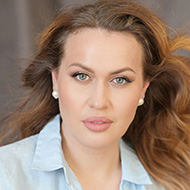
Interview with Elena Stikhina
June 1, 2026
“The Zurich Opera House has a very special meaning for me.” Elena Stikhina is…


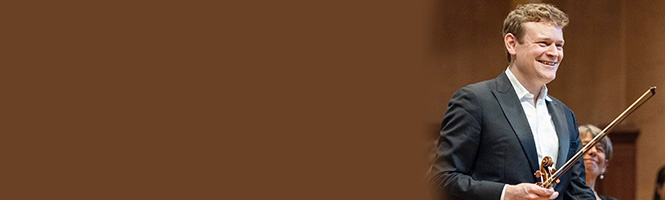


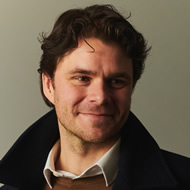
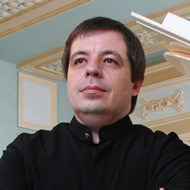
David Philip Hefti is the winner of the prestigious Gustav Mahler Composition Competition in Vienna, the Pablo Casals Competition in Prades, and the George Enescu Competition in Bucharest, and has been awarded the Hindemith Prize and the Composer's Prize of the Ernst von Siemens Music Foundation. His remarkable oeuvre ranges from chamber music and ensemble compositions to works for orchestra.
Classicpoint.ch: Where do you get your ideas from, when do they come to you?
Fortunately, ideas come to me in a flash. But it's completely unpredictable when this happens. That's why I always carry my little notebook with me. One of my most creative moments is just before falling asleep, in that twilight state between wakefulness and dreamland – in absolute silence. Furthermore, I'm generally inspired by everyday life, and specifically by poetry, visual art, walks, and conversations with friends. Although I go to concerts very often, it's rare that "foreign" music inspires me to put my own music down on paper – which always surprises me.
Can you verbally express your current compositional style? And how has your compositional style developed?
Unfortunately not, as I'm not a writer! Seriously though: it's actually not easy for me to put my current style into words, as one has to listen to music – to perceive it sensually. Nevertheless, here's an attempt: My musical language has developed quite naturally. At the beginning of my career, I worked exclusively with the 12 chromatic tones. After my first tentative forays into tonality in my childhood, I very soon oriented myself towards the tonal language of Alban Berg, of course without ever reaching his level... In the following years, I expanded my sonic language to include microtones and natural tones, multiphonics, and all contemporary playing techniques, right down to pure noise production, until my current style emerged from these components as an organic fusion. My aim is not to string together effects, but rather to create a multifaceted expansion of the sound palette and the resulting harmony. However, I'm far from finished with my journey! My style will continue to evolve as long as I compose. However, the direction this development will take is completely open, as I will not be influencing it rationally but rather letting my inner voice guide me.
Looking back, where do you see the differences between your works?
When I finish a new piece, it always feels like the best composition I've ever created, regardless of instrumentation or duration. Logically, this would mean that all my pieces could be arranged chronologically like a string of pearls, automatically creating a catalog of works of increasing quality. However, when I look back, I realize that the quality, originality, and musical depth all vary. The development is by no means linear! On the other hand, one can observe that the compositional craft, the handling of the instruments, becomes ever more refined and delicate thanks to years of experience. Stylistically, two works created within the same period are relatively similar, as my style, as already mentioned, has developed slowly and organically. But looking back several years, the greatest differences lie in the emotional expression, the formal aspects, and the transparency of the music.
Where does your biography influence your work?
My biography influences my work constantly and everywhere. This couldn't be prevented even if I wanted to, as I'm not a robot but a human being with emotional fluctuations. I dare say that's true for every artist. However, one mustn't conclude that I compose cheerful music when I'm feeling well and write dark, sad music when I'm unwell. All the factors that influence my life therefore flow indirectly and unconsciously into my music. For me, my location is also crucial. For example, I lived in London for about six months and didn't compose a single note during that time because I was simply overwhelmed by the cultural offerings, the city's vibrant energy, and, of course, the many pubs, leaving me unable to work. After my time in London, my compositional energy bubbled forth like an inexhaustible spring. It wasn't until a few months later that I was finally able to process, channel, and translate the overwhelming stimuli onto paper. My private life has also had a significant influence on my work: since meeting my wife four years ago, the number of compositions I complete each year has doubled. Marriage has transformed the originally slow writer into a somewhat faster and extremely inspired composer!
Would you compose differently if you lived in a completely different part of the world?
Absolutely! My brief stay in London is just one example. Of course, my music is already present in my body and mind, just waiting to be released and written down. I draw from within myself, so to speak. However, external influences, including other places, do affect the sounds within me. If I lived in Japan, my music would certainly sound very different, although my musical signature would definitely remain recognizable. But even here, one shouldn't conclude that my music would acquire an audibly "Far Eastern touch" in Japan. The geographical influence would be very subtle and, again, unconscious.
Could you describe your creative process for composing a piece?
Since composing is not only my calling but also my profession, I try to make my daily life as interesting and varied as possible. Therefore, each piece has a different creative process. I'll take the liberty of outlining the two extremes between which my compositional approaches, with all their hybrid forms, lie: I first develop the structure and formal progression of the entire piece and draw a timeline diagram into which all the musical parameters are inserted. I use individual words, invented symbols, or even musical notes for this. The dramaturgy and the relationships between tempi, formal sections, motifs, etc., also flow into this sketch, much like an architect's blueprint. Only then do I sit down with a blank sheet of music and begin writing out the entire piece, with the act of writing itself influencing the music. In the early stages of my composing, I meticulously implemented existing concepts, forcing myself not to deviate from the plans. With increasing experience, I allowed myself to be guided more and more by inspiration, leaving the constraints of the sketch, only to return to it again and again. The second extreme of a creative process came much later—with even more experience and self-confidence: there is no concept, no idea, no limitations. I sit down before the blank sheet of paper and wait to see what happens. This painful moment can last forever! When (or rather, if!) inspiration finally arrives, it is the most blissful way of composing for me. As if guided by an invisible hand, note after note is written down until the finished, organically developed piece lies before me. It is astonishing that a work created in this way often turns out, upon subsequent analysis, to be more rigorously composed than a work that follows a mathematical concept. This shows me that one composes not only with the gut and not only with the head, but with both simultaneously, as they are inextricably linked. Between these two types of creative process, there are, of course, countless fascinating hybrid forms. All creative processes, however, share the common feature that the notation of the thick double bar at the end signifies the definitive completion of a score. From this moment on, the works are never touched again, neither for corrections nor for making things worse, and are sent out into the musical world exactly as they are.
You are currently working on your first opera. Can you tell us something about it?
I had enormous respect for this task, even though my technical handling of the orchestral apparatus can now be considered routine after decades of composing experience, as can my work with vocal parts. But an opera is so much more than just an orchestra, chorus, and soloists! The sheer scale of it—my longest work to date lasts 35 minutes—made me break out in a sweat, not to mention the dramaturgy of such a massive undertaking and the development of the individual roles and characters. However, I am incredibly fortunate to be setting a stunning libretto to music. It's called "Anna's Mask," based on the novella of the same name by Alain Claude Sulzer. The author, who is a huge music and opera lover and connoisseur, wrote the libretto himself. His language is so rhythmic that it began to resonate in my mind from the very first reading. About half the opera is now composed, and my initial anxiety has vanished. What's more, working on my opera is giving me more pleasure than almost any other experience in my entire career. Of course, there are always periods of stagnation, critical phases, and obstacles that need to be overcome, but the joy I find in this work far outweighs them. I attribute this to the outstanding libretto, which, despite all its tragedy—murder! suicide!—very often makes me smile and even laugh in the quiet of my own room. I never would have dreamed that working on an opera could inspire and delight me so profoundly. And so, I can hardly wait for the premiere in St. Gallen in May 2017...
Do you see an influence of the internet on the development of contemporary music?
New media have a significant influence on the development of (contemporary) music. It's striking that, particularly in the areas of electronic music and multimedia projects, there are practically no limits anymore. Today, artists have access not only to highly sophisticated software but also to entire sound databases. Composing with electronic tools has become technically easier, while the artistic and aesthetic standards remain (and must remain) just as high as before. It has therefore become more difficult to select the good works from the endless abundance of compositions today. This naturally also applies to acoustic music. A score created by notation software almost always looks graphically magnificent; and so one has to have an extremely keen ear to recognize whether the beautifully printed music is actually artistically valuable. However, the internet is of paramount importance for the dissemination of contemporary music. Today, a complete set of performance material can be sent to an orchestra on the other side of the world, printed out, and performed. The same applies to recordings. For a composer today, it's no longer absolutely necessary to have a publisher distributing their works. With some skill and a bit of time, they can do it themselves. I must confess that I welcome the fact that both sheet music and audio files are available anytime, anywhere. However, it bothers me immensely that everything has to be free these days. In the end, this not only harms the artists but also entire sectors of the music industry. The entire publishing industry is already undergoing a transformation, and I'm very curious to see how this development unfolds. Innovation is key! When it comes to music dissemination, I'm entirely positive about the internet. I'm convinced that social media will play an extremely important role in the future in attracting audiences of all ages to concert halls. The possibilities seem limitless to me and are already being tentatively explored. The focus, however, will increasingly shift to social media. Of course, there is also an endless amount of nonsense on the internet, but if you know how to use electronic media and derive positive benefits from it, the internet is a wonderful, additional information channel.
What is important to you in all your works? Do you set generally applicable standards and criteria?
It is extremely important to me that my music—regardless of the density of the instrumentation—is always transparent and audible. Every single note has its essential place and demands to be perceived by the ear. This results in even thickly and darkly orchestrated passages sounding lucid. A paradox! Furthermore, I place great value on formal rigor, which, so to speak, takes the listener by the hand and guides them through the entire composition, ensuring that important cornerstones of the work remain in the memory even on the first hearing. And finally, it is my aim to notate my scores so precisely that the performer has virtually no questions about technical performability, even with complex works. Only in this way can I be certain that the pieces will sound exactly as I envisioned them, even without my presence at rehearsals and concerts—although this meticulousness, of course, does not extend to the performers' interpretive contribution!
What do you want to achieve with your music?
I want people who listen to my music to be emotionally touched in some way. Whether that's enthusiastic agreement or radical rejection is secondary. Only apathetic indifference bothers me. If my music also sparks thoughts that then change or effect something in the listener's life, I'm very happy! Although all music is political, most of my music doesn't carry a political or socio-critical message – it's nothing more and nothing less than sound.
Do you have an overarching life goal as a composer?
I turned 40 this year and asked myself that very question. Statistically speaking, I'm still working on my early works... Looking back, I'm amazed at how much music I've already composed. And so I actually asked myself whether I should simply write more orchestral works, more chamber music, and more vocal music. In that sense, the opera commission came at the perfect time as an unpredictable challenge. Alongside the opera, I'm working on my extensive symphony, which I'm writing movement by movement on commission from four different orchestras. Two movements have already been premiered by the Orchestre symphonique de Montréal under Kent Nagano and by the Bamberg Symphony under Jonathan Nott, respectively. I'd like to dedicate myself to such special, and also extensive, projects in the future. Of course, there are also a number of orchestras and performers I'd love to collaborate with. However, I don't have a career plan, as life, as we all know, is completely unpredictable. I am proceeding slowly and carefully, step by step, and I look forward to all upcoming commissions, projects, performances, and especially to further encounters with interesting artists.
Interview by Florian Schär | Classicpoint.ch | November 2, 2015
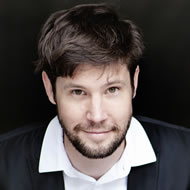
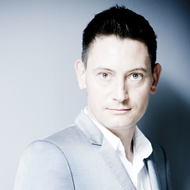
© Photo: Manu Theobald


























































Do you want to attract more visitors to your concerts?
Find out more about the possibilities this portal offers.
With a concert search subscription, you will receive an email for your selected cantons/federal states as soon as a new concert is listed there. You can unsubscribe from the service at any time.
