
interview
Interview with Julia Lezhneva
August 31, 2026
“Analytical work allows for emotional freedom, while emotional discoveries…”


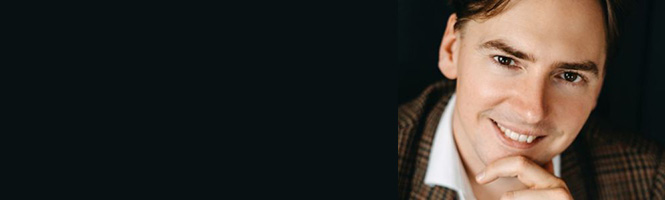


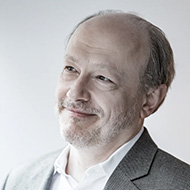
Michael Francis is the new chief conductor of the German State Philharmonic of Rhineland-Palatinate at the start of its 2019/2020 anniversary season. The English-born conductor is in his fourth season as Music Director of the Florida Orchestra and has been the Music and Artistic Director of the Mainly Mozart Festival in San Diego since the summer of 2015. Engagements have taken him throughout Europe to orchestras such as the Berlin Radio Symphony Orchestra, the MDR Symphony Orchestra, the Dresden Philharmonic, the Orchestre Philharmonique de Radio France, the Mariinsky Theatre Symphony Orchestra, the Trondheim Symphony Orchestra, the Helsinki Philharmonic Orchestra, and the Orquesta y Coro de RTVE Madrid. He has also conducted the London Symphony Orchestra on several occasions. It was there, as a double bassist in the orchestra, that he first demonstrated his talent for conducting. He was mentored by Valery Gergiev and Sir Colin Davis. In Asia, he conducted the NHK Symphony Orchestra, as well as the Japan, Seoul, and Hong Kong Philharmonic Orchestras. In North America, he impressed audiences with his conducting of the New York Philharmonic, the Cleveland Orchestra, and the symphony orchestras of Pittsburgh, Houston, Atlanta, Cincinnati, Montreal, and Toronto, among others. He has now signed a five-year contract with the State Philharmonic.
Classicpoint.net: You are the new chief conductor of the German State Philharmonic Orchestra of Rhineland-Palatinate, which is celebrating its 100th anniversary this year. What is your impression of the orchestra?
The orchestra is wonderful. They have an ideal balance between being extremely talented and having the desire to maximize their potential. With this combination, anything is possible. It also helps that they are such wonderful people and try to create a positive, friendly working environment. I am fortunate to have an inspiring partner in Artistic Director Beat Fehlmann, who, together with his excellent staff, achieves outstanding results.
In this anniversary year, you have set yourself the goal of enabling diverse access to classical music and broad cultural participation. What are the specific plans?
Michael Francis: We have just completed an exciting collaboration with the ensemble Re:Soulution, a Mannheim-based modern dance group, which brought its unique style to Stravinsky's Pulcinella. This was enthusiastically received by the audience and paired with Varèse's Amériques and Satie's Parade: a very stimulating evening! Furthermore, in Ludwigshafen we will be introducing a new concert format called "Keynote Concerts." In the first part of the concert, we will discuss a masterpiece with live orchestral examples, followed by a complete performance in the second part. The aim is to encourage deeper listening and understanding among the audience and to attract new listeners.
What are your personal goals in working with this orchestra?
Michael Francis: I see my role as creating excellent conditions that allow our musicians to consistently deliver their best performances, enabling our broad and rich community in Rhineland-Palatinate to experience each composer's intentions at the highest level. I want to maximize our potential and inspire our community.
What are your principles when working with an orchestra?
Michael Francis: Enjoying our wonderful jobs! Striving for artistic excellence in everything we do. Fostering an environment of bold creativity and the collective responsibility of each individual musician. Strengthening leadership within the orchestra, as this is the only way to achieve and maintain the highest level. Constantly ensuring that I am doing my job exceptionally well so that the musicians can do theirs exceptionally well.
What do you think are the most important qualities that successful conductors should possess?
Ultimately, the musicians produce the music. Respect for the composer's intentions. Artistic vision coupled with an openness to what each musician brings. Technical competence, so that the musicians can play with confidence. Communication to glean the truths from the music, with the goal that every concert helps the listener better understand their own life and the lives of others around them. An unconditional commitment to delving deeper into our wonderful art form and making it accessible to the widest possible audience.
Are there also moments when you would rather play an instrument in the orchestra than stand at the podium?
There are times when I miss the physical pleasure of producing sound. I played the double bass, and that instrument has an incredible physicality—especially in the Mahler or Beethoven symphonies, in Strauss's tone poems, and of course at the end of Stravinsky's The Rite of Spring!
You originally studied the double bass; do you still play it?
I can still play it, but it just hurts now! The calluses on my fingers are gone, and it would take a few months to get back to a decent standard. At the moment, I only play my instrument for myself, but hopefully one day I'll be playing for everyone again…
As a conductor, you're very much in the public eye. Can you tell us an anecdote about a particularly embarrassing moment and a particularly successful one?
Live music always provides surprising moments. Recently, when I was conducting Varèse's Amériques in Mannheim, I somehow flicked my baton and accidentally turned over half the pages of my score at once. This meant I had to flip back to the right place extremely quickly while remaining calm and focused. It was the first time I had conducted this rarely performed masterpiece, so conducting from memory wasn't an option. The musicians' hearts sank, and afterwards they asked me what I would have done if I hadn't immediately found the right place in the score during such complex music. I replied, "Smile and conduct at the same time!" All successful moments of this kind involve quickly rectifying a situation where someone else's mistakes would have blown us up – of course, I'm a bit too discreet to mention them... ;-))
You live in Florida with your wife and child. How often are you actually home?
I was just away for three months conducting in North America and Europe. It was a particularly long time living out of a suitcase, but luckily my daughter is young enough that we can still travel together. During the peak season between September and July, however, I am home about half the time.
You have a fondness for composers from your home country. Which ones do you particularly like, and why?
The United Kingdom is known for its literature and poetry, and perhaps its music has been overlooked as a result. I enjoy bringing the music of British composers to other countries for one simple reason: it is wonderful music and it deserves to be heard! So far, orchestras and audiences seem to enjoy discovering new masterpieces by Vaughan Williams, Britten, Walton, Panufnik, and Elgar.
Interview by Florian Schär | Classicpoint.net | November 1, 2019 |
Photographer: © Felix Broede
November 5, 2026 - Julian Rachlin (violin), German State Philharmonic Orchestra of Rhineland-Palatinate, Michael Francis (conductor)
November 11, 2026 - Benjamin Grosvenor (piano), German State Philharmonic Orchestra of Rhineland-Palatinate, Michael Francis (conductor) February
11, 2027 - Only in America

























































Do you want to attract more visitors to your concerts?
Find out more about the possibilities this portal offers.
With a concert search subscription, you will receive an email for your selected cantons/federal states as soon as a new concert is listed there. You can unsubscribe from the service at any time.
