interview
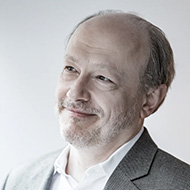
Interview with Marc-André Hamelin
July 31, 2026
“I consider composing an indispensable tool for performing musicians.”…


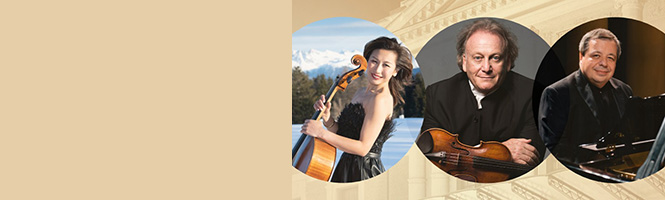


Grammy-nominated cellist, conductor, and educator Amit Peled enjoys a busy and dynamic career performing for audiences worldwide. The founder and artistic director of the Mount Vernon Virtuosi combines a growing conducting commitment with a successful solo career on the ex-Casals Goffriller cello of 1733, personally presented to him by Marta Casals Istomin, and a professorship at the Peabody Institute of Johns Hopkins University in Baltimore, USA. In his ongoing endeavor to make classical music more accessible, he recently published the children's book *A Cello Named Pablo* and the cello technique workbook *The First Hour*.
Classicpoint.net: How did you come to play the cello?
I grew up in a small kibbutz in Israel, and in fourth grade, we were all "forced" to learn an instrument. As a basketball player, that was the last thing I wanted to do. Luckily, there was a girl four years older than me who played the cello. I fell in love with her and thought that the only way to get closer to her was to play the same instrument as her, and that we would then get married one day. Of course, none of that happened, except that I'm now a cellist!
You studied with Bernhard Greenhouse of the Beaux Arts Trio at the beginning of your career. Would you like to tell us about that?
Since my youth in Israel, it had been my dream to meet Greenhouse and hear his legendary sound. Along with his teacher Pablo Casals, no cellist has influenced my sound as much as Greenhouse. When I then had the opportunity to live next to him in his picturesque retirement community in Cape Cod and study intensively with him for three years, I seized it with both hands. It was the most significant training for me as a musician and as a person. Greenhouse himself was mentored in this way by Casals in the 1940s; it was natural for him to pass this mentorship on to younger musicians.
Why did you come to Germany after that?
The first reason was my then-girlfriend, now wife, Julia, who was studying in Berlin. But when I moved to this artistic center in Europe, I was fortunate enough to be invited to study with the Russian cellist Boris Pergamenschikow. The two years with him were the icing on the cake of my training. In Boris, I found the unique combination of a very special person and a truly phenomenal cellist, and the rare opportunity to share all these qualities in one teacher.
You started teaching early. What appeals to you about it?
I had so many wonderful mentors, so it was natural and very important for me to pass on all the knowledge I had gained from my teachers over the years, combined with my own way of working with students. As Janos Starker said, "I can't play without teaching, and I can't teach without playing." That embodies who I truly am as a musician.
You play one of the world's most famous instruments, the Gofriller cello by Pablo Casals. How did you acquire this instrument?
About seven years ago, I played for Mrs. Casals, who was in her eighties at the time. It was a wonderful opportunity to meet her, and I was very grateful for the chance. I began with Bach, and it turned into a lesson. She gave me a great deal of feedback and asked me to keep playing. I played Dvořák, Brahms, and more. She told me she didn't close her ears while I played (she said she often does this when listening to younger players). After an hour, she suggested we have a glass of wine together. She told me she had a Casals cello and invited me to come back another time to play it. About two months later, I returned to play this incredible Gofriller by Pablo Casals. It was like waking an old person who was peacefully sleeping. The cello wasn't very responsive at first, but I was in heaven: I got to touch my hero's cello! A few weeks later, she lent me the instrument so I could share it with people all over the world.
Have you ever had nightmares about something happening to the instrument?
No, ultimately a cello is a tool and must be used as such. After a short time, the cello became a part of me, and I have cared for it as such ever since.
You were a promising basketball talent and had to choose between a professional basketball career and a career as a musician. What was the deciding factor for you in the end?
In the kibbutz in Israel, I spent most of my time outdoors playing sports, and basketball soon became second nature to me. I was very good and saw a future as a professional. But fate had other plans: My teacher told me I had to choose one of the two, and I chose the cello, without knowing that one day I would be 1.95 meters tall!
Looking back, would you make the same decision?
Probably yes, but with the perspective I have now after many years, I know that this decision was made for me by forces more powerful than myself. You could call it fate.
How do you pursue your passion for sports today?
I watch as much NBA as possible with my children, we also go to NBA games from time to time, and of course I've become a big fan of our local team, the Baltimore Ravens.
You've already tried to combine these two worlds in projects; can you tell us more about that?
Yes, I've already given several concert lectures in which I demonstrated the connection between body and mind and the communication aspect that's needed for both playing basketball and playing with other musicians. Leaving aside the significant difference in salary…
It's very important to you to make classical music accessible to a wider audience. What are your aspirations?
That's something I often think about, and so far I've found two approaches that work for me. First, I talk to my audience during the concert. I introduce the pieces I'm playing, tell anecdotes, and connect with the audience through current local events.
I also try to lighten up the program a bit. It's like a good dinner: you have an appetizer, a main course, and a dessert. Nobody eats three main courses; that would be far too monotonous and heavy. The same applies to concert programs: playing three large sonatas is too much, so I play one large piece and surround it with smaller, more entertaining pieces.
I've also published a children's book, "A Cello Named Pablo," and what I love most about it is reading it to children. I've done this in a few schools already, and it's wonderful to see how much they enjoy hearing the story and then seeing the cello. Two weeks ago, I played at a school in Seattle, and one of the children asked me, "Is Pablo really alive?" And I said, "Of course he is! I think he's alive, what do you think?" And he said, "Yes, he's alive!" That was fantastic for me!
What are your future projects?
After twenty years of intensive cello playing and traveling, I have rekindled an old passion of mine: conducting. This allows me to give back to my community and also to train a larger number of musicians in my orchestra. Founding the Mount Vernon Virtuosi in Maryland has been one of the greatest musical joys of my career, and I look forward to increasingly integrating my solo career with my life as a conductor.
Interview by Florian Schär | Classicpoint.net | April 1, 2019


























































Do you want to attract more visitors to your concerts?
Find out more about the possibilities this portal offers.
With a concert search subscription, you will receive an email for your selected cantons/federal states as soon as a new concert is listed there. You can unsubscribe from the service at any time.
