

interview
Interview with Julia Lezhneva
August 31, 2026
“Analytical work allows for emotional freedom, while emotional discoveries…”


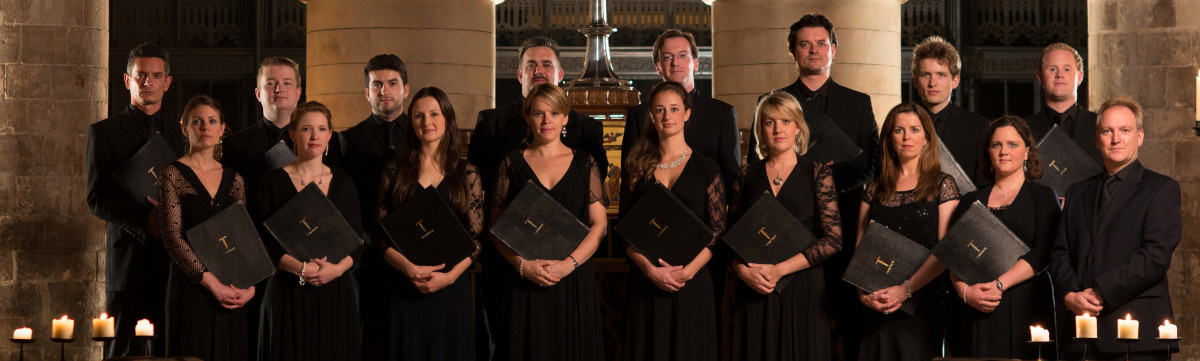




Israeli soprano Chen Reiss grew up in Holon and Herzliya and began her vocal training at the age of fourteen. She completed her military service as a soloist in the IDF orchestra. She continued her studies in New York and made her debut in 2000 as Mademoiselle Silberklang in Mozart's *Der Schauspieldirektor* at the World Bank Mozart Festival. In 2002, she made her debut at the Bavarian State Opera and sang in Gustav Mahler's Symphony No. 8 at Carnegie Hall that November. She was engaged by the Vienna State Opera and has since performed at major international opera houses and concert halls.
Classicpoint.net: You completed your military service as a soloist in the IDF orchestra, which is how you launched your career. Can you tell us something about it?
Yes, I sang everything there, from opera arias to Edith Piaf chansons to Israeli pop music. The first three weeks were the hardest because of basic training. I learned to shoot three different weapons, slept very little, had to do a lot of sports, clean the kitchen, guard the barracks, and put on a gas mask in eight seconds. But I think it's the best school for life.
What fascinates you about singing, what do you love about your profession?
When it comes to the voice, there's never a dull moment. Every day, every role, even simple songs can sometimes present challenges. Sometimes musical, sometimes dramatic, sometimes technical. Often all three. I can't take anything for granted; sometimes you think, yes, now I've got it all figured out and I've got everything under control, and then suddenly it can all go wrong. We're artists, not technicians, and we have to create something fresh and new every day. It keeps me on my toes, and I find that fascinating. You simply have to practice, practice, practice, constantly learn, and when everything comes together effortlessly on stage, that feeling is simply a great joy and a delight. Soul and body become one, and that's what I love most.
What are your biggest challenges?
There are so many challenges. Learning the art of singing and developing those skills requires years of hard work, and it never really ends. That's the technical side. You have to learn many new roles and pieces; some are musically demanding, others dramatic, and all of this has to be done under time pressure. Then, of course, there's the competition; there are so many fantastic singers. On top of that, you always have to be fit and healthy. I also find it difficult to balance family life with a profession that demands so much physical and mental energy and involves so much travel. I'm a mother of two young children and a wife, and both my family and friends, as well as the theaters and orchestras, have expectations of me. That leaves very little time for myself. But I don't want to complain; I'm very happy to have everything.
How do you approach learning a new opera role?
The most difficult step in learning a new role is the first note. Having the courage to open the score and start from scratch. I'm always a little nervous before learning a new role, but once you're in it, it's like riding a bike; I have the necessary learning skills.
You recorded the soundtrack for the film "Perfume: The Story of a Murderer" with the Berlin Philharmonic under Sir Simon Rattle. What was the collaboration like?
The orchestra had already recorded the music, and I sang along to it afterward. The orchestra's beautiful sound was very inspiring, and the director had a clear vision of the sound he wanted from me. I love this soundtrack; I find it very beautiful and perfectly suited to the film.
You also sang at the Christmas Mass in St. Peter's Basilica in front of the Pope. What was that experience like for you?
Singing for the Pope was a highlight for several reasons. The "Et incarnatus est" from the Mass in C minor is, in my opinion, one of the most beautiful and moving arias Mozart ever wrote. Meeting Pope Francis was a very special and inspiring event. You feel that you are in the presence of a great man who is warm, kind, and caring. He wrote me a long, thoughtful, and very personal letter. Of course, I was very excited and nervous to be singing in the church and via live broadcast in front of millions of people, but I knew that God would not let me down, especially not at that moment.
You are Israeli, but you no longer live in Israel. What is your connection to your homeland? Are you also interested in the political developments in your country?
Unfortunately, I am not at all satisfied with the political developments in Israel. I am also very pessimistic about the future of the country. There is a lot of corruption, a lot of social problems, fear, and mistrust. In my opinion, this leads people to vote for the wrong candidates.
What are your current projects?
At the moment, I'm mainly working on the role of Ginevra in Handel's Ariodante. It's a new role for me, a long one, and both dramatically and musically demanding. I'm very much looking forward to working with Sir David McVicar and Maestro William Christie. At the same time, I'm preparing orchestral songs by Richard Strauss, which I'll be singing for the first time in London. So, two very different styles, which I practically have to sing with two different parts. In Handel, there are many fast coloratura passages; you have to sing very precisely and react quickly. In Strauss, it's long phrases, long verses, and you have to sink into the harmonies and merge with the orchestra. It's a completely different use of language. As I said, no boring moments, but a lot of memorization.
Which roles that you haven't yet sung would you absolutely love to sing?
Some of my dream roles would be, for example, Konstanze (The Abduction from the Seraglio), Amina (La Sonnambula) and Giulietta (I Capuletti), to name just a few.
Interview by Florian Schär | Classicpoint.net | March 1, 2018
October 25, 2026 - Kosmos Chamber Music: Chen Reiss & Sharon Kam
March 22,
2027 - Beethoven: Missa solemnis in D major, Op. 123
March 25, 2027 - Beethoven: Missa Solemnis
May 6, 2027 - Chen Reiss (soprano), Munich Philharmonic, Lahav Shani (conductor)
July 1, 2027 - Beethoven: Missa solemnis in D major, Op. 123
































































Do you want to attract more visitors to your concerts?
Find out more about the possibilities this portal offers.
With a concert search subscription, you will receive an email for your selected cantons/federal states as soon as a new concert is listed there. You can unsubscribe from the service at any time.
