
interview
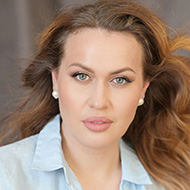
Interview with Elena Stikhina
June 1, 2026
“The Zurich Opera House has a very special meaning for me.” Elena Stikhina is…





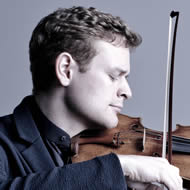
Arabella Steinbacher was born on November 14, 1981, in Munich, the daughter of a Japanese mother and music professor Alexander Steinbacher. She began violin lessons at the age of three, and at nine she received a scholarship to the Munich University of Music and Performing Arts, where she studied with Ana Chumachenco, who recognized and nurtured her exceptional talent. Arabella Steinbacher has since achieved international acclaim and is considered one of the most distinguished German violinists of her generation.
Classicpoint.ch: You grew up in Germany. Your mother is Japanese. What is your connection to Japan?
Japan is like half my home, and every time I'm there, hear the language, breathe the air, so many childhood memories come flooding back. I spent almost every summer with my grandparents in Tokyo. Now I only travel there to perform, but that feeling of coming home has always remained.
Where do you see the main differences in the interpretation of classical music between Europe and Japan?
The Japanese greatly admire Western composers, which is why many Japanese musicians go to Germany to study and be inspired by our culture. Even though Japanese musicians haven't absorbed our traditions like mother's milk, I still sense their passion for European music.
You do a lot of yoga and meditation. How does that affect your violin playing?
Before my performances, it's very important for me to withdraw and focus on my performance through meditation and breathing exercises, freeing myself from all external influences. This makes me feel closer to the music.
Do you always practice sitting cross-legged?
Yes, I learned this way of practicing from Ivry Gitlis. In hotels, I always find a comfortable spot on the floor to practice and rest my violin on a chair. It's the most relaxing way to play as freely as possible.
You often close your eyes for extended periods when performing. Do you still perceive the audience, or do you try to detach yourself from them in a certain way?
Detaching myself isn't quite the right word... I try more to free myself from external distractions that might distract me from the music, but I do perceive the audience as an energy and incorporate it into my playing. They give me so much back, and it's like a give and take.
You learned to play the violin using the Suzuki method. Your father would play for you on the piano, and you would copy him. You only learned to read music much later. Would you still recommend this approach today?
For me, learning by ear was very helpful, and honestly, that's still the fastest way for me to learn, although I also have a visual memory. What I really appreciate about the Suzuki method is the playful way children learn instruments, for example, through group lessons with peers. The most important thing at that age is that making music is fun; otherwise, you give it up pretty quickly.
You haven't won any major competitions. When did you personally have your breakthrough as a soloist?
Since I was eight years old, I've had the opportunity to perform regularly and try out my repertoire in front of an audience, first on a small scale with student orchestras and later more and more with more well-known orchestras. This meant that many people heard me, which in turn gave me new contacts with promoters, agents, and conductors, which was very fortunate for me. Competitions are especially helpful when you don't have these performance opportunities.
You travel a lot, often alone. What do you miss most from home when you're on tour?
Of course, I miss my family and friends the most, but many of my friends are now scattered all over the world. Otherwise, I try to pack a little piece of home in my suitcase, small things like my diary or my yoga mat.
Where do you find balance to the world of classical music?
I love jazz, and when I'm on tour, I always check what jazz concerts are on.
What's your opinion on historically informed performance practice?
As long as something is interpreted honestly and authentically, it convinces me; I only have a problem with it if it seems artificial.
Is a permanent teaching position something you're considering?
One day, I definitely want to pass on my experience to young, talented musicians. There are many aspects besides playing the violin that you have to prepare young musicians for and protect them from. Unfortunately, the music industry isn't just about the music, and for that, you need strong nerves and people you trust who will accompany you on this path.
Interview by Florian Schär | Classicpoint.ch | February 2, 2015
Photo: Robert Vano































































Do you want to attract more visitors to your concerts?
Find out more about the possibilities this portal offers.
With a concert search subscription, you will receive an email for your selected cantons/federal states as soon as a new concert is listed there. You can unsubscribe from the service at any time.
