

interview
Interview with Julia Lezhneva
August 31, 2026
“Analytical work allows for emotional freedom, while emotional discoveries…”







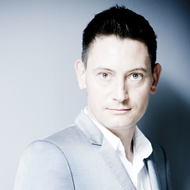
The versatile singer and composer Daniel Behle enjoys equal success in concert, song, and opera. His repertoire ranges from Baroque masterpieces through Classical and Romantic repertoire to compositions of the 20th and 21st centuries.
He regularly performs with orchestras such as the Staatskapelle Dresden, the Berlin and Vienna Philharmonic Orchestras, the Berlin Radio Symphony Orchestra, the German Symphony Orchestra Berlin, the NDR Elbphilharmonie Orchestra, the Orchestra dell'Accademia Nazionale di Santa Cecilia, the Vienna Symphony Orchestra, the Leipzig Gewandhaus Orchestra and the Stuttgart Bach Academy, working with conductors such as Stefan Asbury, Bertrand de Billy, Semyon Bychkov, Christoph Eschenbach, James Gaffigan, Thomas Hengelbrock, Pablo Heras-Casado, Marek Janowski, Philippe Jordan, Fabio Luisi, Ingo Metzmacher, Kent Nagana, Yannick Nezet-Seguin, Hans-Christoph Rademann, Jeremie Rhorer, Andreas Spering, Christian Thielemann and Franz Welser-Möst.
You initially studied school music, trombone, and composition. What were your career prospects back then?
To be perfectly honest, I didn't give it any thought. I also don't believe that people study music to earn money. Making music is a need and an urge. At least for me. The only thing that needed to be figured out was how to channel it. And that took some time.
At the age of 22, you started taking singing lessons from your mother. What was it like being taught by your mother at that age?
Since I was already past puberty, lessons with my own mother weren't a problem. I knew my mother as an artist, yes, as someone who was extremely successful worldwide. In that respect, I already knew that what she was teaching me might be valuable. This determination propelled me into the profession after just six years of training. My first job was at the Oldenburg Theatre.
Do you still play the trombone today?
Unfortunately not. I still have my alto and tenor trombones, but I don't play them. However, I do write quite a lot for brass instruments, and currently, in my first stage work, I'm naturally making sure that my colleague has something beautiful to play.
You then studied with tenor James Wagner for five semesters and returned. Why the return?
James Wagner died suddenly in 2003. My studies weren't yet complete. After his death, I completed the second intermediate exam, the colloquium, and my diploma within six months. I didn't want to subsidize my mother's job.
Are you still composing diligently?
I finished my first stage work in 2020/21. An operetta, "Hopfen und Malz" (Hops and Malt). With orchestra, choir, eight soloists, and a rather funny story. Composing and orchestrating two and a half hours of music was a mammoth task. Now it's 600 pages of score, and I feel I made the best artistic use of the pandemic period.
What's important to you when composing?
I've always been a friend of the musical. As an active musician, I was always very disappointed during my composition studies by how often and readily compositions were written against the musician's will. As you can hear, I'm not a fan of the avant-garde, etc., but rather very much drawn to free tonality. A great admirer of Richard Strauss. His hypertonality, a term I coined for myself, the extremely rapid shifts in tonal centers, that's what I enjoy. It sounds beautiful, but you have to keep your mind on it. Demanding beauty, so to speak.
You received the Opus Klassik award as Singer of the Year 2020. What does this award mean to you?
I still feel very honored. I received the award as an independent artist. MoZart was my 14th solo album, which only came about thanks to crowdfunding. Great stuff.
How are you experiencing the current pandemic situation?
I have more time for my family and for composing. Planning and recording my own productions has had little impact on that. Switzerland is supporting independent artists during the pandemic. Lucky me.
What lessons will you take away from this experience for the future?
Less flying, fewer lengthy new productions, and writing another stage play. And unfortunately, also realizing that Germany didn't exactly cover itself in glory as a "cultural nation" during the pandemic. There's a lot of making up to do.
What passions do you have outside of music?
My children, of course. And if there's any time left, I've been playing World of Warcraft for 16 years now...
Interview by Florian Schär | Classicpoint.net | June 1, 2021
March 20, 2027 - Beethoven: Missa solemnis D major op. 123
June 19, 2027 - Daniel Behle (tenor), Alliage Quintet






























































Do you want to attract more visitors to your concerts?
Find out more about the possibilities this portal offers.
With a concert search subscription, you will receive an email for your selected cantons/federal states as soon as a new concert is listed there. You can unsubscribe from the service at any time.
