

interview
Interview with Julia Lezhneva
August 31, 2026
“Analytical work allows for emotional freedom, while emotional discoveries…”



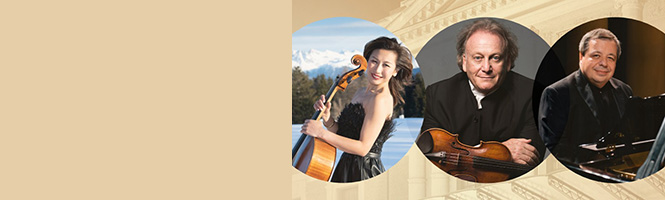


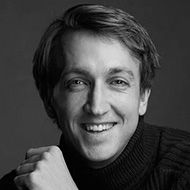
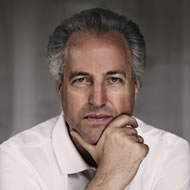
Fabian Müller is one of the most outstanding pianists of his generation. He gained international attention in 2017 at the ARD Music Competition in Munich, where he won five prizes, including the Audience Prize. He had already received multiple awards at the International Ferruccio Busoni Piano Competition in Bolzano in 2013.
Since then, Müller has performed on prestigious stages such as Carnegie Hall, the Elbphilharmonie, and Wigmore Hall. At the invitation of Daniel Barenboim, he performed all 32 of Beethoven's piano sonatas at the Pierre Boulez Saal in Berlin. He regularly collaborates with renowned orchestras, including the Tonhalle Orchestra Zurich, the Bavarian Radio Symphony Orchestra, the Deutsches Symphonie-Orchester Berlin, and the WDR Symphony Orchestra.
Your interpretations often seem very structured yet free – how do you balance analytical thinking and intuition when working on a piece?
I believe that most music has similar aspects to architecture. Of course, it's easy to get lost in the moment. But there's also a relationship between dimensions, distances, and weight, as well as the connections between elements and the processing of structures. Once you've integrated all of that, you're not constrained in the end, but on the contrary, much freer and more expressive.
Is there a work that completely baffled you upon first encountering it, one that you had to work your way through?
Beethoven's Hammerklavier Sonata is still like diving into an alien galaxy every time I play it. At its best, I seem to have "understood" it in the heat of the moment, but as soon as that moment is over, it's a mystery to me again.
What role does silence play for you in music – especially during transitions or after climaxes?
I like to practice at night in the dark, without turning on the lights. The silence then sounds even deeper and the music more intense. In noise, every note loses its value.
How do you decide when to strictly adhere to the score and when to deliberately deviate from it?
I'm reluctant to deviate from what's written in the music. But I also don't believe in mere reproduction. If someone else asks me to say "I love you," in the end I can only say my own version of it—at least if it's to sound genuine.
Which composers do you consider more "intellectual"—and which more "emotional"?
There are many misunderstandings about this. Bach, for example, is much more emotional to me than he is often portrayed. Much contemporary music, for example by Ligeti and Kurtág, is also brimming with emotion. And even the most Romantic composers like Brahms and Schumann have something very "intellectual" about them in the sense that their compositional process was strongly driven by intellectual work, and one can still sense this work.
How do you put your programs together – more according to a dramaturgical concept or out of personal curiosity?
Always very dramaturgically, like a story. Although I'm often surprised myself by which pieces fit well together. You often only realize that when you try them out. It's like with food, when as a child you suddenly realize that strawberries and chocolate go well together, even though you never thought it possible before.
Is there a work that you're currently particularly interested in, but which you wouldn't yet perform publicly?
Anything by Bach. He's actually the most important composer for me, but I hardly ever play him publicly at the moment…
Was there a concert where something completely unexpected happened and influenced your interpretation?
No, during a concert I'm not aware of what's happening around me. But what happens inside me, I can never predict, and it can be the most magical processes I know.
What kind of music do you listen to privately that people might not expect?
I loved listening to Michael Jackson as a child and I still do.
What passions do you pursue besides music?
I have a family with young children. I want to spend most of my time with them. If there's anything left over after music, I enjoy playing sports, which then feels almost like meditation!
Interview by Florian Schär | Classicpoint.net | October 1, 2026
Image Copyright: Fabian Müller
November 3, 2026 - Fabian Müller (piano)
January 9, 2027 - Fabian Müller (piano)
February 27, 2027 - The Trinity Sinfonia, Fabian Müller (piano & conductor)
May 11, 2027 - Maria Ioudenitch (violin), Sào Soulez Larivière (viola), Julia Hagen (cello), Fabian Müller (piano)
May 26, 2027 - Project classes b+, Beethoven Orchestra Bonn, Fabian Müller (piano & conductor)





























































Do you want to attract more visitors to your concerts?
Find out more about the possibilities this portal offers.
With a concert search subscription, you will receive an email for your selected cantons/federal states as soon as a new concert is listed there. You can unsubscribe from the service at any time.
