interview
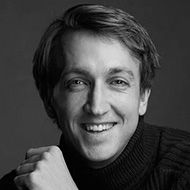
Interview with Fabian Müller
September 30, 2026
"I like to practice at night in the dark, without turning on the light. The silence sounds..."




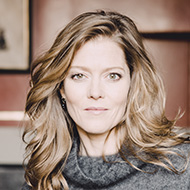
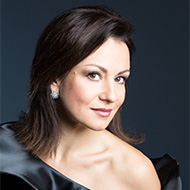
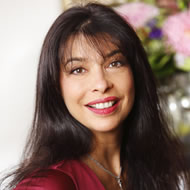
Swiss soprano Gabriela Scherer regularly performs on renowned stages such as the Bayreuth Festival, the Staatsoper Unter den Linden, the Deutsche Oper Berlin, the Semperoper Dresden, the Staatsoper Hamburg, the Festspielhaus Baden-Baden and the Opéra national de Paris, and has attracted international attention with her passionate interpretations of roles from works by Gluck, Mozart, Puccini, Strauss, Verdi, Wagner and Weber.
Do you remember the first opera you ever heard?
The very first opera I heard was The Magic Flute. I was four years old when I used to sit in front of our old record player in Zurich and listen to The Magic Flute over and over again, and that's probably when I first told my family that I wanted to be an opera singer. So the moment I sang my first Pamina last year was all the more emotional and blissful.
You started out as a mezzo-soprano about 20 years ago, then met your current husband and took a break for a few years. In 2015, you switched to soprano and started again. How did that come about? And how do you see it in retrospect?
When I was studying, one of my teachers told me that I wasn't a mezzo, but a true contralto, which completely overwhelmed me vocally. I was supposed to study Dalila and Azucena, and that felt completely foreign. Besides, I had just won a competition and received my first role, Hänsel, as a prize, which is also quite high, perfect for a young lyric mezzo. I then went to Vienna to see a well-known singing teacher and asked for her opinion, and after we had tried a few things, exercises and cadenzas, she said to me: "You're not a contralto, but you're not a mezzo either, you're a soprano." I went back to Salzburg and heard Renata Tebaldi sing her Desdemona, and I remember crying with relief because I simply felt—that's me. It feels one hundred percent authentic. Nevertheless, my calendar quickly filled up as a mezzo-soprano, and I couldn't simply break my contracts and switch to a different repertoire. But the high mezzo range was wonderful for that age. I sang the Composer, Dorabella, Annio, and Hänsel—all roles that can also be sung by a so-called second soprano. When the children were born, I stopped singing completely for a while; I just wanted to be a mother. It wasn't until four and a half years later that I thought about returning. And then it was clear—this time as a soprano, in the right repertoire.
Do you sometimes have a say in the direction and staging?
I find it incredibly important to have a good dialogue with a director, just as I do with the conductor. I want to understand exactly what a director wants and what their ideas and thoughts are, so that I can internalize and embrace them myself. I also ask questions if an idea simply doesn't make sense to me. I've only experienced situations twice where I simply couldn't stand behind a production, and that was a long time ago. I left both productions on those occasions. One involved pedophilic acts that I, as a young singer, was supposed to perform. I was pregnant with my first child at the time, and that was a complete no-go for me.
But otherwise, I've not only gotten along very well with every production, but I've also always found inspiration in working with directors.
Have you ever experienced harassment as a woman in the day-to-day life of opera?
Thankfully, I've hardly experienced any harassment at work so far. Yes, when I was a student. I received a terrible offer and would have been given a concert in a very lucrative setting. I was so shocked that I left the room speechless and then vomited. The second time, a very well-known conductor, whose private auditions everyone knew were like, wanted to hold a similar audition with me, but I simply brought along the opera house's then-casting director for protection, and I got out of the situation without any problems. I had only just started at the opera studio at that point. Nothing like that ever happened to me again after that.
Perhaps that also has something to do with the fact that many people have great respect for my husband.
What advice would you give to young opera singers for the best possible career planning?
I'm not sure what advice I would give a young singer; our business has changed so much, and in my opinion, not all for the better. But I would say that regardless of what's currently popular, what trend is currently dominant—whether it's success on Instagram with 300,000 followers, or whether it's about beauty ideals, or other trends that come and go—what should really matter most is singing well and telling the audience something with an open heart. I would always advise my students to also study with other teachers and to seek help from coaches later in their careers. And I would encourage them to remain authentic. Hopefully, a time will come when it's not primarily about trends or appearances, but about personality, when people go to the opera because they want to be touched in their souls. And that's only possible if you remain honest and true to yourself. The second point would be: a sound and good technique should always be paramount, so that you don't realize after the first three roles that you can only survive the part by screaming your lungs out. Choose the right roles wisely and without pressure, and take your time. Why do you have to sing your first Salome or even Brünnhilde at 28 these days? Or a Sachs? I don't understand it, and I think it's wrong. Trend or no trend.
What are your current favorite roles?
My favorite role is actually always the one I'm currently singing. With very few exceptions. But roles like Elsa, Elisabetta, and Ariadne are particularly close to my heart—absolutely one of my all-time favorites. I would also love to sing Tosca again sometime…
Which roles haven't you sung yet that you absolutely want to sing, and why?
I would love to sing Desdemona; it's my greatest wish. And other Verdi roles, as well as Strauss. I would very much like to sing the Marschallin and Salome. But I would also love to sing Rosalinde sometime… Vitellia, Elettra, Manon Lescaut—there are so many wonderful roles…
On which stages do you feel most at home?
I love singing at so many opera houses; the Berlin State Opera, of course, is a bit like home. But I've always loved singing in Dresden, too. I'm really looking forward to Bayreuth again; it's so special to be in that place, on that stage. And I imagine I'll feel the same way in Zurich this spring. The Zurich Opera House has held a special place in my heart since childhood. It will be very emotional for me to sing there.
Is there a stage experience you'll never forget?
There are many moving moments I've had on stage. As Ariadne, several times: once my debut as a soprano, then my debut with the role at the Berlin State Opera, and as Ariadne, I even broke my fingers six times on stage once—that wasn't a pleasant experience. What I'll never forget is my deep gratitude when I stood on the stage in Berlin and was allowed to sing Pamina; a few tears were shed. Or my first Elsa—with Klaus Florian Vogt as an absolutely otherworldly Lohengrin.
What passions do you have besides music?
I've become addicted to being in nature. I go to the forest with our dog every day; it feels so good, and it grounds me a lot in our sometimes stressful daily life, between traveling, rehearsals, and studying. There are a thousand other things I'd like to do; I want to write, have more time to read, but first and foremost, besides my work, I'm there for my children every free minute. Despite our truly extraordinary and special profession, they are my greatest happiness.
Interview by Florian Schär | Classicpoint.net | January 1, 2026
Image: Manfred Baumann




























































Do you want to attract more visitors to your concerts?
Find out more about the possibilities this portal offers.
With a concert search subscription, you will receive an email for your selected cantons/federal states as soon as a new concert is listed there. You can unsubscribe from the service at any time.
