
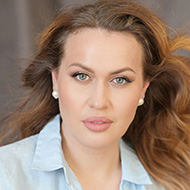
interview
Interview with Elena Stikhina
June 1, 2026
“The Zurich Opera House has a very special meaning for me.” Elena Stikhina is…


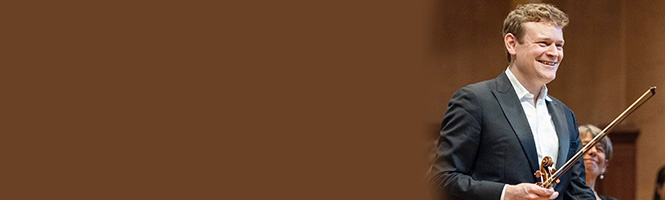


Born in Asti, soprano Erika Grimaldi discovered her passion for music in early childhood, first playing piano and eventually learning to sing. She received her diploma in both subjects from the Giuseppe Verdi Conservatory in Turin. She made her stage debut at the age of 18 as Serpina in Pergolesi's La serva padrona and in the following years won several prestigious competitions, including the Concorso Lirico Internazionale in Orvieto. She is now one of the most sought-after lyric sopranos in Europe. She has performed at opera houses such as La Scala in Milan, the San Francisco Opera, the Teatro dell'Opera di Roma, the Bavarian State Opera in Munich, the Deutsche Oper Berlin, and the Teatro di San Carlo in Naples. Her recent successes include Maddalena di Coigny (Andrea Chénier) and Leonora di Vargas (La forza del destino) at the Teatro Comunale di Bologna, the title role in Aida and Mimì in La bohème at the Teatro Regio di Torino, Lady Macbeth in Verdi's Macbeth at the Korea National Opera Seoul, Manon Lescaut at the Teatro Comunale di Bologna, Desdemona in Otello in Washington DC under the direction of Gianandrea Noseda, and Tosca at the Ópera de las Palmas, the Teatro Regio of Parma, and the Puccini Festival in Torre del Lago. In the current season she makes her role debut as Amelia in Un ballo in maschera at the Zurich Opera House, sings Manon Lescaut for the season opening of the Teatro Regio di Torino, Alice Ford in Falstaff at the Opera Carlo Felice in Genoa and the Contessa in Le nozze di Figaro at the Welsh National Opera.
You discovered your voice as a child. How do you remember that?
I have very clear memories. I loved singing so much that I could hardly wait to get home from school and turn on any music source and sing every song sung by male or female voices. I especially loved singing theme songs from cartoons, theme songs from television commercials, and songs by Cristina D'Avena (Editor's note: famous child singer). As I got older, I also discovered opera arias, although I didn't have even the slightest grasp of the technique. So singing has always been a great passion, a love that was instilled in me from birth.
What roles did you want to sing and act as a child?
Actually, I didn't think about singing roles as a child, since I wasn't familiar with opera. I was already a piano student, but my interest in singing was certainly sparked in my early teens. I was 16 when I took my first singing lesson. The idea of tackling a role only comes later, once you begin to master your voice. And then, especially in the initial stages of my studies, I was also very heavily guided, because a young person has no concept of right and wrong, apart from what they might like or dislike. So I blindly trusted my teacher, who guided me and gave me advice on what would be the right course of study for a hypothetical future. Therefore, I didn't really have a clear idea of what I wanted to do or what I wanted to become.
Which roles would you like to play today?
I'm actually very happy with what I'm doing now, because it's every artist's dream to debut in these roles. That doesn't necessarily happen, though, because it depends on maturity, vocal development, aptitude, and adapting to specific repertoires. So what I want is what I'm already doing.
Of course, there are also roles I haven't sung yet that I would love to sing; some are already planned, others aren't, but I'm sure it will happen sooner or later. For example, one of my dreams is Elisabetta in "Don Carlo," in which I would love to make my debut sooner or later. I haven't sung "Madama Butterfly" yet, but it's already on my calendar. In general, all the roles I've played so far have made me very happy, although I would like to repeat them as often as possible to deepen my understanding of them.
You were born in Asti, a city also known for its wine culture. What is your favorite wine?
Yes, that's true, it's a city that's somewhat famous around the world, perhaps especially for Asti Spumante, which is the most internationally renowned 'wine'. But in reality, our wines are quite different, characteristic of our region. I do have a favorite wine, a red called Ruchè. It's a wine I love very much, a sophisticated wine with a fairly high alcohol content, but very smooth in taste, which has gained international attention in just a few years: I even found it in a restaurant in Zurich, for example!
The Turin theater was your first stop. How did the collaboration with this theater come about?
Turin was the first theater where I made my debut. I consider my first real debut to be at the Teatro Regio in Turin, even though I had sung other roles at other theaters before. The collaboration came about somewhat by chance. I had sent an email requesting an audition, and they called me at a time when I couldn't attend because I was participating in an important competition, the Spoleto Competition, and had already passed the preliminary round. So I was very far away, and the audition was scheduled for a day that wouldn't have allowed me to reach another city, even if I had traveled quickly. Then I won the competition in Spoleto, informed the theater, which gave me another chance to be heard, and from there I was immediately entrusted with a role, Mimì in 'La bohème', with performances both at the Regio Theater and in provincial towns, as it was a youth project of the Regio Theater that toured other cities. I did, I don't remember exactly, about 8 or 10 performances. This is how, gradually, this mutual appreciation and trust developed, and I returned to sing at the Regio Theater practically every season.
Recently, there has been discussion in Switzerland about harassment and sexual assault in the opera world. Have you also experienced this problem?
Sexual aggression has been a topic that has been widely discussed in the media lately, and many incidents have come to light, sparking debate. Personally, I have never experienced anything like that, and I sincerely hope it never will. In any case, these are always very unpleasant situations that also have repercussions. For my part, I try as much as possible to avoid getting into such somewhat dubious situations, which could then perhaps even lead to a misunderstanding that doesn't correspond to reality.
What is your favorite place in the world to sing?
I don't really have a favorite place or theater. Theater in general is my life, so I prefer singing in theaters all over the world. If I really had to express a preference, then Turin is my home. I have this preference because it's a theater I know very well. I know all the people who work there, and the wonderful thing is that I can go home every night and be with my family.
However, I would like to add that I had a wonderful time at the Zurich Opera House when I made my debut there in July of this year as Maddalena di Coigny in 'Andrea Chénier,' in a concert performance: the atmosphere is very familial, I felt right at home because of the warm welcome, and there's great collaboration between all the different departments. The theater is a gem, with exceptional acoustics and a very participatory audience. I am looking forward to returning and making my debut in a stage opera this December, playing Amelia in 'Un ballo in maschera' for the first time.
How would you define your voice?
Defining not just my voice, but any voice in general, is very difficult because the voice often has so many nuances that identification is sometimes impossible. I can say that my voice is flexible and malleable, adapting very well to different circumstances and the role I'm playing.
It's very difficult to categorize because, for the repertoire I'm currently singing, I would say I have a full operatic voice. It's definitely a polished voice, but at the same time, it possesses a brilliance, something crystal clear, that likes to play with the written notes, depending on what it's meant to express.
Which part of your voice do you like best, and where do you see room for improvement?
The first thing I always think about is the potential for improvement, because you never stop studying and learning, especially since the voice is an integral part of a body that changes—not abruptly overnight, of course, but as the body matures. So the voice is constantly evolving. What you've always done might need to be changed in some way tomorrow to ensure a particular passage is performed as effectively as possible. Improvements are ongoing and go hand in hand with the changes our bodies undergo, with the voice changing and maturing depending on the role you take on. What I like most about my voice is precisely this ability to always find a solution to the obstacles along the way. So, apart from this adaptability, I don't have a purely technical vocal quality that I prefer. The areas for improvement relate not so much to the voice, but to the technical execution of a role, also because the same role often appears several times in the course of an artist's career and each time, at least as far as I'm concerned, I try to find an aspect that I can improve and deepen.
What are your passions besides music?
My greatest passion is animals. I have many of them—four wonderful dogs and five chickens—and I love taking care of them. I also enjoy cooking, of course, only when I have the time and inclination. And recently, I've also started gardening; I'm just learning the basics. I'm not an expert yet, but it's something I really enjoy. It relaxes me a lot when I don't have time to do all these things. I'd also like to do some exercise. I have the good intentions, and it's definitely on my to-do list, but the constant travel for work certainly doesn't help.
Furthermore, I'm fascinated by the world of fashion, and I'm very fortunate to have the privilege of working with a famous fashion designer, Eleonora Lastrucci, who dresses me. All the concert dresses I wear are by Lastrucci.
Interview by Florian Schär | Classicpoint.net | October 1, 2024
© Image: Victor Santiago




























































Do you want to attract more visitors to your concerts?
Find out more about the possibilities this portal offers.
With a concert search subscription, you will receive an email for your selected cantons/federal states as soon as a new concert is listed there. You can unsubscribe from the service at any time.
