interview
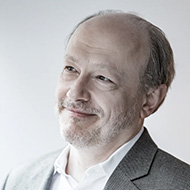
Interview with Marc-André Hamelin
July 31, 2026
“I consider composing an indispensable tool for performing musicians.”…




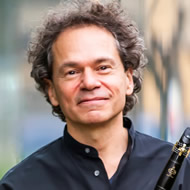
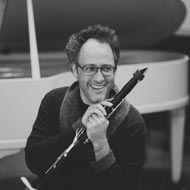
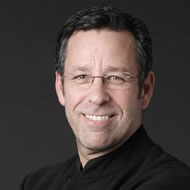
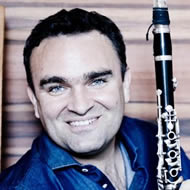
Fabio Di Càsola was born in Lugano in 1967 and won first prize at the Geneva International Music Competition (CIEM) in 1990. He is also a recipient of the Prix Suisse for Contemporary Music and the Prix Patek Philippe. He also won first prize for contemporary music at the Stresa Competition. In 1998, he was voted "Swiss Musician of the Year" by a jury of experts and the public. From 1990 to 2010, he was principal clarinetist of theMusikkollegium Winterthur.
Since 1991, he has been Professor of Clarinet and Chamber Music at the Zurich University of the Arts, where he teaches in English, French, German, and Italian.
In 2006, he founded the Klang Chamber Music Festival, of which he is the artistic director. Most of his CDs have been released by Sony Classical.
Fabio Di Càsola is a member and co-founder of the Ensemble Kandinsky and the wind quintet Swiss5.
How and when did you come to play the clarinet?
On the jazz recordings my father listened to at home, the clarinet was the instrument that caught my attention the most. I was very impressed when I discovered that the sound of the clarinet in classical music is quite different and that the instrument is very rich in color.
As it happened, a friend of my parents had a very old clarinet in his attic that he no longer needed. I borrowed it when I was 10 years old.
You won the prestigious first prize at the CIEM International Music Competition at the age of 23. How did that change your life?
When I participated in my first major international competition, I was still studying for a master's degree in solo performance in Geneva.
Since the best clarinetists of the time were obviously participating, I didn't expect to win.
After winning the competition at that stage of my life, while still a student, I felt compelled to quickly establish myself in this wonderful profession.
A month later, I became principal clarinetist in the Winterthur Music Collegium Orchestra.
You have also won competitions for contemporary music. What is your approach to and relationship with contemporary music?
Through intensive engagement with contemporary music, I have certainly developed certain qualities, both in tone and finger technique.
But I believe the most important aspect of this experience was seeing classical music and its development from a different perspective.
You have been teaching students at the Zurich University of the Arts for over 30 years. How have the students and their playing changed during this time?
One can undoubtedly say that the general basic level of technical mastery of the instrument among the students has improved significantly.
What, in my opinion, unfortunately has not improved (I believe it has even deteriorated) is the ability to listen attentively to music and perceive the musical events in a live concert. This is probably because we hear a lot of music all day long, even involuntarily, and therefore lose the habit of actively listening to music.
Do you teach differently today than you did 30 years ago?
In these 32 years, I have gained a wealth of experience and developed a wide range of methods to help my students solve their problems.
With this in mind, I hope to become more effective in my teaching at the Zurich University of the Arts (ZHdK) over the years.
You were principal clarinetist of the Musikkollegium Winterthur and are currently a very active chamber musician, a member of several ensembles. How do you manage everything, including teaching, alongside your solo career? Did you never want to put all your eggs in one basket?
The fact that I received an orchestral position and a professorship in Zurich just a few months after winning first prize in Geneva allowed me to pursue my solo career, my orchestral career, and my teaching simultaneously.
I still feel very fortunate to have had this opportunity. These three professions are very closely intertwined and complement each other.
This allowed me to develop musically in different directions, which has probably also made me more open-minded in my profession (at least I hope so).
If I had put all my eggs in one basket, I wouldn't have been able to develop in this way.
You have been the artistic director of the klang festival since 2006. What is special about this festival?
The klang.ch festival is based on the idea of creating a close connection between the audience and the musicians. The various venues (Meggenhorn Castle, St. Charles Hall, Grandhotel Giessbach, Kursaal Hotel Zürichberg, etc.) are also very inspiring for the musicians.
The festival always takes place between December 26th and 30th, but also over three days in the summer: for example, from June 16th to 18th, 2023.
In terms of artistic direction, we strive to put together a diverse program with familiar and yet-to-be-discovered pieces to appeal to a broad audience. The ensembles range from soloists to octets, and this summer's closing concert, "Gourmet Grooves," will feature Peter Schickele's classical-jazz quartet and Bohuslav Martinů's sextet "Revue de Cuisine" with humorous texts – an entertaining evening is guaranteed.
What does music mean to you personally, and how has your relationship with it changed over the years?
As a child, I was rather shy and introverted. Listening to classical music in my room, alone with headphones, gave me a lot of inner strength to connect with the outside world.
Later, over the years, and with the concert opportunities I had, I realized that I could express myself differently than with words and that I could reach the souls of the people around me with more feeling and power. As I said, I consider myself very fortunate to have had this opportunity and am very grateful for it.
What passions do you have besides music?
Being in contact with nature, walking in the forest, especially in the mountains, and on the way back... drinking a good espresso.
What haven't you done yet that you would still like to do – musically and personally?
My particular interest lies in chamber music, and I'm pleased that I'm already very active in this area.
If I may indulge in a dream: I would love to have my own concert hall with ideal acoustics. There, I would like to organize (and perhaps even conduct) chamber music programs or programs with small orchestras, where the audience can immerse themselves even more deeply in the sound experience.
Interview by Florian Schär | Classicpoint.net | April 1, 2023
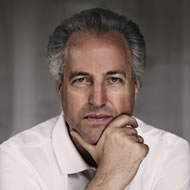
Photo: Adrian Rosu


























































Do you want to attract more visitors to your concerts?
Find out more about the possibilities this portal offers.
With a concert search subscription, you will receive an email for your selected cantons/federal states as soon as a new concert is listed there. You can unsubscribe from the service at any time.
