
interview
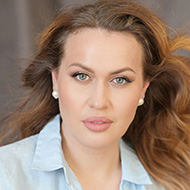
Interview with Elena Stikhina
June 1, 2026
“The Zurich Opera House has a very special meaning for me.” Elena Stikhina is…


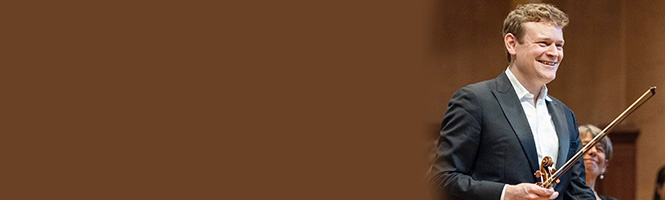


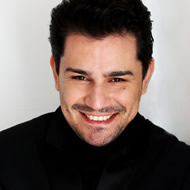
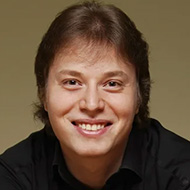
Saimir Pirgu first studied violin in his hometown of Elbasan in central Albania. From 2000, he studied singing at the "Claudio Monteverdi" Conservatory in Bolzano under Vito Maria Brunetti. There, Pirgu met Luciano Pavarotti, who coached him vocally and worked with him on many roles from his repertoire. Pirgu was discovered by Claudio Abbado, who invited him to Ferrara in 2003 to sing the role of Ferrando in a production of Così fan tutte conducted by Abbado.
Classicpoint.net: You first learned to play the violin. What influence did that have on your vocal studies?
When I was in primary school in Albania, the waning communist system was influencing the school system through music courses and various opportunities for artistic expression. Partly because I chose it and partly because the system dictated it, I studied violin, graduated, but never stopped singing. Studying an instrument greatly contributed to my musical preparation, trained my ear, and refined my musical sensitivity. Without the instrumental training I received from that early age, I certainly wouldn't have been able to earn my vocal diploma in just two years, win two major international competitions at the age of 20, and launch my career so early and with such renowned conductors.
You come from Albania. What is the status of classical music in Albania?
Albania is a country with a rich tradition of classical music. After the Second World War, our musicians primarily studied in the former Soviet Union, receiving a Russian-influenced education. In the following years, Albanian communism influenced music education, fostering the development of the local musical tradition and musicians, who were often technically very well-prepared. The Albanian people have always loved music. We have various theaters and symphony orchestras. A music scene in miniature, I would say.
Your parents both worked in the metal industry. What was their connection to classical music and your decision to become a singer?
My parents never had any connection to classical music. However, they always saw me as a responsible boy. Since they recognized my natural aptitude for music from an early age, they always supported my artistic decisions, even when these sometimes seemed risky and reckless. Although my passion for singing wasn't instilled in me by my family from birth, it must be said that it was always within me. Even as a very young child, I loved to sing and performed folk songs for small audiences of friends and acquaintances. The big turning point came when I was in middle school. As I've often said, I consider myself a "product" of the Three Tenors. I started singing because of them. I was about 13 or 14 and living in Elbasan, a small industrial city in Albania, where communism had only recently ended, when I saw the famous Three Tenors concert at the Baths of Caracalla on television. I was captivated. I recorded the concert and listened to it countless times. From that moment on, I knew this would be my life, and so it was. I wasn't even 18 when I finished my violin studies and left Albania for Italy, the home of singing. It was a hard blow for my parents to see me leave Albania. But even then, they trusted me and never questioned my decisions, especially because they saw my love for singing growing stronger every day. They didn't give me a particularly large sum of money by Italian standards, but it was their life savings, and they let me go to pursue my dream. I was accepted into the Bolzano Conservatory, where I met my teacher, Vito Brunetti, who took me into his class and believed in me greatly. Thanks to his teaching, I managed to earn my singing diploma in just over two years and begin my career very early. My parents, who at first couldn't believe how quickly everything happened, became my biggest fans, and even today they accompany and support me in all my decisions. I am proud of them and will never stop thanking them for their faith in me.
You were mentored by Luciano Pavarotti. Can you tell us something about working with him?
Pavarotti has been a great support to me from the very beginning of my career. I met Luciano Pavarotti when I was studying at the Bolzano Conservatory. The maestro was in Merano (northern Italy) taking a cure, and he enjoyed spending his free time listening to young, promising singers. He had asked if there were any young singers in the area, and my name had been suggested to him. I introduced myself, and that's how our friendship began. I studied the most famous works of the operatic repertoire with him, works I still perform today. His advice remains very vivid in my memory. He was not only a great teacher but also a good friend and mentor.
It was a great privilege for me to be taught by Luciano Pavarotti. He was never too proud to give me valuable advice that was fundamental to my career. I especially remember our work on correct pronunciation, passaggio, and sustain.
That's why winning the Pavarotti D'Oro award in 2013 was such a special honor for me.
What impressed you most about Luciano Pavarotti?
Pavarotti was always my idol: I was always particularly fascinated by his extraordinary vocal quality, his perfect technique, the way he paid attention to the words and pronunciation while singing, as well as his consistently impeccable intonation and musicality.
As a person, I can say that he was like a king. He was aware of his qualities and abilities, but at the same time, he was also a person with rare intelligence and an intuition that allowed him to immediately recognize who he was dealing with. He loved beautiful things, colors, and he was always ready to give his best—both in his singing and in his private life. In his presence, I never felt like a little boy, even though I was so young, but like a friend. That was a characteristic typical of Pavarotti and his circle of friends.
Claudio Abbado was the first great conductor to discover you. How did he come across you?
At the age of 20, I had already won the Enrico Caruso Competition in Milan and the Tito Schipa Competition in Lecce, and had participated in Alberto Zedda's Rossini Academy in Pesaro. Claudio Abbado heard about me when he was casting a production of Mozart's "Così fan tutte" and wanted to hear me audition. I remember that on the day of the audition, my flight was delayed, and I arrived very late. I thought I had missed a great opportunity. I arrived and saw the maestro rehearsing with his orchestra. He asked me to sing. I sang half the aria before he stopped me and told me I had been given the role. I couldn't believe it. From that moment on, I had a wonderful connection with him; he was a very warm person. It may be because I was so young at the time, but I think that when you have the opportunity to work with great musicians like Claudio Abbado, you only fully grasp the magnitude of what just happened later. It was incredibly fortunate to begin my career with one of the greatest conductors. For almost a decade, my biggest concern was learning as much as possible to live up to the extraordinary start of my career and not disappoint the maestro's expectations of me. This was true with all the great conductors I worked with who believed in me, such as Nikolaus Harnoncourt, with whom I made my debut as Idomeneo in 2008, and Riccardo Muti, with whom I sang my first Verdi Requiem at the Salzburg Festival in 2011.
What do you enjoy most about your daily work?
In the early years of my career, I loved traveling, getting to know new places and cultures. Lately, I've also been enjoying being at home, as I've traveled a large part of the world and am on the road 300 days a year. Even though the desire to travel isn't as strong as it was 15 years ago, my love for my profession grows stronger every day. Making music, practicing, perfecting my skills, breathing music every day... That's the best thing about my job. I'm a happy man!
Where do you see the challenges or unpleasant aspects?
One challenge I face every day is learning a part well, perfecting it, and developing it gradually. The singing profession, even though it's full of sacrifices, has many positive sides. Among the negative aspects is, above all, a certain loneliness that unites all singers. You're often far away from your loved ones, living in one place for a few weeks, forging new friendships, before having to leave everything behind again when you travel to the next engagement. These are difficult situations that a singer has to be used to and face, but they are immediately repaid when you step onto the stage, and even more so when the work is well received by the audience.
You are still young and already have an enormous number of performances per year. How do you recover each time? How do you take care of your voice?
It's really not easy, especially for a young singer with so many performances a year. The first secret is repertoire selection and the order of roles in the calendar. New productions help to recharge and prepare for a role as best as possible, since you have a long rehearsal period. You also have to know how to deal with colds and how to warm up your voice slowly and properly if you want to take good care of it, especially before performances. Good technique also helps a lot in protecting the voice.
What are your interests outside of music?
I love life and the beautiful things it gives us. I love being around people, being surrounded by friends and family, and spending a lot of time with them. I also love the sea; I enjoy swimming and snorkeling. I spend a lot of time outdoors and go running; I like being in contact with nature and I enjoy listening to all kinds of music.
Interview by Florian Schär | Classicpoint.net | December 1, 2017
© Photo: Fadil Berisha


























































Do you want to attract more visitors to your concerts?
Find out more about the possibilities this portal offers.
With a concert search subscription, you will receive an email for your selected cantons/federal states as soon as a new concert is listed there. You can unsubscribe from the service at any time.
