
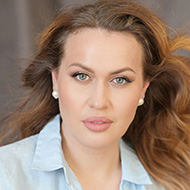
interview
Interview with Elena Stikhina
June 1, 2026
“The Zurich Opera House has a very special meaning for me.” Elena Stikhina is…


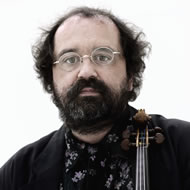
Over 300 compositions have been written for Teodoro Anzellotti. For over 30 years, he has been a fixture on the concert stage, teaching and recording CDs. He has played a key role in integrating the accordion from folk music into classical music. Through innovative techniques, he has expanded the tonal palette of his instrument to an unprecedented degree.
Classicpoint.ch: Your father was already playing the accordion when you were still living in Italy. What did the accordion mean to your father?
The accordion was an integral part of his life and his love. After emigrating, it became even more important in his new country. If it had been possible to pursue music professionally in his time and region, he certainly would have done so.
His ear was infallible, and he had thousands of pieces memorized. That remains indelibly etched in my memory to this day.
How did you come to play the accordion?
My father's accordion case was off-limits. And as is often the case with children, this taboo held a particular fascination for me. When I was finally allowed to play the accordion, I was captivated by it and practically inseparable from the instrument.
You grew up in Germany. If you compare Germany and your birth country, Italy, what are the differences regarding the accordion?
For the general public, the accordion is still closely associated with folk music. If it's interesting or sophisticated, the accordion has a higher status.
In Italy, remnants of folk music with very old roots still exist, for example, in Neapolitan songs. Elements of this music can even be found in Pergolesi's operas with their ambiguities between major and minor keys, or rhythms from tarantellas. This music is still played and loved today – and with it, the current instrumental lineup, including the accordion. In Italy, it seems to me that there are generally fewer prejudices and classifications regarding art or artists. In German
-speaking countries, the accordion still has a somewhat staid and unpretentious image. However, due to the influence and presence of various world music genres, this image has been changing for some time.
Classical music lovers now know and appreciate the accordion as a classical concert instrument as well. Especially at festivals, where curiosity, a thirst for surprises, and a desire for innovation are greater than in subscription series, accordion programs are very well received, increasingly in demand, and frequently performed.
In contemporary music festivals, it is now a standard part of the instrumental repertoire.
As a child, you practiced obsessively. Your parents, out of fear, even once took your accordion away and locked you up. What was your motivation?
I enjoyed it immensely, and that's why there were these periods of intense enthusiasm. Playing the accordion was by far what I loved most, and certainly what I was best at.
I don't really know exactly what sparked this passion.
More than 350 works have been written for you. What fascinates composers about the accordion?
The accordion is an extremely versatile instrument. It possesses a great tonal variety and is a kind of "synthesis instrument." It can be easily combined or mixed with all instrument groups, blended with them, or set apart sonically. It has a mysterious and sensual sound world. It can sound delicate and supple, and even light and somewhat chaotic in the highest registers, while at other times it can be direct, brightly shining, and charge with tremendous intensity and richness, then again pale or liturgical.
But what is particularly special and unique is that it is a polyphonic wind and keyboard instrument. The sounds can be made to swell and recede from nothing. The weight of the sounds can be shaped and experienced with both hands, arms, or the whole body. It is an instrument that audibly and visibly breathes, and I believe this quality is of particular interest to composers and fascinates listeners. For others, there may be a certain appeal in its unusual nature.
Why did composers of serious classical music only discover the accordion now?
It wasn't until the 1960s that concert accordions became readily available. Before that, they were only available as custom-made instruments directly from certain manufacturers. Many composers probably weren't even aware of their existence. Alban Berg, for example, had trouble finding a suitable accordionist for the 1925 premiere of his Wozzeck, one whose instrument could play everything with precise pitch and in the correct octaves. He only succeeded after a long search.
Similarly, Sascha Heifetz, an accordion enthusiast, commissioned such a custom-made instrument in Italy for himself in the 1930s.
The difference from conventional accordions is that they not only allow you to play mechanically pre-programmed bass notes with harmonically matching chords, which is practical for straightforward playing and quick to learn, but also offer individual notes across six octaves. In principle, anything written for keyboard instruments can be performed technically correctly on an accordion. Since then, a serious, independent development of accordion literature has gradually begun, allowing the accordion to be explored in new, complex sonic and technical dimensions.
Of course, this required exceptionally talented, courageous, and inspiring pioneers who approached composers. Initially, the focus was on setting standards. A pedagogical aspect also played an understandable and important role at that time. Extremes were not sought.
I, on the other hand, am driven by an insatiable curiosity to explore every facet of the accordion, to question sonic and technical standards, and to continually test and expand my own limitations and those of the instrument. From this, and naturally with the selection of composers, a corresponding repertoire, technique, playing style, and also questions about improving accordion construction have emerged.
Recently, far more new literature has been composed for the accordion than for any other instrument. Is the accordion the solo instrument of the future?
Indeed, a large body of interesting literature has now been created worldwide. Not only solo pieces, but also music for a wide variety of smaller and larger ensembles, or solo concertos with orchestra. For many musicians, especially keyboard players, solo pieces or purely solo programs are an obvious challenge. There is now an ocean of wonderful solo pieces that allow for the most diverse and interesting programs.
Nevertheless, I believe that in the future the accordion will develop even further in chamber music and also become a more established part of new orchestral and ensemble repertoire.
You teach at the music academies in Bern and Freiburg im Breisgau. Where do you see the differences between the university systems and the students in Switzerland and Germany?
As a result of the Bologna reforms, music academies in Germany were able to maintain a four-year study period for Bachelor's degrees. The extra year is noticeable for the instrumental major.
Students in Switzerland appreciate that chamber music and contemporary music receive more organizational support, planning, and promotion. Project work and openness to new ideas are encouraged and almost always lead to public performances. Students generally receive closer guidance and support, even in minor subjects.
In Germany, students are expected to demonstrate more initiative, independence, and flexibility. Much is also done informally.
However, despite individualized course content, locations, and traditions, the universities are working intensively, especially recently, to bring the multifaceted requirements for later professional life up to date and to optimally prepare students for it. For example, the option of living as a freelance "patchwork musician"—which is becoming increasingly common for musicians today.
What about the next generation? Is the number and quality of accordion students increasing or decreasing?
According to statistics, the accordion is the third most popular instrument among children in Germany and Switzerland.
In rural areas, however, it is still more often taught by part-time teachers. The idea of working as a professional accordionist and pursuing comprehensive music studies at a university is still somewhat unusual in these circles.
Nevertheless, the number of accordion students has multiplied in the last 20 years. Applications have become more international. The overall quality has increased significantly. A high professional level of playing is now reached three to four years earlier.
In prestigious university classes, you can now find at least one student who can play pieces that were considered extremely demanding 20 years ago and had only a few soloists in their repertoire.
Stylistic confidence and sound quality have also developed further.
Many instruments required a development period of 200 years to achieve a highly refined playing technique and a large repertoire. The accordion played it at a dizzyingly high speed. Like in time-lapse.
Do you have any other passions besides playing the accordion?
Besides my family, I don't have much free time and try to consciously experience and enjoy everyday things. Beautiful landscapes, travel, good cooking. Or, for a long time, I've been interested in accordion making. I have very precise ideas and criteria, and I was fortunate enough to find an exceptional and, for me, perfect accordion maker in the Bugari workshop many years ago. I maintain close contact with his technicians. The pianist Pierre-Laurent Aimard made a nice comparison for the dialogue between instrument makers and performers: "It's somewhat like a Formula 1 driver and his technicians."
Interview by Florian Schär | Classicpoint.ch | August 4, 2014
































































Do you want to attract more visitors to your concerts?
Find out more about the possibilities this portal offers.
With a concert search subscription, you will receive an email for your selected cantons/federal states as soon as a new concert is listed there. You can unsubscribe from the service at any time.
