

interview
Interview with Julia Lezhneva
August 31, 2026
“Analytical work allows for emotional freedom, while emotional discoveries…”


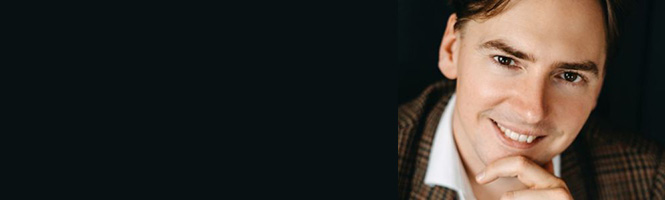


Lena-Lisa Wüstendörfer is Music Director of the Swiss Orchestra and, since 2022, has been Artistic Director of Andermatt Music, shaping the concert program at the Andermatt Concert Hall. In addition to her concert activities, Lena-Lisa Wüstendörfer publishes in the field of reception and interpretation history, particularly on Gustav Mahler and Felix Weingartner. Her edited volume, Mahler-Interpretation heute (edition text + kritik 2015), is, according to the Neue Zürcher Zeitung (NZZ), among the most "fascinating" publications on recent Mahler reception. In June 2019, the monograph Klingender Zeitgeist on Mahler's Fourth Symphony was published by the same publisher and was reviewed as a "groundbreaking" and "highly stimulating pioneering work" (Stifter Jahrbuch). She has also taught at the University of Basel on several occasions.
Born in Zurich in 1983, Lena-Lisa Wüstendörfer studied violin and conducting at the Basel Academy of Music and musicology and economics at the University of Basel, where she also earned her doctorate. She furthered her conducting studies with Sylvia Caduff and Sir Roger Norrington and was assistant conductor to Claudio Abbado.
Your goal with the Swiss Orchestra is to revive Swiss works from the Classical and Romantic periods. Why?
Swiss Classical and Romantic music has been largely forgotten in our cultural history. Few people today are aware of the musical treasures of the 19th century that lie hidden in this country – especially in the symphonic realm, which is my specialization. Abroad, people are much more attentive to their own musical history than here in Switzerland. With the Swiss Orchestra, we want to illuminate this blind spot and make it tangible in concert. For our 5th stage anniversary, which we are celebrating this November with our tenth tour, we are broadening our scope even further: from Viennese Classicism through early Swiss Romanticism to the present day – with Mozart, Beethoven, Friedrich Theodor Fröhlich, and Helena Winkelman.
Which Swiss work is particularly close to your heart and why?
Since I am deeply involved with these forgotten works, there are naturally several that mean a great deal to me. If I had to choose one, it would probably be Hans Huber's Symphony No. 1, also known as the Tell Symphony. An impressive work of Romanticism, it masterfully captures the essence of Swiss nature and legend without becoming simplistic. Huber's symphonies are superbly composed, which earned him, among others, the recognition of Richard Strauss.
How do you go about searching for unknown works?
That varies, of course. I often sift through estates in university libraries or find what I'm looking for when browsing private collections. These days, I also receive submissions from people who know and share my passion for Swiss Classical and Romantic music. When selecting pieces, I usually rely on my intuition. I read the scores, and if the musical quality convinces me, I like the composition, and I perhaps also recognize a relevant connection to current issues, I begin the planning and implementation, which can extend over a period of up to two years – depending on whether the piece already exists in print or needs to be newly edited from the manuscript.
You are the artistic director of Andermatt Music. What distinguishes Andermatt Music?
With Andermatt Music, we bring music beyond the beaten path to the highest concert hall in Switzerland. We present around 20 concerts here each year. The program is based on three pillars: "Swiss Orchestra – Swiss Classics," "World Stage," and "Local Roots – Sounds of Home." In addition to the Swiss Orchestra as the resident orchestra, celebrated classical stars, world-renowned orchestras, and outstanding ensembles from Central Switzerland perform. We consciously combine tradition with innovation. A central theme reflected in both the music and the architectural openness of the Andermatt Concert Hall, where the audience and backstage areas seamlessly merge, creating an intimate atmosphere for listeners and musicians. Rarely does one get as close to the performers as here.
You studied violin and conducting, as well as musicology and economics, and earned a doctorate. To what extent did the different fields of study benefit from one another, and what might have been challenging?
My motivation was to gain a thorough understanding of the genesis of compositions and their cultural context, alongside my studies of violin and conducting. This context is essential for me to grasp the subject matter from the ground up. Without this musicological background knowledge, my professional work with Swiss Orchestra in this form would not be possible – from research in the archives to examining manuscripts and performances. Perhaps the biggest challenge for me was managing these different fields of study within the given timeframe.
In your opinion, what are the greatest challenges in conducting?
For me, it is crucial that an orchestra forms an organic unit. This requires seamless interaction that enables optimal interplay. Sometimes the conditions for ideal harmony are quickly established, while other times it requires more effort to create them. This depends on various factors, such as the acoustics of a concert hall.
How would you describe your ideal orchestral sound?
That depends on the piece being played. What's important to me is the diversity of tonal characters an orchestra can evoke. A forte can be harsh, but it can also sound soft. Playing these nuances is crucial for making music speak.
What are your passions besides music?
I enjoy reading crime novels and like to stroll through the city with my eyes and ears open. I also love baking cookies – I've become quite the expert on Mailänderli (a type of Swiss shortbread).
Interview by Florian Schär | Classicpoint.net | November 1, 2024
© Image: Dominic Büttner
February 19, 2027 - Olga Scheps (piano), Swiss Orchestra, Lena-Lisa Wüstendörfer (conductor)































































Do you want to attract more visitors to your concerts?
Find out more about the possibilities this portal offers.
With a concert search subscription, you will receive an email for your selected cantons/federal states as soon as a new concert is listed there. You can unsubscribe from the service at any time.
