

interview
Interview with Julia Lezhneva
August 31, 2026
“Analytical work allows for emotional freedom, while emotional discoveries…”




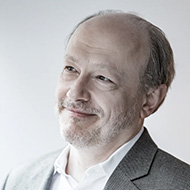
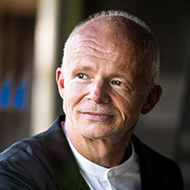
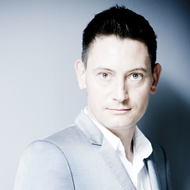
Kent Nagano is considered one of the foremost conductors of both operatic and orchestral repertoire. Since September 2006, he has been Music Director of the Montreal Symphony Orchestra, and his contract was recently extended until 2020. Since autumn 2013, he has been Principal Guest Conductor and Artistic Advisor of the Gothenburg Symphony Orchestra. Kent Nagano will begin his tenure as General Music Director and Chief Conductor of the Hamburg State Opera with the 2015/16 season.
Classicpoint.ch: Even as a child, you had 12-hour days filled with school, practice, and studying. Was that exhausting for you? What was your childhood and school experience like?
Yes, studying and practicing aren't always fun. And there's no doubt that it's also tiring. Nevertheless, I wouldn't say that practicing and studying took anything away from me or my friends or restricted us in any way. I was definitely able to coordinate it with other activities, such as water sports and surfing.
You were already conducting the church choir at the age of eight. What fascinated you about conducting as a child?
Music interested and fascinated me. And I very quickly became aware that it has to be shaped, that sound and melody don't happen by themselves, but that they require a person and their will to shape and mold them.
And what fascinates you about it today?
The sound, the melody, the rhythm – all of this requires shaping, especially in the context of works that tell great musical stories, that depict pictures or dramas.
You were good friends with Olivier Messiaen and have since recorded his entire concerto repertoire. Can you tell us something about Messiaen as a person and about his music?
Messiaen was my teacher, mentor, and friend, but above all, a role model. Through him, I learned what music truly is and what its meaning is. From him, I learned how to relate myself and my life to the world, to other people, and, of course, to music.
They believe in broad musical education, not just for gifted young talent. How should this be fostered, in their opinion?
By helping those who are serious about their engagement with music to discover and experience all that music is, what it can be, what it tells us, and what it speaks of.
You fear the impending irrelevance of classical music and have even written a book about it. Can you tell us about the main points and your vision for the future?
We must open up access to the phenomena of classical music and find methods and ways to make this access as barrier-free as possible. We should find ways to transform the effort of listening to musical works into a pleasure, an experience that cannot be replaced by anything else. We should provide opportunities on a broad scale to experience music, to understand it as a medium in which much about human existence, about hardship and suffering, but also about joy and utopian longings, is conveyed through music.
How exactly do you try to counteract this trend?
Our task in this context can essentially only be to convey the value of artistic work and creation, as well as the value of artistic presentation. But in doing so, we as artists must be authentic, honest, and truthful. Only in this way can we create profound experiences.
On April 21, 2016, you will celebrate your new premiere with the Hamburg State Opera. You will be staging Bach's St. Matthew Passion as "La Passione." What can we expect?
I'd rather not say anything about that at this time. The circumstances of this production are unusual, as extraordinary as the Passion of Christ itself. Yet at the same time, suffering is also something quite normal; it is constantly present among people and shapes life.
You're said to be a passionate surfer. Do you still get to surf?
Yes, although very rarely these days.
Are there any other passions besides music?
Thinking about our world, about the conditions, and about our children and their future.
Interview by Florian Schär | Classicpoint.ch | April 1, 2016
© Photo: Felix Broede
January 10, 2027 - Rafał Blechacz (piano), Deutsches Symphonie-Orchester Berlin, Kent Nagano (conductor)
January 23, 2027 - Marc Bouchkov (violin), Würth Philharmoniker, Kent Nagano (conductor)
January 24, 2027 - Mari Kodama (piano), Momo Kodama (piano), Masaya Kamei (piano), Würth Philharmoniker, Kent Nagano (conductor)
February 26, 2027 - Barbara Bode (oboe), Manuel Mischel (trumpet), Marius Urba (cello), Gregor Moser (percussion), Bamberger Symphoniker, Kent Nagano (conductor)
April 18, 2027 - Anna Gabler (soprano), Philharmonisches Staatsorchester Hamburg, Kent Nagano (conductor)
April 25, 2027 - Wagner: Götterdämmerung (concert performance)
01.05.2027 - Wagner: Das Rheingold (concert performance)
03.05.2027 - Wagner: Die Walküre (concert performance)
06.05.2027 - Wagner: Siegfried (concert performance)
09.05.2027 - Wagner: Götterdämmerung (concert performance)




























































Do you want to attract more visitors to your concerts?
Find out more about the possibilities this portal offers.
With a concert search subscription, you will receive an email for your selected cantons/federal states as soon as a new concert is listed there. You can unsubscribe from the service at any time.
