interview
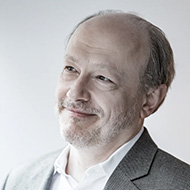
Interview with Marc-André Hamelin
July 31, 2026
“I consider composing an indispensable tool for performing musicians.”…


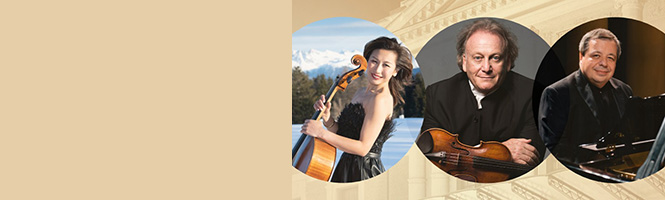


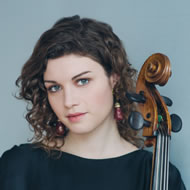
Nadège Rochat is a highly expressive voice among young cellists. Alongside her broad musical interests in the Baroque, Classical, and Romantic repertoire, she enjoys exploring forgotten composers, world music, and contemporary pieces.
She began playing the cello at the age of four and initially studied in Geneva, then in Cologne with Maria Kliegel. She attended masterclasses with, among others, Heinrich Schiff and Anner Bijlsma, and completed her studies at the Royal Academy of Music with Robert Cohen, where she is now a professor. She has won several first prizes at Swiss, German, and British competitions and has twice been awarded the Swiss SUISA Prize for the interpretation of contemporary music. Nadège Rochat has performed in venues including the Tonhalle Zurich, the Vienna Musikverein, the Konzerthaus Berlin, Carnegie Hall in New York, the Mariinsky Theatre in St. Petersburg, the Beethoven House in Bonn, the Konzerthaus Dortmund, the KKL Luzern, and Victoria Hall in Geneva.
She has collaborated with orchestras such as the Scottish National Orchestra, the BBC Concert Orchestra, the Staatskapelle Weimar, the Dortmund Philharmonic, the North German Radio Symphony Orchestra (NDR), the Württembergische Philharmonie Reutlingen, the Biel/Bienne Symphony Orchestra, the Northwest German Sinfonieta, the Orchestre des Pays de Savoie, the Geneva Chamber Orchestra, and the Amadeus Chamber Orchestra of Polish Radio.
You were born into a musical family. What are your earliest musical memories, and what drew you to the cello?
Music has been a part of our lives since my earliest memories. I desperately wanted to join in, as one does when imitating one's parents. To prevent me from breaking their instruments, my father roughly built me a one-stringed viola out of wood so I could pluck the string for my own amusement.
Then, when I was four years old, they finally decided to give me a real instrument. My aunt is a cello teacher, and that's how they sent me to her.
You studied at the Royal Academy of Music, where you now teach a class yourself. What is particularly important to you in teaching?
I am incredibly grateful to my professors. When you teach an instrument, and art in general, you give so much of yourself. You pass on things that you yourself spent years figuring out and realizing. It's so rich and complex: some students never truly understand or realize parts of what they want to pass on, yet you have to keep trying. On the other hand, those same students might learn something else very quickly that took you a very long time to learn! Everyone is different. What my first professor, Maria Kliegel, taught me regarding pedagogy (I was her assistant in Cologne for two years) is never to try to guess what a student is capable of, but always to expect the highest from each and every student. Because everyone learns at a different pace. You can never truly know what someone is capable of, and underestimating students, demanding too little of them, is a huge mistake. What I remember most about my second professor, Robert Cohen, is his generosity, his goodwill at all costs, and his lack of competition. It's a sensitive topic because, ultimately, I was preparing for the same career path as him. But for him and me, it's about much more than that; it's about giving a gift to humanity through our love of music. It's an important task, which is why we need musicians who are masters of communication, and that's why I teach.
You've been dedicated to oriental dance since you were 13 and are passionate about flamenco. What fascinates you about them?
Everything... First of all, the multifaceted nature of these two musical styles. If you don't delve into them deeply, you have no idea how complex they are. I'm also interested in languages, and ultimately, these two dances and their music are other languages. I support the scientific theory that language has fostered the development of our brains, and not the other way around. When you engage with a foreign language or unfamiliar music, you learn to think in a more nuanced way. That's fascinating. I also find the attitude of musicians in more "popular" music (I don't like to call classical music unpopular; for me, all music is popular) inspiring. I mentioned earlier our special task of conveying music as a gift. I think this task is even more pronounced in so-called popular music than in classical music. Probably because so many institutions have interfered in classical music, and the pursuit of technical perfection has become almost pathological.
How does this passion for dance also influence your cello playing?
My aim when playing the cello is to have as little physical tension as possible. The tension should be in the music, not in the body producing it; otherwise, a lot of expression is lost. With dance (at least belly dancing), you learn to move according to your body's natural possibilities and gravity. This gives you natural strength, and the physical relaxation allows your mind and heart to be receptive to creativity.
Do your cello students also have to dance?
I actually recommended my former belly dancing school in London to a student not long ago! It's fantastic for back problems, and incidentally, it's also great for men (my first teacher, back in France, was a choreographer from Egypt and a fantastic dancer!).
Have you ever been annoyed that you chose the cello, of all instruments, where movement while playing is quite restricted?
It's not about how much you move, but how... Pina Bausch expressed this very well with her ballet "Kontakthof" (with non-professional dancers aged 65 and over). And if you watch an old man dancing salsa, you understand it immediately.
You performed several world premieres of works composed for you in 2020. How did this come about, and could you briefly introduce the works?
Unfortunately, there was only one world premiere, "Apocalypse" by the French composer Gilles Colliard for solo cello – in October 2020; everything else was postponed due to Covid. I'm looking forward to playing "Elegia di un Silenzio" for cello and orchestra by Raffaelle Bellafronte on a tour in Italy in the winter of 2022/23, and in March 2022, with the Biel Theatre Orchestra, the world premiere of "Fulgores" by Lorenzo Palomo in a recomposition for cello, guitar, and orchestra (I'm currently working on this with the composer).
You're interested in philosophy from Europe, Asia, and the Arab world. Which ideas are particularly important to you?
Like Schumann, I'm interested in the question of the place of music and the musician in this world, because I suspect it's very important. "Tones are higher words," the composer is said to have remarked. And since I believe that words shape our reality...
For me, music and life are inseparable (in fact, little in this world can be separated). Music allows us to experience the world as if through a lens, and that's something philosophy also deals with. Since I dedicate myself to music on a daily basis, it's refreshing to also see everything through a different lens.
What future plans and dream projects do you currently have?
Before the pandemic, I had very concrete ideas about what I would be doing in a few months and even years. Now I'm going with the flow... First, lots of concerts until the end of the year (France, Germany, Mexico, Switzerland). I've started composing and doing interviews with colleagues for an online cello magazine (cellomagazine.online). That's fun! A wish? To play Schumann's Cello Concerto with the conductor François-Xavier Roth.
Interview by Florian Schär | Classicpoint.net | October 27, 2021
April 23, 2027 - Nadège Rochat (cello), Göttingen Symphony Orchestra, Nicholas Milton (conductor)
May 3, 2027 - Nadège Rochat (cello), Göttingen Symphony Orchestra, Nicholas Milton (conductor)


























































Do you want to attract more visitors to your concerts?
Find out more about the possibilities this portal offers.
With a concert search subscription, you will receive an email for your selected cantons/federal states as soon as a new concert is listed there. You can unsubscribe from the service at any time.
