
interview
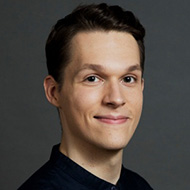
Interview with Lukas Sternath
April 30, 2026
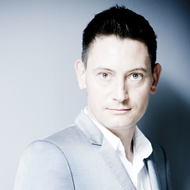
“Silence can be very powerful, almost shocking.” Lukas Sternath (*2001 in Vienna) is…






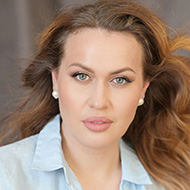
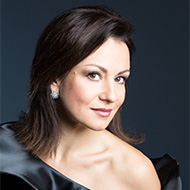
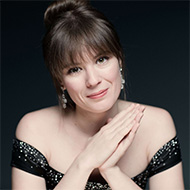
Elena Stikhina is an internationally acclaimed Russian operatic soprano who has established herself in recent years as one of the most outstanding voices in her field. Born in Russia, she received her musical training at the renowned Saint Petersburg Conservatory. She first gained significant attention as a member of the Mariinsky Theatre ensemble in Saint Petersburg, where she sang key roles in the Italian and Russian repertoire.
Stikhina has achieved international breakthroughs at, among others, the Metropolitan Opera in New York, the Vienna State Opera, La Scala in Milan, and the Bayreuth Festival. She is particularly admired for her powerful yet lyrical voice and her intense stage presence. Her most important roles include Tosca (Puccini), Aida (Verdi), Senta in The Flying Dutchman , and Elisabeth in Tannhäuser (Wagner).
With her musical expressiveness and technical precision, Elena Stikhina is considered one of the leading sopranos of her generation.
How has your understanding of "Tosca" or "Aida" changed over the years?
When you first fall in love with opera, you surrender to it completely. You absorb everything as one vast, magnificent whole. Then you begin to learn a role, and suddenly you're inside the character's head, living in the libretto. But every time you return to a role for a new production, you discover something new. A different nuance in the music, a new tension between the characters, a truth you somehow overlooked before. With Aida, the first thing that overwhelms you is the spectacle. The large ensembles, the chorus, the sheer scale of it all. Only later does it become something much more intimate. A story about real people, their impossible choices, their grief. Tosca was a puzzle in itself for me. For a long time, the first act baffled me. Why does it feel so different from everything that follows? Why is the music so light? Then my teacher gave me the key. Treat him like an operetta. Playful and vulnerable. Because the tragedy simply hasn't begun yet. This one realization has changed everything.
Is there a role that you would say you would have interpreted completely differently five years ago?
Honestly, every single one. You can never sing the same opera the same way twice. Every performance is absolutely unique. When you return to a role over the years, it evolves with you. Your life changes, your perspective shifts, and the character changes along with it. I can't think of a single opera that I could perform today the same way I did five years ago, or the way I will perform it in five years. The role ages with you.
What prejudices about dramatic voices do you encounter time and again?
I recently came across a rather charming one: apparently, people with dramatic voices only enjoy listening to other dramatic voices. Completely false and, frankly, a little insulting to our tastes! But the bigger myth is that dramatic voices are simply fully developed by the age of twenty. Yes, the potential has to be there from the beginning. But a powerful voice very often matures over many years. It's truly rare for a dramatic instrument to be stable and complete so early in life. And then there's the assumption that great voices don't need technique. That singers like me just stand there and let nature do all the work. That always makes me smile.
Does every stage really feel different, or is that a myth?
Not a myth at all. Every stage feels completely different because every theater has its own acoustics and its own atmosphere. The acoustics are the work of the architects. The atmosphere is something entirely different. It develops through the audience and over time, decades later, and simply cannot be designed. It just accumulates.
Is there an opera house that has had a particularly profound impact on you?
All theaters are special in their own way. But the Zurich Opera House holds a very special significance for me. It was there that I sang Salome for the first time in Europe. The emotional pressure was immense. Singing a German opera in a German-speaking country is truly daunting. The pronunciation is unforgiving, and Salome also demands tremendous physical movement. But all the hard work was worth it, and Zurich will therefore always hold a special place in my heart.
You are currently performing as Amelia in "Un ballo in maschera" at the Zurich Opera. How much of Elena is in Amelia?
Honestly, not very much. I rarely see myself in my characters. We are usually very different people. But during rehearsals, I work hard to think like my character, to justify every decision she makes, even those I find completely illogical. If I can't understand her from the inside, I simply can't portray her convincingly from the outside.
Many of your roles involve extreme emotional pressure. Do you take any of that home with you?
I have a personal mantra: when you leave the theater, you leave the character behind. For me, separating work and private life is absolutely essential. The dressing room door swings both ways.
Is there a character that has changed you personally?
Every role makes me think. Not necessarily about myself, but every one leaves its mark. I would even say it's the other way around. Life leaves its mark on my characters. A particular event or experience in your own life can completely turn your understanding of a role, what you bring to it, and what you feel when you sing it on its head. The character doesn't change you. You change the character.
Was there a performance where the audience reaction was particularly intense?
Yes, in 2017 I stepped in at the Paris Opera to replace Anna Netrebko in "Eugene Onegin." The protest against the cast change was just as loud as the ovation after the letter scene. The reception at the final curtain was extraordinary. It was, quite literally, a new chapter in my career.
If you hadn't become a singer, where would your path have led you?
We'll never know. When you find your passion, truly find it, you can't imagine thinking about anything else. I'm sure I would have found my place somewhere. But to speculate about what that would have been? I really can't.
Are there any pre-performance rituals that are important to you?
I love to rest before a show, sometimes even taking an afternoon nap. But what's truly sacred are the last thirty minutes before the curtain rises. Warming up, listening to my inner self, finding stillness. I need to be alone, without interruptions, without noise. Just me and the music that's about to begin.
What passions do you have outside of music?
Above all, my family. Time with them is irreplaceable. Going to the movies, long walks, nature, and good food. Really simple things. But after a week of Verdi, simple things are exactly what you need.
Interview by Florian Schär | Classicpoint.net | June 1, 2026
Image Copyright: Daria Valetova



























































Do you want to attract more visitors to your concerts?
Find out more about the possibilities this portal offers.
With a concert search subscription, you will receive an email for your selected cantons/federal states as soon as a new concert is listed there. You can unsubscribe from the service at any time.
