

interview
Interview with Julia Lezhneva
August 31, 2026
“Analytical work allows for emotional freedom, while emotional discoveries…”





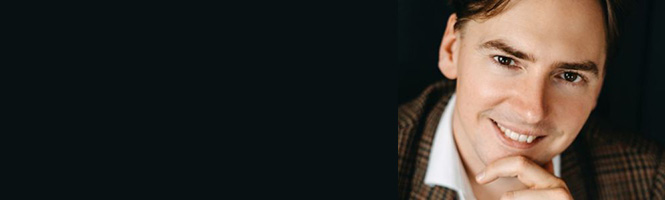


Vladimir Ashkenazy, born in 1937 in Gorky, Soviet Union (now Nizhny Novgorod), began his musical career as a pianist and achieved worldwide fame as a conductor. At the age of six, Ashkenazy began piano studies and later studied at the renowned Moscow Conservatory. In 1963, he emigrated with his family to England, and six years later to Iceland. Ashkenazy has lived in Switzerland since 1982. As a pianist, he has won numerous prizes and awards. His recording record is exceptionally extensive, unparalleled by almost any other pianist. In the mid-1970s, Ashkenazy began his conducting career. From 1987 to 1994, he was music director of the Royal Philharmonic Orchestra. From 1989 to 1999, he succeeded Riccardo Chailly as music director of the Deutsches Symphonie-Orchester Berlin. He then served as music director of the Czech Philharmonic until 2003. Guest conducting engagements take him around the world.
Classicpoint.ch: For the first 14 years of your life, you grew up in an apartment measuring eight square meters, two by four meters. The furnishings consisted of your parents' bed, a wooden cubbyhole with a table, and a piano. You shared the kitchen and toilet with four other families. What did music mean to you back then, and what did it give you?
As a six-year-old boy, I knew nothing else and was very happy. My father was a pianist, and when my parents asked me if I also wanted to learn an instrument, it was clear that I would choose the piano. When my mother realized how quickly I was progressing at the piano, she showed me all kinds of music. I was soon playing many piano reductions of operas and symphonies. I discovered a great deal and, as I said, was very content.
You experienced the Stalin era firsthand. In 2003, you launched the project "Prokofiev and Shostakovich Under Stalin."
Yes, I took the 50th anniversary of Stalin's death as an opportunity to present a concert featuring music by composers Prokofiev and Shostakovich from that period. I tried to put together a program that was as diverse as possible and would document the difficult time for composers under Stalin. We performed the program on a tour.
As you said in an interview, you were never particularly interested in conducting. How did you nevertheless become a world-renowned conductor?
Even as a young boy, I was much more interested in symphonic music than in the piano repertoire. I listened to far more recordings of symphonies than of piano concertos. I was indeed never particularly interested in conducting. I thought it was very difficult and that I had plenty of time to learn it. Later, I was able to gain some initial experience at benefit concerts with my father-in-law's orchestra; he was the conductor of an amateur orchestra. I didn't plan to continue conducting, as I thought it was too difficult. It was an "accident" that really led me to conducting. In the 1970s, it was planned that Daniel Barenboim would conduct two piano concertos, one with me and a second with Pinchas Zuckerman. When Zuckerman had to cancel, Daniel Barenboim spontaneously suggested I take over the piano part and conduct. Because I knew the concerto inside and out, I agreed. After the concert, the orchestra asked me if I'd be interested in occasionally conducting as a guest. I've now been conducting for over 30 years.
As a world-renowned pianist and conductor, can your word, if used consciously, also have a political impact?
As a public figure, I can draw attention to issues and offer support. However, in my opinion, that's not enough for political influence. Often, money is the power that determines political decisions. Nevertheless, I try to continually highlight important issues and am happy to support good causes.
As a pianist and conductor, you have a very extensive repertoire, primarily in the traditional genre. What is your stance on contemporary music?
It's difficult to find good contemporary works. However, there are some truly excellent compositions that I enjoy very much. I'm also always open to new things.
You are on the patronage committee of the "Foundation for Young Musical Talents Meggen," which supports highly gifted young musicians. How did that come about?
I live in Meggen myself, and supporting young musical talents is important to me. When I was asked, I gladly accepted and supported the launch with a benefit concert.
You moved to Switzerland in 1978. What does this country mean to you?
Switzerland's central location in the heart of Europe is a great advantage for me, as I travel a lot. I have many friends in Switzerland and have always loved the country.
Interview by Florian Schär | Classicpoint.ch | March 25, 2011




























































Do you want to attract more visitors to your concerts?
Find out more about the possibilities this portal offers.
With a concert search subscription, you will receive an email for your selected cantons/federal states as soon as a new concert is listed there. You can unsubscribe from the service at any time.
