
interview
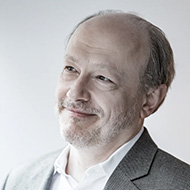
Interview with Marc-André Hamelin
July 31, 2026
“I consider composing an indispensable tool for performing musicians.”…




"What I dreamed of as a little boy, I've long since achieved," beams Felix Klieser. Indeed, the career of the musician, born in 1991, is impressive: first the youngest horn player ever at the Göttingen Music School, then at 13 a junior student at the Hanover University of Music, horn player in the German National Youth Orchestra and on tour with pop star Sting, winner of the "Life Award" and national champion at the "Jugend musiziert" competition. In 2013, his highly acclaimed debut album "Reveries" with pianist Christof Keymer, featuring Romantic works, was released. The following year, he received the "Echo Klassik" award as Newcomer of the Year as well as the €10,000 music prize from the Association of German Concert Agencies – "he is at the beginning of a promising career," predicted the jury. Is it any wonder, then, that a book publisher took notice of him and offered him the opportunity to publish his autobiography? And so it happened: Felix Klieser's book "Footnotes – A Horn Player Without Arms Conquers the World" has been available since summer 2014. It is now even available in Japanese and Chinese.
Classicpoint.net: You were born without arms and decided on the horn at the age of four. Despite these adverse circumstances, you are now among the best horn players in the world and play better with your feet than most do with their hands. Can you tell us a little about your beginnings?
Why I fell in love with the horn at the age of four, I honestly can't say. But the fact is, I didn't want to do anything else, even though there are no musicians in my family, and there wasn't much interest in music among my immediate family either. I pestered everyone until I was sitting in front of a horn. Only then was I satisfied. Of course, every sensible horn teacher advises against starting so early. The mere fact that your baby teeth eventually fall out and new teeth grow in is basically a good reason to start much later – not to mention the lack of lung capacity. But I must have already had a rather stubborn character back then, one that no one could easily overcome. I know for sure that I really enjoyed it as a child. I practiced little melodies, and after about a year and a half, I could actually play "Little Hans" on the horn. It was a hobby, like other children play soccer. Nobody would have thought that I would one day do it professionally. Even though I didn't practice every day at the beginning, it was always regular, and I got better over time. Eventually, I participated in competitions and even won, all the way to the national "Jugend Musiziert" competition. Even though there were still people who smiled condescendingly at my enthusiasm, I realized more and more that playing the horn made me happy.
Have you ever wondered if you might not have become such a good horn player if you had hands? Perhaps because your ambition would have been less?
Many people always ask me how one can learn to play the horn with their feet. I've never asked myself that question; I just did it, like everything else in life. Where no teacher could help, I had to help myself. But I enjoyed that even as a child, and today, as an adult, it's precisely what drives me: I love solving problems, working on techniques until they work. I don't think that a character trait depends on whether or not you have arms, legs, or fingers. I've always been very ambitious and wanted to understand things and make them work. I don't usually think about arms.
You play almost without thumping, since you don't have a right arm. You've spent years meticulously crafting your sound, shaping different timbres through minimal adjustments to your tongue position and mouth cavity size. Are you still searching and discovering new sonic possibilities?
Finding the right sound was indeed my biggest challenge. I worked on it for many, many years. Initially, my sound was very high-pitched, almost trumpet-like. But I wanted to sound like everyone else, and that's something I had to work on. Honestly, I've been working on it for 20 years, and I'm far from finished. What the audience sees in concert—how I play the horn and press the keys with my toes—I never had to practice. That's always worked for me and is simply natural. But what the audience doesn't see, but only hears, is something I've worked hard on.
You don't consider yourself particularly talented and are convinced that everything has to be earned through hard work. Do you also give talks at companies or events about self-motivation and paths to success?
No, I haven't done that yet. It's not one of my goals at all. I simply want to play the horn well, and I'm always happy when people come up to me after a concert and tell me how much they enjoyed the music.
Who are your favorite composers?
We horn players are very fortunate that so many composers have written for our instrument. Richard Strauss, Ludwig van Beethoven, the brothers Michael and Joseph Haydn, Johannes Brahms, but also Reinhold Glière and Camille Saint-Saëns… and of course the great Wolfgang Amadeus Mozart. His four horn concertos are truly magnificent, and I absolutely love playing them in concert.
Which compositions do you have a special connection to?
I just recorded Mozart's four horn concertos with the Camerata Salzburg. And to do it in Salzburg, Mozart's hometown, in the great hall of the Mozarteum... it doesn't get much more Mozart than that. Every morning I walked past his house on my way from the hotel – that definitely had an effect on me. But what was even more fun was delving into the background of the horn concertos. Mozart wrote them all for his good friend Joseph Leutgeb. Leutgeb was a few years older than Mozart and had to endure a lot to get his hands on these compositions. Mozart made him kneel by the stove for hours and threatened to tear up everything he had written so far if he dared to get up. Or he would hurl insults at him in the scores, calling him a "donkey who should take a breath," a "pig's tail who can't hit a single note," and so on. At one particularly difficult passage, he even has the violins laughing at the horn player. And yet, they were close friends. Such details reveal a great deal about Mozart as a person and how he himself viewed his music. All of this must be considered in a recording, and with this knowledge, a soloist develops a special relationship with the composer.
What does music mean to you in general, and why is it important to people?
That's a really difficult question to answer because music has a different meaning for everyone. I personally couldn't imagine a life without music, but of course, I also see it through a professional lens. Others have music playing in the background all day and only register it peripherally. I couldn't do that.
Music has been a part of our lives for thousands of years and is present in every civilization. Musicians have always held special positions in society. Musicians were and are messengers, storytellers, a mirror of society, or simply entertainers — and I don't mean the latter in a derogatory way at all; I greatly admire truly great entertainers and always try to learn from them. Music can make people happy, but it can also make them think. Sometimes, music can even spark a revolution. Every era has its music, and it connects people in our society.
As a musician, where do you see your role in our society?
First of all, as a classical musician, I don't think in political terms. I want to give the audience a pleasant evening, to remind them of the beautiful things in life. I'm always happy to see young people in the concert hall, perhaps even some who are learning an instrument themselves, preferably the French horn! I always chat with them, and occasionally I can even offer some advice. Incidentally, this is also why I not only accepted a teaching position at the university in Münster, but I'm also involved in the "Rhapsody in School" initiative and visit classrooms to tell the students about my instrument or my profession. It's important to me that we classical musicians aren't seen as an elitist bunch. Hopefully, this will remove any inhibitions young people might have about attending a classical concert, or even inspire them to learn an instrument themselves.
What are your hopes for the future?
Right now, everything is so wonderful. I have many concerts, I get to travel all over the world, and I'm meeting many interesting people. With all these wonderful successes, I always try to remind myself that I'm not even 30 years old yet. I would like to continue in this profession as long as people want to listen to me.
Do you have any interests or passions besides the horn?
Unfortunately, the life of a professional musician doesn't leave much time for other things. I'm either practicing, traveling, or playing concerts. There's not much time in between. So it's fortunate that I'm passionate about practicing, love traveling to new countries, and most of all, love playing concerts.
Interview by Florian Schär | Classicpoint.net | June 1, 2019
© Image: Maike Helbig
November 26, 2026 - Sebastian Manz (clarinet), Theo Plath (bassoon), Felix Klieser (horn), Franziska Hölscher (violin), Stephen Waarts (violin), Wen Xiao Zheng (viola), Andrei Ioniță (cello), Dominik Wagner (double bass)
January 28, 2027 - Beethoven & Kreutzer for seven: Masterpieces in dialogue
February 12, 2027 - Felix Klieser (horn), Wuppertal Symphony Orchestra, Felix Mildenberger (conductor)
May 4, 2027 - Felix Klieser (horn), I Solisti di Pavia































































Do you want to attract more visitors to your concerts?
Find out more about the possibilities this portal offers.
With a concert search subscription, you will receive an email for your selected cantons/federal states as soon as a new concert is listed there. You can unsubscribe from the service at any time.
