interview
Interview with Marc-André Hamelin
July 31, 2026
“I consider composing an indispensable tool for performing musicians.”…


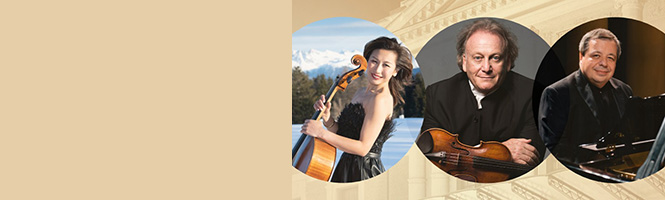


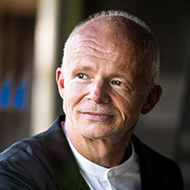
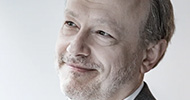
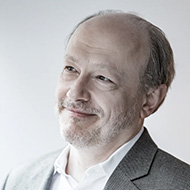
Thomas Zehetmair enjoys the highest international acclaim as a conductor, soloist, in dual roles, and as a chamber musician. He is the principal conductor of the Orchestre National Auvergne Rhône-Alpes, and his position as principal conductor of the Stuttgart Chamber Orchestra has been extended until summer 2029. In recent years, Zehetmair has increasingly developed a passion for composing and arranging. For his diverse artistic achievements, Thomas Zehetmair has received, among other accolades, the Honorary Certificate of the German Record Critics' Award and holds honorary doctorates from the Franz Liszt University of Music Weimar and Newcastle University.
How would you describe your musical personality in a few words?
Inquisitive, thorough, a blend of research drive and a love for the spontaneously created moment.
What continues to motivate you after so many years in the music world?
I learn something new every day! Then there's the connection with the audience – I increasingly believe that a brief verbal introduction creates a sense of closeness and aids the listening experience. Or every single moment I get to spend as a performer with brilliant music, every moment working with wonderful musicians, every moment I spend with my Stradivarius or my new violins. And in recent years, my work as a composer – it began with working on and completing fragments like Mozart's Sinfonia Concertante KV 320e, then came my own new pieces like my string trio.
Is there a common thread running through your artistic work?
At the moment, it's the recording of all Beethoven symphonies with the Stuttgart Chamber Orchestra, a truly exciting engagement with works that have been important to me since my youth.
Are there any works you prefer to conduct rather than play – or vice versa?
I often perform Mozart's violin concertos in a dual role. Otherwise, it's repertoire that hardly overlaps – I have performed a few pieces in both capacities: Schoenberg's "Verklärte Nacht" as a violinist and later as conductor of the Stuttgart Chamber Orchestra – that helps with the overall picture and is more exciting.
Which aesthetic principles are indispensable for you in an interpretation?
How does one strike a balance between too many details, which would exceed the scope of this discussion, and overly philosophical considerations… but perhaps that's precisely the right answer: to explore every detail and place it within the right framework in order to grasp the grand form.
What makes working with an orchestra productive for you?
If I manage to spark genuine interest, and if the players' level is right – these things usually go hand in hand.
How do you manage to develop a shared vision of sound in a short rehearsal period?
I remember an interview with Karajan in which he said, more or less, about his work with singers, that he made sure they absolutely wanted to sing the way he wanted them to. When that works with the musicians of the orchestra, those are truly blissful moments.
What role does trust play in conducting?
That ties in with my previous answer: I have absolute trust in the musicians I work with when I step onto the concert stage! Otherwise, I've missed my calling – a conductor's voice only comes from the music he coaxes from his orchestra.
What do you expect from musicians – and what can they expect from you?
Excellent preparation and openness – on both sides!
What insights from chamber music do you bring to your conducting?
…and vice versa! Interpretation is never static; everything is in flux. It makes a huge difference which voices you focus on; the orchestral, sensual sound of a string quartet is just as important as the clarity of a symphonic work.
Was there a key moment that shaped your career?
There are several, for example...
Which performances or projects have stayed with you most vividly?
Three exciting projects from last year that I experienced as a composer: the world premiere of my "Passacaglia, Burlesque and Chorale" with the Orchestre national Auvergne-Rhône-Alpes, followed by a US tour; the world premiere of my Double Concerto at the Swiss Chamber Concerts in Geneva in September; and the tour of Japan with the Stuttgart Chamber Orchestra in November, where I served in three roles – composer, conductor, and soloist.
What passions do you have besides music?
Chess addiction – sometimes far too time-consuming; swimming in natural bodies of water, regardless of the season; alpine skiing and following ski jumping…
Interview by Florian Schär | Classicpoint.net | February 1, 2026
Photo: Wolfgang Schmidt
November 22, 2026 - New Westphalian Philharmonic, Thomas Zehetmair (violin & conductor)
December 6, 2026 - Ittingen Sunday Concert – Thomas Zehetmair & Pierre-Laurent Aimard
March 31, 2027 - Stuttgart Chamber Orchestra, Thomas Zehetmair (violin & conductor), Sven Helbig (live electronics)



























































Do you want to attract more visitors to your concerts?
Find out more about the possibilities this portal offers.
With a concert search subscription, you will receive an email for your selected cantons/federal states as soon as a new concert is listed there. You can unsubscribe from the service at any time.
