

interview
Interview with Julia Lezhneva
August 31, 2026
“Analytical work allows for emotional freedom, while emotional discoveries…”





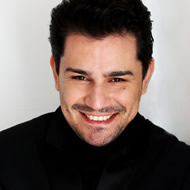
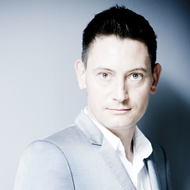
Baritone Kartal Karagedik has garnered critical acclaim for his "virile, Mediterranean-tinged voice," praised for its "delicate warmth and emotional depth." Having sung over 40 roles, Karagedik's repertoire stands out for its breadth, ranging from Verdi to Gluck. His performances include iconic roles such as Renato in Un ballo in maschera, Simon Boccanegra, Don Giovanni, Il Conte Almaviva in Le Nozze di Figaro, Germont in La Traviata, Enrico in Lucia di Lammermoor, Zurga in Les pêcheurs de perles, Rodrigo in Don Carlo, Oreste in Gluck's Iphigénie en Tauride, and Tchaikovsky's Eugene Onegin. He has performed at opera houses such as the Hamburg State Opera, Opéra Vlaanderen, the Savonlinna Opera Festival, the Grand Théâtre de Genève, the Opéra de Monte Carlo, the Torre del Lago Puccini Festival, the Teatro Comunale di Bologna, and many others. In 2015, Kartal released his debut album, PROMETHEUS – a collection of Schubert's songs about classical antiquity and mythology, accompanied by pianist Helmut Deutsch. Born in Izmir, Turkey, Karagedik began his vocal studies in his hometown and in Istanbul before entering the Accademia dell'Opera Italiana in Bologna. Since 2015, he has been an artist-in-residence at the Hamburg State Opera. In addition to his singing career, Kartal is also a celebrated and award-winning photographer. Since 2014, his numerous solo exhibitions have garnered significant public acclaim.
You grew up in Turkey and completed your undergraduate studies there. Afterwards, you moved to Italy to continue your studies. What did you learn in Italy?
Before I tell you what I learned in Italy, I must say that I acquired a solid foundation in vocal technique in Turkey. Thanks to the clear, logical, and effective system that my teachers, especially Professor Güzin Gürel, taught me, I felt confident and well-prepared. I still apply these principles today.
After winning a prize at the AS.LI.CO competition, I went to Como for six months. It was an incredible opportunity to work with real maestros on a role (no less than Falstaff) and prepare for a full stage performance, receiving guidance every step of the way. This Falstaff debut was also my debut in Europe. Having come to Italy from Turkey, I can say that I learned a great deal about the tradition, the language of singing, and the old Italian style of singing.
My time in Bologna was primarily focused on the stage, albeit briefly, for only seven months. Soon after, I received an offer from the Magdeburg Theatre, where I began my first professional engagement, before moving to the Erfurt Ensemble and then to the Hamburg State Opera, where I am still a member of the theatre.
Where do you see the biggest cultural differences between your home country and your current place of residence (Germany)?
I can't speak for all of Turkey, just as I can't speak for all of Germany. I grew up in a secular family in Izmir, a very open, progressive, and modern city. When I first moved to Europe, I didn't perceive it as a major cultural shift, but of course, it was the desire to make music in its place of origin that drew me to Europe.
Even now, living in Germany, I still travel a lot as an artist. I can honestly say that I feel like I don't really belong anywhere. Perhaps it's a good thing for a traveler or artist to have this feeling, to feel like a cosmopolitan. I'm always fascinated by different cultures and enjoy adapting to new environments and their cultures. But, to be honest, I don't feel like I truly belong to any one place. This, by the way, connects me personally to the question: Beautiful world, where are you?
Your latest album is called "Prometheus." How did you come up with this name?
The idea for the album was clear to me from the very beginning. I wanted to record a collection of Schubert songs that deal with mythological themes. When we had finished the 21 songs and I immersed myself in their lyrics, I was impressed by how masterfully Schubert captured the human condition: our fears, hopes, inner conflicts, and our joy. And all this in just a few minutes of music. This emotional depth made the album title obvious: Prometheus. The Titan who not only stole fire from the gods but also created humanity itself.
For me, Prometheus is perhaps the first symbol of humanism. He defied the will of Zeus, not out of vanity or ambition, but out of compassion. He believed in humanity's potential and chose to empower it, even if it meant great personal sacrifice. By stealing fire, he brought knowledge, freedom, and creative power to humankind. It was an act of rebellion, but also of love. He stood against the tyranny of a single ruler, against Zeus, who wanted to keep humanity in darkness and dependence. In this sense, Prometheus is much more than a mythological figure. He is the eternal symbol of resistance against oppression, of rebellion against absolute power, even if the price is suffering.
Goethe's poem, which Schubert set to music, perfectly captures this rebellious, almost revolutionary spirit. The Prometheus we hear in Schubert's song is proud, defiant, and profoundly human. He creates humans in his own image, not to serve the gods, but to feel, to weep, to rejoice, and to live freely. This vision deeply resonated with me. This is not just a story from antiquity, but a timeless message about dignity, defiance, and the spark of humanity that lives within us all.
In this album, we embark on a journey through ancient myths, but also explore very current ideas about power, freedom, and what it means to be human.
How interested are you personally in mythological topics?
I'm very, very interested! Mythology has truly become a part of my life. My wife and I have had countless conversations about archetypes in mythological narratives, about how relevant they still are, how we can recognize these archetypal patterns within ourselves and even in the dynamics between people. It's fascinating to see how the same scenarios repeat themselves over time. I find the whole subject absolutely fascinating, and its depth seems endless.
You also work with photographic art. What exactly do you do in this area?
I started with photography as a child. My grandfather was a photographer, and his cameras were toys to me. Even today, I feel that same childlike joy every time I pick up my camera. As a singer, I travel a lot, and my camera is always with me, not just as a companion, but sometimes even as the main reason for the trip. Over time, photography has become an indispensable form of expression for me.
The focus of my photographic work is evident in my solo exhibitions, which I often combine with song recitals. My last exhibition, HIATUS, was dedicated to capturing moments of stillness—images that seem to freeze time and convey a sense of calm amidst the hustle and bustle of everyday life. Every time I press the shutter, I feel as if time pauses for a heartbeat. With these images, I try to create spaces where viewers can pause, breathe, and perhaps rediscover something within themselves.
There is a deep connection between my photography and my music. Both are based on contrasts of light and shadow, sound and silence, and both are driven by emotions. I try to photograph the way I sing, and I sing the way I photograph.
Photography also gives me a sense of balance in life. On stage, I'm the center of attention. That's a very extroverted experience. But behind the camera, I can step back, observe, and become the eyes looking out at the world. It's the calm, introverted counterpart to the intensity of the stage.
A selection of my photographs can be found on my website under the heading "KK as a photographer": www.kartalkaragedik.com
Which philosophical topics interest you most?
I'm not sure if it's philosophical enough, but one of the most important topics for me personally lately is the process of individuation as described by the Swiss psychiatrist Carl Jung, and all of Jung's other theories. Working on "Prometheus" for this album has opened up a whole new world for me, especially the world of archetypes and Jungian theory.
Viewing my own journey, and even the stories of the opera characters I portray, through this lens has fundamentally changed my life. It has given me a new understanding, not only intellectually, but also emotionally and artistically. There are so many books by Jungians on this subject, but if anyone is interested, I would particularly recommend two: "Gods in Every Man" and "Goddesses in Every Woman" by Jean Shinoda Bolen.
What question about humanity would you like answered?
I would really like to understand how the collective unconscious actually works—where its roots lie and how it influences us all. It's such a powerful idea, and I keep wondering where these shared patterns come from and why they resonate so deeply across cultures and time.
What do you want to achieve as an artist?
Of course, I have ambitions and dreams that are slowly taking shape and becoming concrete plans. But my real goal is for my professional development to go hand in hand with a deepening of my artistic skills, so that I can express myself more clearly, make bolder decisions, and be freer and more daring in my work. I believe that my role as a performing artist is to create the world of a story, a world where composer, performer, and audience meet. When this happens authentically, magic is created, and people from different eras come together. I want to achieve this feeling as often as possible.
What are your other passions besides music?
Life is a miracle, and I live it passionately. I also appreciate good food and wine and am very interested in psychology. Another passion, which might be somewhat unusual and not entirely healthy for an opera singer, is pipe smoking. It's a ritual I cherish.
Interview by Florian Schär | Classicpoint.net | November 1, 2025




























































Do you want to attract more visitors to your concerts?
Find out more about the possibilities this portal offers.
With a concert search subscription, you will receive an email for your selected cantons/federal states as soon as a new concert is listed there. You can unsubscribe from the service at any time.
