
interview
Interview with Fabian Müller
September 30, 2026
"I like to practice at night in the dark, without turning on the light. The silence sounds..."



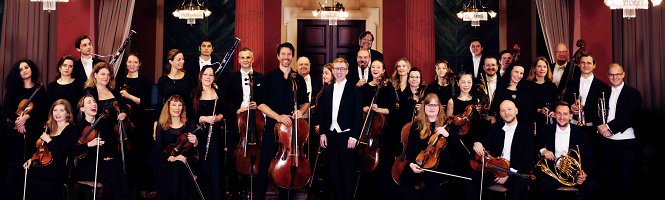



Ragnhild Hemsing was born in 1988 in the heart of Norway. She began playing the violin at the age of five. A particularly versatile artist, Ragnhild Hemsing stands out among Norway's rising talents. Since childhood, she has been deeply connected to the rich folk traditions of her native Norway. This allows her, as one of the first artists, to successfully combine the typical characteristics of Norwegian folk music and classical music in a youthful, fresh, and thoroughly modern way. At just 14, Ragnhild made her debut with both the Bergen Philharmonic Orchestra and the Trondheim Symphony Orchestra, performing Mendelssohn's Violin Concerto. Since then, she has performed with all of Norway's major orchestras. She complements her extensive repertoire of classical solo violin works with lesser-known, complex pieces for the traditional Hardanger fiddle.
In the following interview, Ragnhild Hemsing talks about the Hardanger fiddle, the Hemsing Festival in Norway, and Norwegian folk music.
Classicpoint.net: You have studied Norwegian folk music extensively. What are its typical characteristics?
In our family home in Aurdal in Valdres, there has always been a lot of music. Aurdal is a small village with only 700 inhabitants, high in the mountains of Norway. My mother is a violin teacher and plays Norwegian folk music. From the very beginning, my siblings and I accompanied our mother when she gave concerts with her colleagues. We developed a natural connection to both folk and classical music. From a young age, I loved music, its power, and how one can express feelings and emotions through something magical like the violin.
When I was four years old, I asked my parents, "Where is my violin?", and from the age of five, I began learning classical music on the violin and folk music on the Hardanger fiddle. I loved the duality of these two genres, the contrasts, but also the similarities, and I have played both instruments ever since. Typical features of Norwegian folk music include, for example, the different rhythms. The rhythm of the dance melodies changes depending on which valley or mountain range you are in in Norway. It's the same as with language and dialects.
You want to combine Norwegian folk music with classical music. How do you do that?
I've always combined classical music with Norwegian folk music, and that has become my musical identity. The unique sound of the Hardanger fiddle combined with the classical violin has always fascinated me. Both instruments and both genres enrich each other. I find it very interesting to combine a repertoire where the composer has drawn inspiration from the folk music and traditions of the respective countries. I try to put together a repertoire that is interconnected. Many of Beethoven's compositions, for example, his Violin Sonata No. 8, are influenced by the German Ländler dance, and I find it very exciting and interesting to combine this with folk tunes on the Hardanger fiddle. For me, it's important to be open to other influences, and I think it's wonderful that young composers are using folk music in a new musical language. Folk music isn't confined to a single playing style of the instrument.
You mentioned the Norwegian Hardanger fiddle. Could you tell us about this instrument?
The Hardanger fiddle, or "hardingfele" in Norwegian, is the national instrument of Norway. The first Hardanger fiddle was built in the mid-1600s in an area called Hardanger. The fiddle has nine strings. Four of the strings are fixed and played like a violin, while the remaining strings, aptly called understrings or sympathetic strings, vibrate in sync with the other four.
It is possible to tune the violin to more than 20 different tunings, depending on the pieces and the region from which the melodies originate. The lower strings are tuned to vibrate according to the main tuning. The Hardanger fiddle is mainly used in southwestern Norway, while the common fiddle (called flatfele – "flat fiddle," like the original classical violin) is found elsewhere. The Hardanger fiddle is used for dancing, accompanied by rhythmic, loud foot-stomping.
The instrument is beautifully decorated, with a carved animal (usually a dragon or the Lion of Norway) as part of the scroll at the top of the pegbox. Extensive mother-of-pearl inlays adorn the tailpiece and fingerboard, and black ink decorations known as "rossing" decorate the body of the instrument. Sometimes pieces of bone are used to decorate the pegs and edges of the instrument.
What can you play on the Hardanger fiddle, and where does this tradition come from?
You usually play traditional melodies on the Hardanger fiddle, passed down from generation to generation. Traditionally, you don't learn these melodies by reading sheet music, but by listening to and imitating our master fiddle players. The fiddle is a beautiful solo instrument, but it's also often played in a group with other fiddle players or with other instruments from bygone eras. Throughout history, there has been a special use of melodies at weddings, for example. The wedding march is one such example. Among the dance melodies, there are dances for couples, such as the "Halling" in 2/4 or 6/8 time, and the "Bonde." In Valdres, where I come from, we have a very special dance rhythm called "Springar," characterized by an asymmetrical 3/4 time signature.
Around 1900, Norwegian composers began writing pieces for Hardanger fiddle and orchestra. Even today, this is not very common. One example of such a piece is Johan Halvorsen's "Fossegrimen Suite." Another Norwegian composer, Edvard Grieg, was also greatly inspired by Norwegian folk music and melodies, which he incorporated into his compositions. He composed melodies for the Hardanger fiddle as part of his score for Ibsen's "Peer Gynt Suite No. 1." The opening phrase of "Morning Mood" from Grieg's Peer Gynt music is derived from the tuning of the sympathetic strings of the Hardanger fiddle: AF♯ EDEEF♯ and so on...
Folk music can be presented in many different ways. I find it exciting when younger composers think outside the box and have a connection to Norwegian folk music.
You also founded the Hemsing Festival in your home country of Norway. What makes this festival special?
I founded the festival in 2013 in our hometown of Valdres together with my sister, Eldbjørg (also a violinist). Eldbjørg and I are joint artistic directors, and I am the festival director. The Hemsing Festival is held annually in Aurdal. Edvard Grieg and Knut Hamsun were inspired by the beautiful nature of the village, and Frydenlund Skysstasjon was an important meeting place for artists from all over Norway. The Hemsing Festival invites you to experience great music in an intimate setting and presents classical music of a high international standard in collaboration with local musical and cultural traditions. The festival offers a unique combination of music, local food traditions, and nature experiences.
Eldbjørg and I grew up in the village and were introduced to both classical and folk music at a young age. Today, we are both artists working internationally. It was our experience of the power and depth of this music, as well as its potential for human connection, that inspired us to establish an international chamber music festival in our home village. Our desire was to apply our own skills to the environment in which we grew up, demonstrating how music can influence a community and create identity and a sense of belonging. Every year at the end of February, renowned musicians of the highest international caliber from around the world gather in Aurdal for a truly unique chamber music festival, creating unforgettable memories.
Fifteen concerts take place over five days. The village's beautiful church, dating from 1737, forms the center of the festival; the adjacent building, Frikar-Smia, offers a modern stage space; the Frydenlund Skysstasjon has a historic feel; while the modern mountain church at Aurdalsåsen invites visitors to combine skiing in beautiful nature with great musical experiences.
The Hemsing Festival is deeply rooted in the region and has offered activities specifically for children and young people from the very beginning. Our aim is to make classical music meaningful for the local community by engaging the local cultural school to perform its own concerts. This, combined with the village's rich culinary traditions, a supportive local business community, and a particularly large contribution from volunteers, allows the festival to flourish.
The festival offers a complete winter adventure with great classical music in a historical setting, high-quality accommodation, local culinary experiences and activities such as cross-country skiing, snowshoeing and husky tours.
Her debut album on Berlin Classics, a co-production with WDR, is scheduled for release at the end of June 2020. What can we look forward to?
I am very much looking forward to working with the Berlin Classics label. And I am so excited to be recording my first album with Berlin Classics in a co-production with WDR. The album will feature all Norwegian music – played on both the violin and the Hardanger fiddle – and I am very much looking forward to working with WDR. The recording will take place at the end of June this year, and I am delighted that the wonderful musicians Mario Häring (piano) and Benedict Klöckner (cello) will be joining me for some of the pieces. I am very much looking forward to presenting the album to you at the beginning of next year.
How are you currently coping with the coronavirus lockdown? How are you using your time?
I think the consequences of the coronavirus have surprised us all. But in these times, I believe it's more important than ever to think positively and use the moment to be creative.
You are still very young. What are your visions and dreams?
Music is my life and my passion. My vision is to bring the Hardanger fiddle to the world and promote it, and to view the tradition in a new light. I also want to continue to highlight the connection between classical and folk music.
What are your interests besides music?
Ever since I was a little girl, I've loved drawing and designing concert attire. I'm also very interested in interior design. Having grown up in the beautiful Valdres region, I love being in nature and experiencing the peace it gives me. Because my father worked in the natural world, we always had the unique opportunity to experience culture and nature side by side, and for that I am very grateful.
Interview by Florian Schär | Classicpoint.net | May 4, 2020
| Photography: © Kaupo Kikkas
02/12/2027 - Ragnhild Hemsing (hardanger fiddle), Alexander Malofeev (piano), Bergen Filharmoniske Orkester, Tabita Berglund (conductor)
02/13/2027 - Ragnhild Hemsing (hardanger fiddle), Alexander Malofeev (piano), Bergen Filharmoniske Orkester, Tabita Berglund (conductor)
02/15/2027 - Victoria Randem (soprano), Ragnhild Hemsing (hardanger fiddle), Alexander Malofeev (piano), Bergen Philharmonic Orchestra, Tabita Berglund (conductor)
02/21/2027 - Alexander Malofeev (piano)
05/04/2027 - Ragnhild Hemsing (violin & hardanger fiddle), Schleswig-Holstein Symphony Orchestra, Harish Shankar (conductor)




























































Do you want to attract more visitors to your concerts?
Find out more about the possibilities this portal offers.
With a concert search subscription, you will receive an email for your selected cantons/federal states as soon as a new concert is listed there. You can unsubscribe from the service at any time.
