interview
Interview with Elena Stikhina
June 1, 2026
“The Zurich Opera House has a very special meaning for me.” Elena Stikhina is…


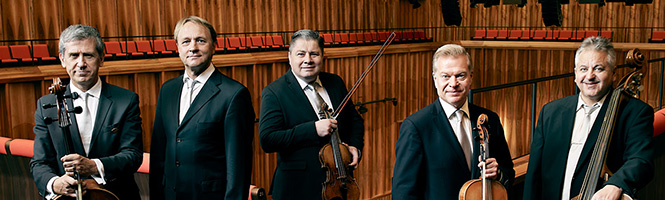


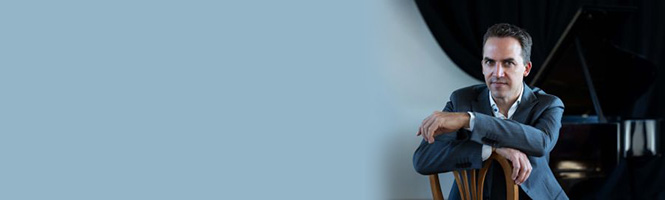


Patricia Kopatchinskaja plays with wild passion. The Moldovan-born violinist is one of the most interesting violinists of her generation. She disregards the rules of the classical music establishment. Her playing is direct and uncompromising. She studied composition and violin in Vienna and Bern. Today she lives in Bern.
At the age of 13, you fled from Moldova to Vienna. What was that time like for you?
It was a very dangerous time. We arrived with just a few suitcases and a dog, had to give our fingerprints, and lived almost penniless in a refugee shelter. That's when I realized that no one would help me if I didn't help myself.
Your parents are both musicians; what did they do for a living in Vienna?
My father was a superstar in my homeland. He led a large folk ensemble with musicians and dancers. He gave 300 concerts a year in the Eastern Bloc and other pro-Soviet countries. My mother also performed with him. We were well-off. He couldn't continue that career in the West. It was a very difficult time.
From Vienna, you came to Bern. How big was the change?
I came to Bern through the violin teacher Igor Ozim, who helped me a lot. When you come from Moldova, the difference between Vienna and Bern isn't that great. Of course, you miss Vienna's rich cultural offerings when you live in Bern. The people are patient and friendly, and the landscape is right on our doorstep and absolutely beautiful.
What do you miss most when you think of your homeland, Moldova?
I miss my late grandmother most of all. And you can't find tomatoes like you do in Moldova in supermarkets here.
You started composing as a child and only learned violin later. What did composing mean to you as a child, and what does it mean to you today? It was
until I came to Vienna that I encountered the Second Viennese School (Schoenberg, Berg, Webern). Coming from the Eastern Bloc, it was like a revelation. Alongside my instrumental studies, I also studied composition and composed a lot back then. Today I compose little, but still occasionally. When you compose, you approach music in a completely different way, for example, more experimentally, whether it's old or new. Incidentally, the living composers I've worked with have never been bothered by my free approach to the material.
You have a young daughter. What is her relationship to music?
My daughter will be seven soon. Her relationship with music is ambivalent because she's jealous of it. I'm away so often. But she has a great passion for opera and, for example, absolutely wanted to see a three-hour performance of Wagner's Flying Dutchman to the end, even though it was played without intermission.
How does it feel when you can really immerse yourself in the music at a concert?
It's like a drug-induced high. That's what I live for.
Do you prefer contemporary music to the well-known great violin works of the Classical and Romantic periods?
Prefer isn't quite the right word. But the old works have been played so often and so well that it's difficult to contribute a new perspective. Besides, Classical and Romantic music belong to a bygone era.
You can contribute much more that's new by bringing the music of our time closer to the audience. That's my contribution and my real mission.
Which are your favorite works?
My favorite work is always what I'm currently playing. But I feel particularly close to the works of Bartók, Kurtág, Ligeti, and also Mansurian.
They try to push all boundaries, seeking ecstasy in their playing. Isn't that incredibly exhausting? Where do you get that energy?
It is indeed incredibly exhausting, and between concerts I'm often completely drained. But I want to give the composer and the work everything I have. I don't want to leave anything to chance.
And anyway, what's the point of playing half-heartedly? I'd rather stay home.
Have there ever been conductors or chamber music partners for whom your energy and playing style were too extreme?
Yes, of course. It's a lifelong endeavor to find the right musicians (and the right audience, too). Fortunately, I keep succeeding. Recently, for example, I joined forces with Pekka Kuusisto, Lilli Majala, and Pieter Wispelwey to form a string quartet. We work very freely and experimentally, like in a laboratory. We call it "quartet-lab." A magnificent experience.
Interview by Florian Schär | Classicpoint.ch | October 5, 2012
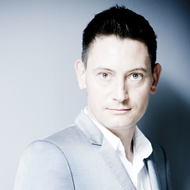
© Photo: Marco Borggreve, Amsterdam
June 11, 2026 - Patricia Kopatchinskaja, violin, BEETHOVEN, World Stars
June 28, 2026 - MULTI-PACETED - above the rooftops of Zurich




























































Do you want to attract more visitors to your concerts?
Find out more about the possibilities this portal offers.
With a concert search subscription, you will receive an email for your selected cantons/federal states as soon as a new concert is listed there. You can unsubscribe from the service at any time.
